

📊 Campbell Duck at a Glance: Key Specifications & Production Benchmarks
| Scientific Classification | Anas platyrhynchos domesticus |
| APA Breed Classification | Light Class Waterfowl (Standardized 1941) |
| Mature Drake Body Weight | 5.0 to 5.5 lbs (2.3 to 2.5 kg) |
| Mature Duck (Hen) Weight | 4.0 to 4.5 lbs (1.8 to 2.0 kg) |
| Annual Egg Productivity | 280 to 320 large white-to-tinted eggs |
| Egg Size & Shell Quality | Extra-large (70 to 80 grams), firm thick shells |
| Primary Homestead Purpose | Unsurpassed egg production, slug eradication, light roasting |
| Foraging Ability & Range | Superior active forager; hunts insects, snails, and aquatic greens |
| Temperament & Disposition | Active, alert, non-broody, gentle, highly efficient |
| Incubation Duration | 28 days (forced-air or still-air waterfowl incubation) |
The Campbell Duck, universally known through its primary Khaki color variety, holds undisputed status as the world’s most productive domestic egg-laying waterfowl breed. Developed in England at the turn of the 20th century, these athletic, light-bodied ducks routinely out-produce elite commercial leghorn chickens while thriving on backyard pasture and farm wetlands. Good predator-proofing and dry bedding safeguard Campbell Duck comfort in harsh weather.
Whether you are launching a commercial market egg flock through our comprehensive duck farming pillar guide or seeking organic pest controllers for garden orchards, Campbells offer peerless feed conversion efficiency. Unlike heavy meat ducks that require massive grain inputs, Campbell ducks transform simple farm forage into nutrient-dense, rich table eggs. Monitoring water quality and mineral balance directly benefits Campbell Duck vitality.
Their calm, industrious disposition and exceptional hardiness make them ideal for smallholders who demand maximum return on investment. In this master husbandry manual, we analyze the physiological standards, daily protein rations, predator-proof housing, and brooding management required to sustain 300-egg productivity across North American seasons. Practical hands-on husbandry ensures consistent results when raising Campbell Duck.
Physical Characteristics & Breed Standards
Campbell ducks exhibit a trim, alert, slightly upright carriage that reflects their Indian Runner ancestry without adopting the extreme vertical stance of pure Runners. Their sleek, streamlined bodies minimize physical stress during egg production.
Conformation Standards & Anatomical Structure
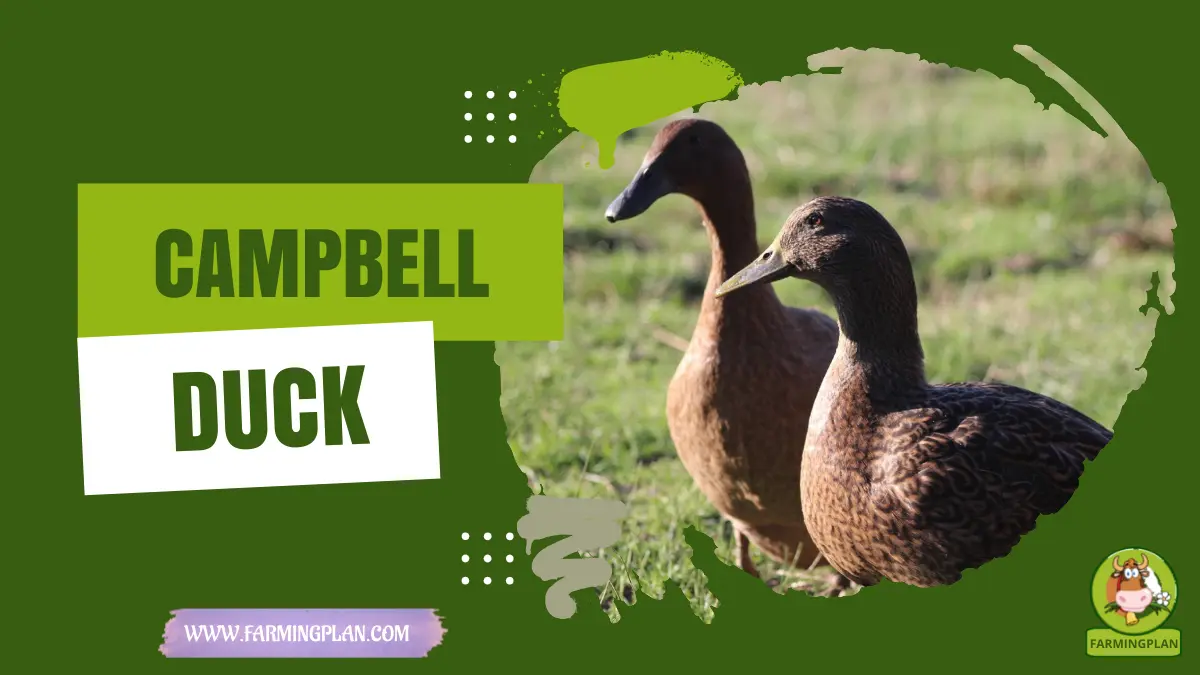
The head is refined, slender, and carried gracefully on an arched neck of medium length, giving the bird an alert and composed bearing. In Khaki drakes, the head, neck, stern, and lower back display a lustrous dark bronze-green sheen that contrasts sharply against the warm khaki-brown plumage of the body. The bill is greenish-slate with a solid black bean at the tip, while the legs and webbed feet are dark orange. Early intervention at the first sign of lethargy protects overall Campbell Duck flock or herd health.
The female Khaki duck is clad in uniform warm khaki plumage, with each feather finely penciled with a slightly deeper shade of brown across the back and wings. Her bill is greenish-black, creating an understated camouflage that protected nesting ancestors in English marshlands from aerial and ground predators. Structured culling and biosecurity protocols strengthen Campbell Duck genetic quality.
The body is compact, deep-keeled, and well-proportioned, allowing unrestricted development of the oviduct and digestive tract. Their alert carriage enables rapid agility in pasture foraging without sacrificing the abdominal depth required to maintain peak egg production across all four seasons. Maintaining clean feeders and sanitized equipment supports sustainable Campbell Duck care.
Size, Weight Benchmarks & Color Variations
Mature Campbell drakes average 5.0 to 5.5 pounds, while active laying hens maintain a working weight of 4.0 to 4.5 pounds. Keeping body weight lean is essential; hens that accumulate excessive abdominal fat experience lower laying persistence and prolapse risks.
Ducklings grow rapidly, achieving nearly 80% of their adult structural frame by week eight when supplied with proper starter and grower rations. Their legs are set well apart, giving them a steady, purposeful walking gait without the awkward waddle characteristic of heavy meat breeds. Consistent daily observation helps keepers spot early changes in Campbell Duck health and behavior.
Beyond the classic Khaki variety, the Campbell breed includes White, Dark, and Pied varieties, though the Khaki remains the premier egg-laying standard in the United States and international waterfowl registries. Clean housing, fresh water, and balanced nutrition remain essential for Campbell Duck productivity.
📊 Campbell Duck Performance & Production Matrix
| Productivity Parameter | Khaki Campbell | White Pekin Duck | Indian Runner Duck |
|---|---|---|---|
| Annual Egg Yield | 280 to 320 eggs (Year-round) | 140 to 180 eggs (Seasonal) | 180 to 220 eggs (Seasonal) |
| Average Mature Weight | 4.0 to 5.5 lbs (Light) | 8.5 to 11.0 lbs (Heavy Meat) | 3.5 to 5.0 lbs (Light) |
| Feed-to-Egg Ratio | High (3.2 lbs feed per dozen) | Low (6.5 lbs feed per dozen) | Moderate (3.8 lbs feed per dozen) |
| Maternal Broodiness | Extremely Low (Continuous lay) | Low to Moderate | Very Low |
| Homestead Garden Suitability | Superior (Low plant trampling) | Poor (Heavy trampling) | Excellent (Narrow footprint) |
Breed History, Heritage & North American Development
The Campbell duck was created in Uley, Gloucestershire, England, by Adele Campbell during the late 1890s. Seeking to provide a dependable supply of table eggs and roasted duckling for her family, Mrs. Campbell crossed a high-producing fawn-and-white Indian Runner hen with a fleshy Rouen drake. Tracking feed intake and body condition supports long-term Campbell Duck performance.
The resulting offspring produced remarkable egg yields, but Mrs. Campbell sought greater body symmetry and richer plumage. She introduced Mallard blood to stabilize the type. The original birds possessed irregular plumage, but when the distinctive khaki shade appeared, Mrs. Campbell remarked that the color resembled British military uniforms, leading to the name ‘Khaki Campbell.’
The breed gained worldwide acclaim during the early 1900s when documented egg-laying trials recorded Campbell ducks laying over 340 eggs in 365 consecutive days. Admitted to the American Poultry Association Standard of Perfection in 1941, the breed remains the global benchmark for egg-laying waterfowl. Following biosecurity best practices reduces disease risk in any Campbell Duck operation.
Housing, Shelter Dimensions & Winter Hardiness
Housing Campbell ducks requires prioritizing dry interior floor bedding, wide access doors, and total predator exclusion. Because Campbells lay prolifically before dawn, secure nighttime containment ensures pristine, uncracked eggs. Seasonal adjustments to shelter and diet keep Campbell Duck thriving year-round.
Spatial Density & Enclosure Engineering
Provide a minimum of 4 square feet of dry coop space per adult duck inside the night house, coupled with 15 to 20 square feet per duck in exterior runs. Unlike flighty bantams, Campbells remain grounded behind 3-foot poultry netting, though 4-foot perimeter fences deter raccoons and foxes. To evaluate alternative bloodlines and practical management routines, check our Dutch Hookbill Duck overview. Proper record-keeping makes breeding and culling decisions easier for Campbell Duck keepers.
Cover coop floors with kiln-dried pine shavings or chopped clean straw. Avoid cedar shavings, which emit toxic aromatic hydrocarbons harmful to waterfowl respiratory systems. Ensure cross-flow ridge ventilation keeps relative humidity below 65% to prevent frostbite on damp foot webs during freezing American winters.
In muddy climates, create an elevated pea-gravel apron around exterior feeding stations to prevent puddling and foot infections. Ducks delight in water exploration, but managing surface water runoff preserves flock hygiene and prevents soiled eggs in early morning collection rounds. Providing adequate space and ventilation prevents common stress issues in Campbell Duck.
Nutritional Requirements, Daily Rations & Feeding Protocols
High-output egg production places heavy metabolic demands on Campbell ducks. A hen laying 300 eggs annually produces nearly four times her own body weight in egg mass each season, requiring strict nutritional balance. Understanding breed-specific traits helps maximize Campbell Duck longevity and output.
Because ducks consume feed by swallowing whole pellets followed immediately by mouthfuls of water, feed troughs must be positioned within a few paces of fresh waterers. This constant rinsing behavior prevents dry mash impactions in their esophagus. Routine preventive care saves time and lowers veterinary costs for Campbell Duck.
Crude Protein Benchmarks Across Life Stages
Feed ducklings a 20% crude protein starter crumble for the first 3 weeks, ensuring rations supply at least 60 mg/kg of bioavailable niacin (vitamin B3) to avert crippled leg development. At week 4, transition to a 15% to 16% grower pellet until week 18.
Active laying Campbells require a 16% to 17% complete layer pellet with 3.5% to 4.0% calcium. Adult ducks consume approximately 0.32 to 0.38 lbs (145 to 170 grams) of feed daily. Always supply coarse crushed oyster shell in separate free-choice hoppers so high-producing hens can regulate shell calcification, following guidelines in our duck feed formulation guide. Matching forage or ration quality to life stage optimizes Campbell Duck growth.
Health Management, Common Diseases & Biosecurity Standards
Campbells enjoy vigorous natural immunity against most common poultry diseases, but their active foraging and heavy egg output create specific management concerns regarding bumblefoot, botulism, and calcium depletion. Gradual dietary transitions protect digestive stability in Campbell Duck.
Their robust body temperature of 107°F (41.6°C) naturally suppresses many common poultry bacteria, yet external dampness combined with poor drainage can lead to localized dermatitis if bedding is neglected. Selecting healthy foundation stock is the cornerstone of successful Campbell Duck management.
Biosecurity Protocols & Veterinary Defenses
Because wet, muddy runs harbor *Staphylococcus aureus*, place drainage gravel pads around all watering troughs to prevent bumblefoot foot ulcers. Never allow ducks access to warm, stagnant ponds with rotting vegetation, which can harbor deadly *Clostridium botulinum* neurotoxins.
Provide clean, deep drinking water daily so ducks can submerge their eyes and wash out their nares, preventing ocular encrustations and wet feather syndrome. For national biosecurity standards against Highly Pathogenic Avian Influenza, adhere to the USDA APHIS Defend the Flock Guidelines, and treat flock conditions using our duck disease prevention guide. Good predator-proofing and dry bedding safeguard Campbell Duck comfort in harsh weather.
Implement a strict quarantine protocol of 30 days for any new waterfowl brought onto your homestead property. Keep quarantine pens isolated at least 50 feet downwind from your primary laying flock to prevent aerosol transmission of avian pathogens. Monitoring water quality and mineral balance directly benefits Campbell Duck vitality.
Breeding Management, Incubation & Duckling Brooding
Due to intense selective breeding for continuous egg production, Campbell ducks rarely go broody. Homesteaders seeking self-replenishing flocks must utilize artificial incubation or place eggs under broody Muscovy ducks or chickens. Practical hands-on husbandry ensures consistent results when raising Campbell Duck.
Maintain a breeding ratio of 1 drake to 5 or 6 ducks to preserve fertility above 85% while minimizing excessive feather wear on hens’ necks. Collect clean hatching eggs daily, storing them at 55°F to 60°F (13°C to 15°C) with 75% relative humidity for no more than 7 days prior to incubation.
Incubate eggs at 99.5°F (37.5°C) with 55% relative humidity for days 1 to 24, turning eggs at least four times daily. On day 25, halt turning and increase humidity to 75% for lockdown. Brood hatched ducklings under ceramic heat lamps at 90°F (32°C) during week one, lowering temperatures 5°F weekly, comparing results with sibling breeds like the Golden Cascade duck. Early intervention at the first sign of lethargy protects overall Campbell Duck flock or herd health.
US Ownership Budget & Annual Maintenance Costs
The economics of keeping Campbell ducks are exceptionally favorable due to their outstanding egg-to-feed conversion. The financial model below itemizes annual operating expenses for a backyard flock of six laying hens. Structured culling and biosecurity protocols strengthen Campbell Duck genetic quality.
💰 Estimated Annual Budget & Maintenance Costs (USD)
| Budget Category | Item Description & Scope | Initial Capital Outlay | Annual Recurring Expense |
|---|---|---|---|
| Laying Stock (Day-Old) | Sexed female Khaki Campbell ducklings (flock of 6) | $60 – $90 | $0 (replenish via incubator) |
| Predator-Proof Night Shelter | Timber coop (24 sq ft), wire apron, latches, bedding | $350 – $600 | $30 – $50 (annual hardware maintenance) |
| Watering & Feeding Setup | Deep watering founts, gravel splash pad, treadle feeder | $80 – $140 | $15 – $25 (valve replacements) |
| Layer Pellets & Grain | 16% layer ration (approx. 18 bags/year for 6 ducks) | $35 (starter bag) | $320 – $420 |
| Calcium & Granite Grit | Crushed oyster shell and insoluble granite grit bags | $20 | $25 – $40 |
| Straw & Pine Bedding | Kiln-dried pine shavings (approx. 15 bales/year) | $25 | $100 – $150 |
| Total 6-Duck Budget | Initial capital investment and recurring annual operating costs | $570 – $960 | $490 – $685 / year |
🦆 Campbell Duck Flock Feed & Water Intake Calculator
Estimate daily balanced feed (lbs), fresh drinking/rinsing water requirements (Gal), indoor shelter, and monthly 50-lb feed bags for your Campbell Duck flock.
Frequently Asked Questions (FAQ)
How many eggs do Campbell ducks lay each year?
Khaki Campbell ducks lay between 280 and 320 large white eggs annually, often outperforming the best commercial laying chickens with consistent production throughout winter.
Do Campbell ducks need a pond to lay eggs?
Campbell ducks do not require an open pond to lay eggs, though they must have access to clean drinking water deep enough to fully submerge their heads and nares daily.
Are Campbell ducks noisy in backyard setups?
Campbell ducks are moderately quiet compared to other breeds; females possess a gentle quack, while drakes produce only a soft, raspy whisper that will not disturb nearby neighbors.
Can Campbell ducks fly over garden fences?
Campbell ducks are a light class breed capable of low flutter flights up to 3 or 4 feet, but they rarely attempt escaping enclosures enclosed with standard 4-foot poultry fencing.
Do Khaki Campbell ducks go broody and hatch their own eggs?
Khaki Campbell ducks rarely go broody due to generations of breeding focused exclusively on egg laying, meaning keepers must use artificial incubators or broody hens to hatch ducklings.
What age do Campbell ducks start laying eggs?
Campbell ducks begin laying remarkably early at 18 to 22 weeks of age, quickly reaching full egg size and maintaining peak lay rates for their first two to three years.
Expert Verdict & Next Steps for Egg Producers
The Campbell Duck remains the undisputed queen of domestic egg production, offering homesteaders and commercial waterfowl farmers unmatched laying persistence and feed conversion. Their gentle nature, industrious slug-hunting habits, and high cold tolerance establish them as indispensable permaculture partners. Maintaining clean feeders and sanitized equipment supports sustainable Campbell Duck care.
By constructing dry, predator-proof coops, providing continuous access to calcium supplements and niacin, and setting up clean head-dipping water, you can harvest fresh, farm-fresh duck eggs every morning. Review our comprehensive evaluation of the best laying duck breeds for homesteaders to build your ideal waterfowl flock.
📚Agricultural Reference & Scientific Citations
Standards and physiological data referenced in this guide comply with American Poultry Association (APA), The Livestock Conservancy, and USDA APHIS Avian Biosecurity Standards.


