
⚡ Breitovo Pig at a Glance: Key Specifications & Benchmarks
| Scientific Classification | Sus domesticus |
| Breed Category / Type | Universal Meat & Lard Swine Breed |
| Mature Male Weight | 650 to 770 lbs (295 to 350 kg) |
| Mature Female Weight | 500 to 570 lbs (230 to 260 kg) |
| Carcass Quality | High-yield bacon and tender pork with dense, firm subcutaneous backfat |
| Forage Efficiency | Outstanding ability to convert low-cost roots, steamed potatoes, and rough forage |
| Litter Productivity | 10 to 12 strong piglets per farrowing with heavy sow milk output |
| Temperament & Handling | Calm, hardy, steady, easily confined, and highly maternal |
The Breitovo Pig represents traditional swine excellence, prized by commercial producers and regenerative homesteaders for combining robust foraging hardiness with superior meat quality. Originating from dedicated selection in pasture and woodland environments, this versatile breed excels in outdoor husbandry where rough forage is converted into premium farm pork. Practical hands-on husbandry ensures consistent results when raising Breitovo Pig.
Whether establishing an outdoor pasture herd through our pasture pig farming and commercial swine herd guide or expanding a farmstead meat enterprise, the Breitovo Pig delivers dependable production parameters. Livestock keepers value their docile disposition, strong maternal instincts, and high disease resistance in natural paddock environments.
Unlike sensitive commercial white pigs bred solely for climate-controlled confinement, the Breitovo Pig thrives across varied outdoor climates. From muddy spring paddocks to cold winter pastures, their sound physical frame and thick skin guarantee reliable growth and exceptional pasture utility.
Physical Characteristics & Breed Standards
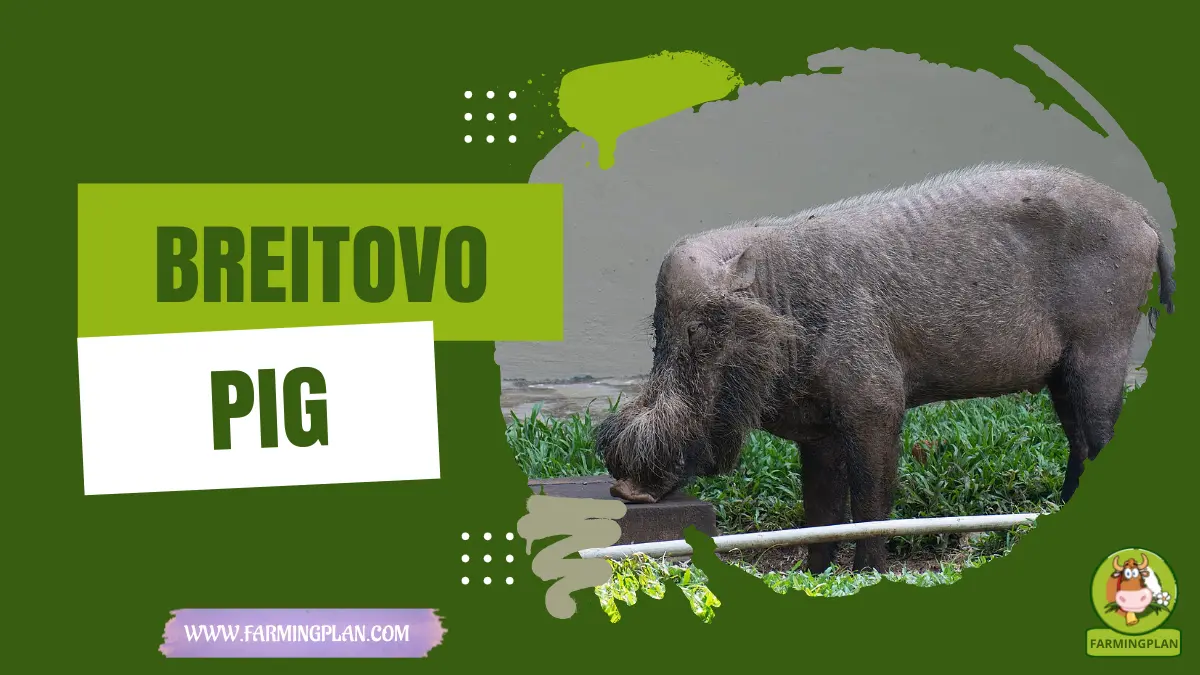
The physical conformation of the Breitovo Pig illustrates generations of purposeful selection for robust skeletal depth, sound legs, and heavy muscling. Mature boars reach 650 to 770 lbs (295 to 350 kg), displaying wide chests and strong bone, while mature sows maintain an efficient, long-bodied frame of 500 to 570 lbs (230 to 260 kg). Early intervention at the first sign of lethargy protects overall Breitovo Pig flock or herd health.
Structural Conformation & Skeletal Frame
Clean leg joints, strong pasterns, and durable black hooves allow these pigs to root, forage, and walk actively across rolling pasture acreage without developing structural lameness. Deep chest cavities provide generous heart and lung capacity for outdoor vitality.
Evaluating breeding stock requires inspecting teat placement, seeking a minimum of 12 to 14 evenly spaced, functional teats to support large nursing litters. Straight top lines and smooth shoulder blending indicate superior carcass muscling.
Breed Evaluation & Functional Standards
Breed standards penalize sway backs, weak hocks, shallow flanks, or coarse shoulders that diminish commercial processing yields. Breeding only sound, structurally correct stock ensures generational herd longevity and dependable slaughter performance. Structured culling and biosecurity protocols strengthen Breitovo Pig genetic quality.
⚡ Breitovo Pig Carcass & Performance Matrix
| Performance Indicator | Standard Benchmark | Operational Advantage for Producers |
|---|---|---|
| Mature Boar Weight | 650 to 770 lbs (295 to 350 kg) | Solid frame substance and heavy terminal muscling |
| Mature Sow Weight | 500 to 570 lbs (230 to 260 kg) | Generous body length with high maternal carrying capacity |
| Carcass Dressing Yield | 72% to 78% dressing yield | Superior lean cut-out with firm, flavorful fat |
| Litter Size & Weaning | 9 to 13 vigorous piglets | High unassisted weaning survival on pasture |
| Forage Efficiency | Superior roughage conversion | Lower grain costs on managed clover and legume pastures |
Breed History, Heritage & North American Development
Developed in the Yaroslavl region of Russia between 1905 and 1934 by crossing local hardy swine with Large White, Middle White, and Danish Landrace genetics; officially recognized in 1940.
Throughout the 19th and 20th centuries, dedicated agricultural stewards recognized the Breitovo Pig for its dependable commercial utility and exceptional resilience. As commercial confinement systems increasingly prioritized high-input specialized lines, heritage caretakers preserved these balanced genetics on diversified farms.
Today, registered breeders, smallholders, and homestead associations champion the Breitovo Pig as an ideal choice for sustainable small-scale farming and regenerative pasture systems. Their adaptability to diversified management makes them a valuable agricultural asset.
Regional agricultural societies and breed clubs continue to document performance benchmarks for the Breitovo Pig, recording fertility percentages, daily gains, and feed conversion efficiency. These empirical records confirm that traditional heritage traits remain directly competitive in modern rural economies. Maintaining clean feeders and sanitized equipment supports sustainable Breitovo Pig care.
Housing, Shelter Dimensions & Winter Hardiness
Housing and paddock design for the Breitovo Pig centers on dry resting shelters, sturdy perimeter fencing, and seasonal wallows for thermoregulation. Providing dry, draft-free huts allows pigs to rest comfortably during wet weather.
Pasture fencing demands robust construction. Two strands of high-tensile electric wire positioned at 6 and 14 inches from the ground, backed by heavy woven hog wire, reliably contain pigs while preventing wild predator ingress.
Fencing Standards & Spatial Density
During bitter winter conditions, pigs huddle together in deep straw nests to conserve body warmth. Pack shelters with dry cereal straw, allowing pigs to burrow completely beneath the bedding to maintain thermal comfort in sub-zero weather. Consistent daily observation helps keepers spot early changes in Breitovo Pig health and behavior.
Because pigs lack functional sweat glands, summer heat management requires shaded loafing areas and clean mud wallows. Evaporative cooling from wallows protects sensitive skin against biting insects and severe sunburn while regulating internal body heat.
Seasonal Mud & Winter Run Protocols
Managing high-traffic paddock gateways requires rotational gravel pads or geotextile footing to curb deep muddy ruts. Rotating pasture paddocks every 3 to 4 weeks allows forage regeneration and interrupts internal parasite life cycles.
Nutritional Requirements, Daily Rations & Feeding Protocols
Formulating cost-effective, nutritionally complete swine rations requires balancing crude protein, digestible amino acids, and dietary fiber. Optimize your herd feeding program following our British Landrace commercial swine feeding manual to maximize daily gain and carcass marbling. Clean housing, fresh water, and balanced nutrition remain essential for Breitovo Pig productivity.
Grower-finisher pigs require 14 to 16 percent crude protein rations balanced with synthetic lysine, methionine, and threonine. Ground barley, field peas, oats, and roasted soybeans provide sustained energy while fostering firm, aromatic fat.
Crude Protein & Dry Matter Formulations
Pasture foraging on clover, alfalfa, and brassicas lowers commercial feed bills by 20 to 35 percent. Supplement pasture pigs with free-choice trace mineralized salt packs containing bioavailable selenium, zinc, and iron to prevent nutritional anemia.
Gestating sows require controlled caloric feeding (4 to 5 lbs daily) to prevent obesity, while lactating sows need high-energy ad-libitum rations (12 to 16 lbs daily) to sustain heavy milk production without losing body condition.
Trace Minerals & Hydration Parameters
Continuous access to clean, fresh water delivered through heavy-duty bite nipples or float-valve troughs is essential. Finishing hogs consume 2 to 5 gallons of water daily, with consumption doubling during hot summer months. Tracking feed intake and body condition supports long-term Breitovo Pig performance.
Health Management, Common Diseases & Biosecurity Standards
Proactive herd wellness protocols significantly reduce mortality and veterinary expenditures. Establish strict quarantine protocols that isolate newly arriving livestock in dedicated pens for at least 30 days before integration into existing pasture groups.
Routine veterinary monitoring should follow established national guidelines, such as the National Pork Board Swine Health & Pasture Biosecurity. Maintaining standardized vaccination records, implementing strategic anthelmintic rotations based on fecal egg counts, and testing water quality prevent chronic parasitic infestation.
Parasite Surveillance & Anthelmintic Management
Biosecurity protocols must restrict farm visitor access, disinfect footwear at barn thresholds, and isolate sick stock immediately upon early clinical symptoms like lethargy or nasal discharge. Prompt veterinary diagnosis and targeted intervention prevent isolated conditions from escalating into herd-wide health challenges. Following biosecurity best practices reduces disease risk in any Breitovo Pig operation.
Internal parasites represent the most persistent subclinical production drain in pasture-based livestock. Utilizing targeted selective treatment (FAMACHA scoring or body condition indexing) ensures dewormers are applied only to animals harboring high parasite burdens, preserving anthelmintic drug efficacy.
Quarantine Protocols & Infectious Disease Biosecurity
Rotational grazing acts as an effective non-chemical parasite barrier. Moving animals to fresh pasture paddocks before grass is grazed below 4 inches prevents stock from ingesting infective L3 larvae concentrated near soil level.
Breeding Management, Incubation & Offspring Care
Selective breeding maintains the carcass marbling, maternal prolificacy, and pasture hardiness of the Breitovo Pig. Evaluate complementary bloodlines with our British Lop rare breed farrowing and breeding guide to design successful breeding schedules. Seasonal adjustments to shelter and diet keep Breitovo Pig thriving year-round.
Gilts should achieve at least 280 to 300 lbs and experience at least two natural estrus cycles before their initial breeding at 8 to 9 months of age. Sound leg conformation, clean vulva development, and calm temperament ensure trouble-free farrowing.
Mating Protocols & Conception Benchmarks
Swine gestation follows the classic ‘3 months, 3 weeks, and 3 days’ benchmark (approximately 114 to 116 days). Move pregnant sows into sanitized farrowing huts bedded with fresh wheat straw 5 days prior to expected farrowing.
Newborn piglets require immediate naval disinfection with 7% tincture of iodine and guaranteed colostrum ingestion within 2 hours of birth. Provide an insulated creep corner with a safe radiant heat source maintained at 88°F to 92°F (31°C to 33°C). Breeders interested in comparing housing, diet, and productivity traits should see our Bazna Pig husbandry guide.
Neonatal Care & Weaning Milestones
Administer supplemental injectable iron dextran (200 mg) at 3 days of age to prevent piglet anemia. Wean piglets gradually at 4 to 6 weeks onto highly digestible starter crumbles before transitioning them to pasture paddocks. Proper record-keeping makes breeding and culling decisions easier for Breitovo Pig keepers.
US Ownership Budget & Annual Maintenance Costs
Developing an accurate operational budget is essential for profitable pasture pork production with the Breitovo Pig. While initial capital covers breeding stock, perimeter fencing, and shelter huts, ongoing expenses center on supplemental grain, minerals, and veterinary care.
Budgeting transparently prevents cash flow surprises while ensuring your herd receives balanced nutrition across every growth phase. Formulating bulk on-farm grain rations and maximizing pasture forage lowers per-head maintenance overhead.
⚡ Estimated Annual Budget & Maintenance Costs (USD)
| Expense Category | Estimated Range (Per Head/Year/USD) | Operational Management Notes |
|---|---|---|
| Supplemental Grain & Protein Feed | $160 – $290 | Locally milled barley, field peas, and protein balancer |
| Pasture Upkeep & Seed Balancers | $35 – $70 | Rotational pasture clover seed, lime, and paddock upkeep |
| Veterinary Care & Deworming | $25 – $50 | Iron injections, erysipelas vaccines, and seasonal dewormers |
| Bedding & Shelter Straw | $20 – $45 | Clean cereal straw bales for deep winter nesting huts |
| Fencing Upkeep & Electric Power | $20 – $40 | Electric fencer battery upkeep, wire insulators, and gate maintenance |
| Total Annual Operating Cost | $260 – $495 | Average annual maintenance cost per breeding or finishing hog |
Selling specialty freezer pork, artisanal bacon, lard, and registered breeding stock provides substantial returns that reward thoughtful pasture swine management. Providing adequate space and ventilation prevents common stress issues in Breitovo Pig.
🐖 Breitovo Pig Swine Daily Feed Calculator
Calculate daily grower/finisher rations (lbs), monthly 50-lb feed bags, pen space, and water needs for your Breitovo Pig pigs.
Frequently Asked Questions (FAQ)
What unique traits make Breitovo pigs exceptionally cold-hardy?
Breitovo pigs develop a dense, protective bristle coat with thick underdown in winter and carry a deep layer of subcutaneous fat, allowing them to thrive in sub-zero northern conditions.
What traditional feeds do Breitovo pigs convert most efficiently?
Bred in northern rural regions, they excel at converting root vegetables, boiled potatoes, dairy whey, clover pasture, and grain byproducts into high-quality pork and lard.
How many piglets do Breitovo sows typically farrow and raise?
Sows consistently farrow 10 to 12 piglets per litter, producing abundant milk that enables piglets to reach heavy 60-day weaning weights above 40 lbs.
What is the physical conformation of the Breitovo pig?
They feature a long, deep-sided body, broad back, solid muscular hams, and a wide dished head with semi-lop ears pointing forward without obstructing vision.
What are the core shelter requirements for outdoor wintering?
Provide dry, draft-free hoop barns or insulated wooden sheds packed with deep wheat straw; deep bedding generates composting warmth, eliminating the need for electric heaters.
Expert Verdict & Next Steps
The Breitovo Pig represents a premier agricultural asset that balances production yield, environmental adaptability, and reliable livestock returns. By adhering to structured management protocols and integrating best practices from our Cyprus Honey Bee Mediterranean apiary management guide, producers establish healthy, profitable farm enterprises.
Careful pasture rotation, balanced dry matter nutrition, and strict preventative biosecurity ensure long-term flock and herd vitality. Investing in quality breeding stock and maintaining clean shelter infrastructure provides reliable agricultural dividends across every season.
Strategic Seasonal Management Checklist
Establish a calendar-based management routine that aligns vaccinations, pasture turnouts, and breeding cycles with regional weather patterns. Regularly updating farm records and auditing feed conversion efficiency protects livestock health and maintains agricultural returns.
📚Agricultural Reference & Scientific Citations
Standards and physiological data referenced in this guide comply with USDA APHIS Swine Health, FAO Domestic Animal Diversity Information System, and the American Veterinary Medical Association (AVMA).