

| Characteristic | Breed Standard | Commercial Sheep Significance |
|---|---|---|
| Breed Classification | Giant Lop-Eared Alpine Meat Sheep (Ovis aries) | Superior carcass mass, high dressing percentage, and rapid average daily gain |
| Mature Ram Weight | 220 to 285 lbs (100 to 130 kg) | Heavy terminal sires infusing muscle volume and length in crossbred lambs |
| Mature Ewe Weight | 175 to 220 lbs (80 to 100 kg) | Large-framed maternal dams with deep pelvic clearance and high milk yield |
| Withers Height | Rams: 34 to 38 in (86 to 96 cm); Ewes: 30 to 34 in (76 to 86 cm) | Tall, long-bodied chassis maximizing loin eye length and leg muscle cuts |
| Head & Ear Morphology | Pronounced Roman nose, hornless (polled), long pendulous lop ears | Ears hang downward well past the jawline; dark spotting on ears tolerated |
| Lamb Growth Rate | 0.75 to 1.1 lbs (340 to 500 grams) per day | Rapid pre-weaning growth yielding prime milk lambs at 60 to 75 days |
| Average Productive Life | 8 to 12 years | Exceptional longevity and sound udder retention over repeated lambings |
Breed Overview and Production Statistics
The Biellese sheep—known throughout its native northern Italy as the *Razza Biellese* or the Giant of the Piedmont—stands among the heaviest, tallest, and most muscular indigenous domestic sheep breeds in continental Europe. Originating in the alpine valleys, subalpine foothills, and fertile plains of the Biella and Vercelli provinces in Piedmont, this imposing white meat sheep represents an exceptional triumph of Alpine transhumance pastoralism. Celebrated for its long pendulous ears, pronounced Roman profile, rapid lamb growth velocity, and lean, tender mutton, the Biellese commands respect across European sheep production. Seasonal adjustments to shelter and diet keep Biellese sheep thriving year-round.
Unlike small, delicate heritage sheep that struggle to produce commercial market weights, mature Biellese rams routinely reach 220 to 285 pounds while remaining surefooted on steep Alpine summer pastures. Simultaneously, Biellese ewes produce abundant milk, allowing them to rear heavy twin lambs to weaning weights of 70 to 90 pounds in under 90 days. For commercial sheep producers, terminal sire graziers, and homestead flock managers, understanding the Biellese breed’s nutritional demands, reproductive cycle, housing design, and preventative veterinary care unlocks superior meat yields per acre. Proper record-keeping makes breeding and culling decisions easier for Biellese sheep keepers.
Piedmont Alpine History and Transhumance Migration
The genealogy of the Biellese sheep is deeply rooted in the ancient transhumance sheep routes connecting the Western Alps to the Po River plain. Historically known as the *Piemontese delle Alpi* (Piedmont Alpine sheep) or the Bergamasca-derived lop-eared group, local shepherds in the valleys of Cervo, Sesia, and Elvo selectively bred large-framed alpine sheep for centuries. The breed was adapted to spend June through September grazing high alpine meadows at 6,000 to 9,000 feet, descending in October to winter in the low-lying crop stubble and river plains of Piedmont and Lombardy.
In 1942, formal registration and standardization protocols were initiated by the Italian Ministry of Agriculture, establishing the Biellese as a distinct national breed. By the mid-20th century, the breed had become the premier terminal meat sire across northern Italy, widely used to crossbreed with local dairy and mountain sheep to boost market lamb carcass yields. Today, the National Association of Italian Pastoral Sheep Breeders (*ASSONAPA*) governs the official herdbook, conducting progeny testing and linear conformation scoring to preserve genetic purity while advancing muscular carcass performance. Providing adequate space and ventilation prevents common stress issues in Biellese sheep.
Physical Conformation and Conformation Standards
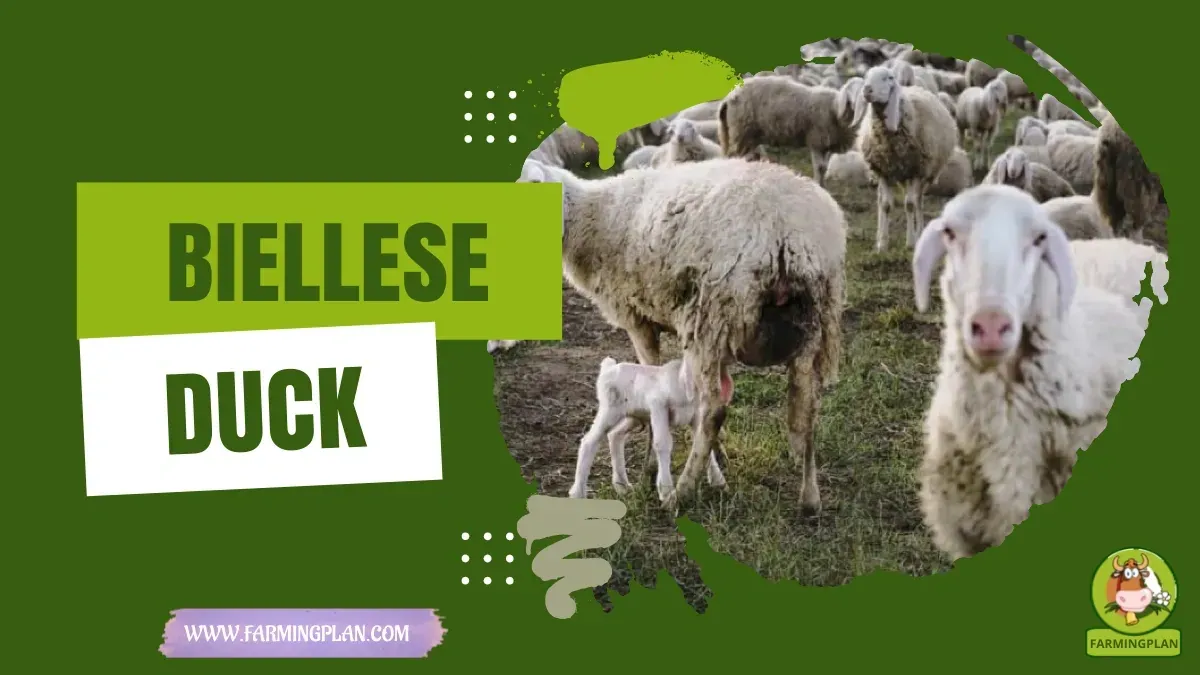
The Biellese sheep displays an aristocratic, powerful frame characterized by outstanding length, bone density, and heavy muscling. The head is large, long, and dry, featuring a strongly convex Roman profile (*profilo montonino*) extending from the forehead down to a broad, dark-pigmented muzzle. Both sexes are naturally hornless (polled); the presence of horns or scurs is cause for studbook disqualification. The eyes are lively, large, and alert, set beneath well-developed brow arches. Understanding breed-specific traits helps maximize Biellese sheep longevity and output.
The most visually striking facial feature is the ears: long, broad, flat, and pendulous, hanging downward well below the jawline and carried with slight forward curvature. The neck is long, strong, and muscular, transitioning smoothly into broad, well-laid shoulders. The chest is deep and voluminous, providing generous thoracic space for cardiopulmonary endurance during steep mountain trekking. The back and loins are remarkably broad, level, and heavily muscled, connecting to a wide, gently sloping rump. The limbs are long, heavy-boned, and straight, equipped with hard, durable hooves that resist cracking on rocky alpine scree.
Fleece Characteristics and Wool Harvesting
The fleece of the Biellese sheep is classified as semi-open, coarse carpet wool, uniformly white in color. Small black or reddish-brown speckles (*moschettature*) on the ears, face, and lower shanks are accepted in the breed standard, but colored spots within the main fleece body are discouraged. The wool covers the trunk, neck, and upper chest, leaving the head, ears, throat, belly, and lower limbs bare. Routine preventive care saves time and lowers veterinary costs for Biellese sheep.
The staple length averages 3.5 to 5.5 inches (90 to 140 mm) with a fiber diameter ranging from 34 to 42 microns. Flocks are shorn twice annually—in spring prior to alpine transhumance turnout and again in autumn upon returning to lowland paddocks. Annual fleece yields average 6.5 to 9.0 pounds (3.0 to 4.2 kg) per mature ram and 5.0 to 7.0 pounds (2.2 to 3.2 kg) per mature ewe. The wool is durable and springy, commonly utilized in mattress manufacturing, coarse felt production, and regional woven textiles. Matching forage or ration quality to life stage optimizes Biellese sheep growth.
Mutton Quality, Carcass Yield, and Terminal Sire Power
The commercial excellence of the Biellese sheep lies in its terminal mutton production. The carcass produces exceptionally lean, tender meat with a high meat-to-bone ratio and minimal excess subcutaneous trim fat. Lambs possess wide, muscular loin eyes (*longissimus dorsi*) and deeply fleshed hind legs that command premium pricing in wholesale and direct-to-consumer culinary markets.
Market lambs are marketed primarily under two commercial categories: light milk lambs (*agnello da latte*), weighing 26 to 33 lbs (12 to 15 kg) at 30 to 45 days of age, and heavy weaned market lambs (*agnellone*), weighing 85 to 110 lbs (38 to 50 kg) at 100 to 120 days. Dressing percentages consistently range between 55% and 60% in prime finished lambs. When Biellese rams are used as terminal crossbreeding sires on smaller, hardier mountain ewes, their crossbred progeny gain up to 25% faster and yield substantially higher retail meat cuts without increasing maternal calving or lambing difficulties. Gradual dietary transitions protect digestive stability in Biellese sheep.
Nutritional Requirements for High-Mass Alpine Ruminants
Because the Biellese is a large-framed, heavy-muscled ovine breed, its daily dry matter intake and nutritional demands exceed those of smaller heritage hill breeds. Maintaining body condition in a 200-lb ewe carrying twins requires thoughtful pasture budgeting and strategic energy supplementation. To evaluate alternative bloodlines and practical management routines, check our Brazilian Somali Sheep overview.
During the spring and summer grazing season, Biellese flocks thrive on rotational pasture swards comprising orchardgrass, meadow fescue, perennial ryegrass, red clover, and alfalfa. In the final six weeks of gestation and during peak lactation, supplement forage with 1.5 to 2.5 lbs of balanced energy concentrate (rolled barley, steam-flaked corn, beet pulp, and soybean meal) per ewe daily to prevent pregnancy toxemia (ketosis) and support high milk production. Selecting healthy foundation stock is the cornerstone of successful Biellese sheep management.
Maintain continuous access to loose trace mineral salt specifically formulated for sheep, providing essential selenium, cobalt, zinc, and iodine while ensuring copper levels remain safely below ovine toxicity thresholds. Review our comprehensive guide to sheep farming and flock feeding systems to structure precise seasonal feeding schedules. Good predator-proofing and dry bedding safeguard Biellese sheep comfort in harsh weather.
Housing, Paddock Design, and Barn Infrastructure
While Biellese sheep spend summer months outdoors in open alpine environments, their large body mass and winter lowland management necessitate well-designed barn facilities. Box stalls and group pens should provide at least 20 to 25 square feet of bedded resting area per adult ewe, with maternity lambing jugs measuring at least 6 feet by 6 feet to comfortably accommodate the large ewe and her lambs.
Barn ventilation must be clean and continuous; large ruminants generate significant respiratory moisture and heat, which must be exhausted through open ridge vents and adjustable sidewall curtains without creating drafts at ground level. Feed bunks and hay racks must be heavily constructed and positioned at an appropriate height (14 to 18 inches off the ground) to prevent neck rubbing and fleece contamination. Perimeter fencing for pastures should stand at least 48 inches (120 cm) high, using 4×4-inch woven wire or five strands of high-tensile electrified wire with solid wooden corner posts. Monitoring water quality and mineral balance directly benefits Biellese sheep vitality.
Veterinary Protocols, Health Management, and Biosecurity
Proactive herd health surveillance is vital to protecting valuable breeding stock against infectious diseases, following biosecurity standards from the USDA Animal and Plant Health Inspection Service. Administer annual core Clostridial vaccines (CDT covering enterotoxemia and tetanus) to ewes four to six weeks prior to lambing, ensuring maternal antibodies are concentrated in the colostrum. Practical hands-on husbandry ensures consistent results when raising Biellese sheep.
Because Biellese sheep possess large, pendulous lop ears, handlers must regularly inspect the ear canals for grass seeds, dirt accumulation, and parasitic ear mites (*Psoroptes cuniculi*). In wet pasture environments, hooves must be trimmed every 8 to 12 weeks; although their hooves are hard, excessive moisture can encourage foot scald (*Dichelobacter nodosus*). Maintain a zinc sulfate footbath protocol during seasonal pasture transitions. For a complete clinical overview of ovine pathology, read our definitive treatise on sheep diseases, symptoms, and biosecurity protocols.
Reproduction, Lambing Ease, and Maternal Performance
The reproductive performance of the Biellese ewe is among the finest of any large meat sheep breed. Ewes reach sexual maturity between 10 and 12 months of age, with many flocks managed on an accelerated lambing schedule of three lambings in two years due to their low seasonal anestrus sensitivity. The gestation period averages 147 to 150 days. Early intervention at the first sign of lethargy protects overall Biellese sheep flock or herd health.
Lambing prolificacy averages 140% to 160% in mature ewes, with twins being common. Calving and lambing difficulty is remarkably low; despite the heavy birth weights of the lambs (averaging 9 to 12 lbs or 4.0 to 5.5 kg), the ewe’s wide, sloping pelvis and long pelvic canal facilitate smooth, unassisted delivery. Biellese mothers produce generous milk volumes (often exceeding 2.5 to 3.5 lbs daily during peak lactation), allowing them to rear two fast-growing lambs without supplemental bottle feeding. Structured culling and biosecurity protocols strengthen Biellese sheep genetic quality.
Annual Enterprise Budget and Commercial Economics
Investing in Biellese genetics offers strong commercial returns through heavy lamb weaning weights and carcass premiums. While registered seedstock rams command purchase prices between $800 and $1,800, their terminal crossbreeding impact elevates market lamb weights across the entire herd. Below is an annual enterprise budget for an adult Biellese breeding ewe managed in a pasture-and-forage system.
| Budget Category | Annual Estimate (USD) | Operational Strategy & Notes |
|---|---|---|
| Pasture Grazing & Hay Forage | $75 – $110 | Rotational pasture grazing plus 800 lbs of winter grass-alfalfa hay |
| Gestation & Lactation Concentrate | $40 – $65 | 150 lbs of high-energy grain balancer fed during critical weeks |
| Trace Mineral Licks & Salt | $10 – $18 | Loose ovine-specific mineral mix and white salt blocks |
| Vaccines & Veterinary Supplies | $14 – $24 | CDT pre-lambing vaccine, targeted deworming, footbath zinc sulfate |
| Shearing Labor & Wool Handling | $12 – $20 | Twice-annual professional shearing and wool bagging |
| Bedding & Stall Maintenance | $15 – $25 | Clean cereal straw or wood shavings for indoor lambing jugs |
| Contingency & Replacement Reserve | $20 – $35 | Reserve for veterinary emergency care and breeding ram turnover |
| Total Projected Annual Operational Cost | $186 – $297 | Highly profitable when marketing 1.4 heavy lambs at $180+ each |
To further examine premier meat, wool, and dual-purpose sheep breeds, explore our dedicated sheep farming resource hub. Compare the Biellese’s massive frame with arid-adapted sheep in our Bibrik sheep breed profile, study international commercial flock models in our guide to global meat and wool sheep breeds, or explore broader livestock husbandry techniques across our livestock farming portal. Maintaining clean feeders and sanitized equipment supports sustainable Biellese sheep care.
🐑 Biellese Sheep Flock Forage & Pasture Calculator
Calculate winter hay bales, daily pasture forage intake, minerals, and water needs for your Biellese Sheep flock.
Frequently Asked Questions
How big does a Biellese sheep get?
The Biellese is one of the largest sheep breeds in Europe. Mature rams typically weigh between 220 and 285 pounds (100 to 130 kg) with a withers height up to 38 inches (96 cm), while mature ewes weigh between 175 and 220 pounds (80 to 100 kg).
What is the defining head feature of the Biellese sheep?
The Biellese sheep possesses a strongly curved Roman nose profile and very long, broad, pendulous lop ears that hang downward well below the jawline. Both rams and ewes are completely polled (hornless).
What are Biellese sheep primarily used for?
The Biellese is primarily a specialized meat sheep breed, prized for heavy market lamb production and as a terminal crossbreeding sire. Its lean, tender mutton carries a high dressing percentage (55% to 60%) with excellent retail meat yield.
How fast do Biellese lambs grow?
Biellese lambs have an exceptional growth rate, averaging 0.75 to 1.1 pounds (340 to 500 grams) of gain per day under good maternal milk production, easily reaching 85 to 110 pounds at 100 to 120 days of age.
Do Biellese sheep have horns?
No, Biellese sheep are naturally polled in both rams and ewes. The breed standard strictly disqualifies any animals displaying horns or scurs from official herdbook registration.
Conclusion and The Alpine Giant Legacy
The Biellese sheep stands as a magnificent achievement of Italian pastoral craftsmanship, combining monumental physical scale with gentle docility and rapid lamb growth. For commercial sheep producers seeking a terminal sire that adds immediate carcass mass and length of loin, or smallholders desiring a robust dual meat and carpet-wool animal, this Alpine giant delivers unmatched production performance. By prioritizing high-quality forage nutrition, spacious lambing infrastructure, and attentive hoof care, producers ensure the noble legacy of the Razza Biellese continues to thrive across modern pastures for generations to come.

📚Agricultural Reference & Scientific Citations
Standards and physiological data referenced in this guide comply with USDA APHIS Small Ruminant Health, The Livestock Conservancy, and the American Veterinary Medical Association (AVMA).


