

📊 Badger Face Welsh Mountain Sheep at a Glance: Key Specifications & Production Benchmarks
| Scientific Classification | Ovis aries (Celtic Hill Mountain Breed) |
| Welsh Native Heritage Name | Defaid Idloes (Ancient Welsh Mountain lineage) |
| Mature Ram Body Weight | 120 to 160 lbs (55 to 73 kg) |
| Mature Ewe Body Weight | 80 to 110 lbs (36 to 50 kg) |
| Two Distinct Color Varieties | Torddu (white with black belly/stripes) & Torwen (black with white belly/stripes) |
| Horn Conformation Profile | Rams carry heavy dark spiral horns; ewes are naturally polled |
| Maternal Lambing Ability | Exceptional; self-reliant unassisted lambing on open hill pastures |
| Fleece & Fiber Quality | Dense, firm kemp-free fleece; staple length 3 to 4 inches; 28-32 microns |
| Primary Agricultural Purpose | Prime sweet mountain lamb, hand-spinning specialty fleece, hill grazing |
| Hardiness & Foraging Range | Unrivaled; thrives on rough bracken, heather, and steep upland forage |
The Badger Face Welsh Mountain Sheep, known in its native Wales as Defaid Idloes, represents one of the oldest, hardiest, and most aesthetically striking mountain sheep breeds in the British Isles. Documented in Celtic folklore and medieval Welsh agricultural texts for over a thousand years, this rugged, athletic small ruminant was bred to forage steep, windswept Cambrian mountains where lush lowland pastures do not exist. Good predator-proofing and dry bedding safeguard Badger Face Welsh Mountain Sheep comfort in harsh weather.
Whether you are grazing marginal upland topography through our comprehensive sheep farming and flock husbandry pillar or producing specialty artisan wool for fiber spinning, Badger Face sheep offer outstanding survival grit. Unlike heavy commercial meat sheep that require constant grain supplementation and sheltered lambing barns, Badger Face ewes lamb unassisted on open hillsides, fiercely defending their lambs against predators.
The breed exists in two distinct, eye-catching color patterns: the famous Torddu (‘black belly’), featuring a creamy-white fleece with dramatic black eye stripes, jaw lines, and a solid black underbelly; and the reverse Torwen (‘white belly’), which features a dark black or brown body accented by crisp white markings. In this detailed husbandry manual, we analyze hill conformation, pasture stocking, fleece shearing, lambing vigor, and ovine biosecurity. Monitoring water quality and mineral balance directly benefits Badger Face Welsh Mountain Sheep vitality.
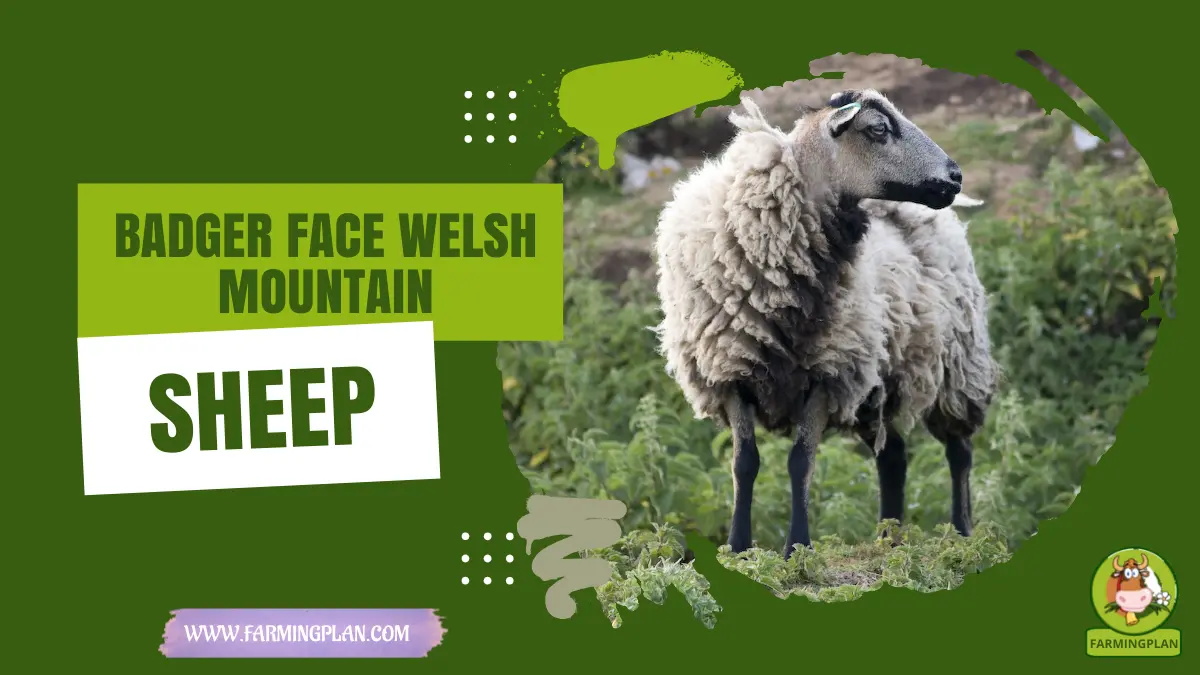
Physical Characteristics & Breed Standards
The Badger Face Welsh Mountain sheep is a compact, alert, athletic hill sheep displaying remarkable agility on steep gradients and rocky bluffs. Producers planning a diversified homestead operation often cross-reference our Bleu Du Maine Sheep breed and care guide.
Their skeletal framework is fine-boned yet remarkably dense and strong, supporting lean, muscular cuts with excellent meat-to-bone ratios without excessive carcass tallow. Practical hands-on husbandry ensures consistent results when raising Badger Face Welsh Mountain Sheep.
Conformation Standards & Anatomical Structure
The head is clean, fine, and carried high and alertly, free of wool across the face. In rams, the head is adorned with magnificent, dark, heavily fluted spiral horns that curve backward and outward in a wide arc; ewes are naturally hornless (polled), though small scurs are occasionally seen.
The body is compact, with a level topline, well-sprung ribs, and deep, muscular hindquarters. The chest is moderately broad and deep, housing powerful lungs suited for thin mountain air and continuous climbing.
The tail is long, thin, and wool-covered, reaching down to the hocks. The legs are clean, hard-boned, and free of wool below the knees and hocks, ending in hard, jet-black hooves that are naturally resistant to footrot and stone bruising. The fleece is dense, firm, and water-repellent, shielding the sheep against driving rains. Early intervention at the first sign of lethargy protects overall Badger Face Welsh Mountain Sheep flock or herd health.
Size, Weight Benchmarks & Color Variations
Mature rams weigh between 120 and 160 pounds (55 to 73 kg), while mature hill ewes weigh a thrifty 80 to 110 pounds (36 to 50 kg).
In the Torddu pattern, the body wool is creamy white, adorned with bold black badger-like stripes extending from the muzzle over the eyes to the jaw, continuing in a solid black band down the throat, chest, belly, and legs. Structured culling and biosecurity protocols strengthen Badger Face Welsh Mountain Sheep genetic quality.
In the Torwen pattern, the body wool is dark black-brown, accented by white badger stripes over the eyes, white jawlines, a white underbelly, and white accents on the underside of the tail.
📊 Badger Face Welsh Mountain Sheep Performance & Production Matrix
| Hill Ovine Metric | Badger Face Welsh Mountain | Hebridean Sheep | Texel Commercial Sheep |
|---|---|---|---|
| Native Origin & Habitat | Cambrian Mountains, Wales | Scottish Western Isles | Texel Island, Netherlands |
| Mature Ewe Weight | 80 to 110 lbs (Thrifty Hill) | 75 to 95 lbs (Primitive) | 160 to 200 lbs (Heavy Lowland) |
| Unassisted Lambing Vigor | Exceptional (100% on open hill) | Exceptional (Primitive ease) | Moderate (Frequent dystocia) |
| Foraging Capability | Superior (Heath, moor, weeds) | Superior (Browses rough scrub) | Poor (Requires lush ryegrass) |
| Fleece Weight & Micron | 3.5 to 5.0 lbs (28-32 microns) | 3.0 to 4.5 lbs (Black primitive) | 8.0 to 12.0 lbs (Medium wool) |
Breed History, Heritage & North American Development
The Badger Face Welsh Mountain sheep is a direct descendant of the ancestral Celtic sheep kept by indigenous British tribes prior to the Roman conquest of Britain. Archaeological excavations of iron-age settlements throughout Wales have unearthed ovine skulls possessing the exact horn architecture and small stature of modern Badger Face sheep.
Throughout the Middle Ages, Welsh shepherds recognized the hardiness of the Torddu and Torwen color morphs, preserving them in remote valleys like Idloes in Montgomeryshire. They were praised for producing sweet, lean mountain lamb characterized by rich gamey flavor, and dense wool that could be woven into traditional Welsh wool flannel blankets. Maintaining clean feeders and sanitized equipment supports sustainable Badger Face Welsh Mountain Sheep care.
In 1976, Welsh hill farmers organized the Badger Face Welsh Mountain Sheep Society to formally register flocks, standardize show conformation, and preserve pure genetics. Today, the breed enjoys a passionate international following among conservationists, conservation graziers, and artisanal wool crafters.
Housing, Shelter Dimensions & Winter Hardiness
Housing Badger Face Welsh Mountain sheep centers on extensive hill pasture grazing rather than indoor confinement. Their dense water-repellent fleece and ancient mountain constitution allow them to live outdoors year-round in harsh climates. Consistent daily observation helps keepers spot early changes in Badger Face Welsh Mountain Sheep health and behavior.
Spatial Density & Enclosure Engineering
Stocking density on upland pasture ranges from 3 to 5 ewes per acre on improved grass, down to 1 ewe per 2 to 4 acres on rough brushy hillside range. Provide natural shelterbelts or simple three-sided timber run-in shelters for refuge during freezing freezing rainstorms.
Fencing must be well-engineered: Badger Face sheep possess exceptional jumping ability developed from centuries of bounding across mountain crags. Install 42 to 48-inch woven wire field fence or 5-to-6-strand high-tensile electric fencing with secure ground aprons to deter coyotes.
Provide clean, freeze-proof stock tanks or clean natural streams. An adult ewe consumes 1.5 to 2.5 gallons of fresh water daily during warm weather. Clean housing, fresh water, and balanced nutrition remain essential for Badger Face Welsh Mountain Sheep productivity.
Nutritional Requirements, Daily Rations & Feeding Protocols
Badger Face sheep are thriftiness personified. Their digestive tracts are adapted to extracting rich nutrition from coarse grasses, mountain heather, gorse shoots, and broadleaf weeds that standard lowland sheep cannot digest.
Crude Protein Benchmarks Across Life Stages
Maintain breeding ewes on pasture browse and mixed grass hay. During the final 4 weeks of gestation, supplement hill pasture with 0.5 to 0.75 lb of whole oats or barley per ewe daily to support fetal development and prevent pregnancy toxemia. Tracking feed intake and body condition supports long-term Badger Face Welsh Mountain Sheep performance.
Over-feeding high-protein grain concentrates must be strictly avoided; over-conditioned hill ewes experience difficult lambing and fatty liver syndrome. Always supply loose ovine mineral salt containing selenium and zinc free-choice, following nutritional standards in our sheep feeding and pasture manuals.
Never feed general livestock feed containing copper to Badger Face sheep, as all ovine breeds accumulate copper in hepatic tissues, triggering fatal hemolytic crises.
Health Management, Common Diseases & Biosecurity Standards
Badger Face sheep possess remarkable natural immunity to footrot, internal parasites, and flystrike, but routine preventive management preserves flock vitality. Following biosecurity best practices reduces disease risk in any Badger Face Welsh Mountain Sheep operation.
Biosecurity Protocols & Veterinary Defenses
Their hard, black hooves rarely suffer from foot rot unless forced to stand in deep, stagnant lowland mud. Trim hooves annually if pasture conditions do not provide natural stone wear.
Monitor barber pole worm (*Haemonchus contortus*) using the FAMACHA eye-mucosa scoring protocol, deworming only individuals scoring 4 or 5. Vaccinate annually with CD&T toxoid against Enterotoxemia and Tetanus. Comply with federal health standards from the USDA APHIS National Scrapie Program and review shelter blueprints in our predator-proof sheep housing guide. Seasonal adjustments to shelter and diet keep Badger Face Welsh Mountain Sheep thriving year-round.
Shear adult sheep annually in late spring (May to June), harvesting a clean 3.5-to-5.0-pound fleece prized by hand-spinners for its natural undyed color contrasts.
Breeding Hill Genetics, Lambing Vigor & Flock Selection
Badger Face ewes are seasonal autumn breeders with a 145-to-150-day gestation window. Maintain a breeding ratio of 1 horned ram per 35 to 45 ewes.
Ewes lamb effortlessly in open pastures with zero human intervention; lambs are born small, lively, and fully covered in dense weather-resistant down. Lambs stand and nurse within 10 minutes of birth and follow dams across steep hillsides by day two. Proper record-keeping makes breeding and culling decisions easier for Badger Face Welsh Mountain Sheep keepers.
Maternal instincts are fierce: ewes will lower their heads and stomp their feet to drive away foxes and hunting dogs. Wean lambs at 14 to 16 weeks, comparing thriftiness with primitive northern short-tailed breeds like the Hebridean sheep.
US Ownership Budget & Annual Maintenance Costs
The capital budget for establishing a heritage Badger Face Welsh Mountain flock is modest due to their low feed requirements and zero need for expensive indoor lambing infrastructure. Providing adequate space and ventilation prevents common stress issues in Badger Face Welsh Mountain Sheep.
💰 Estimated Annual Budget & Maintenance Costs (USD)
| Budget Category | Item Description & Scope | Initial Capital Outlay | Annual Recurring Expense |
|---|---|---|---|
| Registered Breeding Trio (1 Ram, 2 Ewes) | Purebred Badger Face stock from certified pedigree flock | $900 – $1,600 | $0 (self-replenishing flock) |
| High-Tensile Field Fencing | 48-in woven wire field fence and steel T-posts (150 linear ft) | $500 – $1,000 | $30 – $60 (wire upkeep) |
| Three-Sided Pasture Shed | Timber run-in field shed (10×16 ft) for winter storm protection | $450 – $850 | $30 – $50 (hardware upkeep) |
| Winter Grass-Hay Bales | Clean grass-clover hay bales for winter months (approx. 20 bales/year) | $50 (initial bales) | $160 – $240 |
| Copper-Free Sheep Minerals | Loose ovine mineral salt, kelp meal, and covered mineral feeder | $40 | $50 – $80 |
| CD&T Vaccines & Dewormers | CD&T vaccines, FAMACHA card, dewormer doses, hoof shears | $50 | $45 – $75 |
| Total Badger Face Flock Budget | Complete initial setup costs and recurring annual maintenance for trio | $1,990 – $3,740 | $315 – $505 / year |
🐑 Badger Face Welsh Mountain Sheep Flock Forage & Pasture Calculator
Calculate winter hay bales, daily pasture forage intake, minerals, and water needs for your Badger Face Welsh Mountain Sheep flock.
Frequently Asked Questions (FAQ)
What is the difference between Torddu and Torwen Badger Face sheep?
Torddu (‘black belly’) has a white fleece with black eye stripes and a black belly, while Torwen (‘white belly’) has a black-brown body with white eye stripes and a white belly.
Do Badger Face Welsh Mountain sheep have horns?
Rams carry large, magnificent spiral horns that curve outward and backward, while ewes are naturally hornless (polled) or carry small scurs.
How big do Badger Face Welsh Mountain sheep get?
They are a compact hill breed: mature rams weigh between 120 and 160 pounds, while mature ewes weigh between 80 and 110 pounds.
Do Badger Face ewes need help giving birth?
No, they are celebrated for unassisted, easy lambing on open pastures, producing vigorous lambs that get up and nurse within minutes.
What kind of wool does a Badger Face sheep produce?
They produce a dense, firm fleece weighing 3.5 to 5.0 pounds (28-32 microns) with striking natural two-tone pigmentation highly prized by hand-spinners.
Can Badger Face sheep survive on rough pasture browse?
Yes, they thrive on marginal upland pasture, heather, gorse, and broadleaf weeds where commercial lowland sheep would starve.
Expert Verdict & Next Steps for Conservation Graziers
The Badger Face Welsh Mountain Sheep is an extraordinary living heritage to ancient Celtic pastoralism, delivering unmatched mountain hardiness, unassisted lambing vigor, and artisanal two-tone fleece in a manageable, thrifty package. For homesteaders with rough hillside acreage or fiber enthusiasts seeking striking natural fleeces, the Badger Face is an incomparable asset.
By providing secure 48-inch perimeter fencing, clean winter grass hay, and loose copper-free minerals, your hill flock will thrive for years with minimal labor inputs. Explore our complete guide to heritage and mountain sheep breeds to discover more resilient livestock for your homestead.
📚Agricultural Reference & Scientific Citations
Standards and physiological data referenced in this guide comply with USDA APHIS Small Ruminant Health, The Livestock Conservancy, and the American Veterinary Medical Association (AVMA).


