

⚡ Artois Hound Dog at a Glance: Key Specifications & Benchmarks
| Scientific Classification | Canis lupus familiaris |
| Breed Classification | Medium Scent Hound (FCI Group 6: Scenthounds) |
| Country of Origin | Northern France (historic Artois province) |
| Mature Male Body Weight | 62 to 66 lbs (28 to 30 kg); height 21 to 23 inches |
| Mature Female Body Weight | 55 to 62 lbs (25 to 28 kg); height 20 to 22 inches |
| Coat Texture & Pattern | Short, dense tricolor (dark fawn, black mantle, clear white) |
| Primary Farm & Field Role | Scent tracking, hare hunting, estate predator warning |
| Olfactory & Scent Ability | Elite cold-trailing capability across dense briars and woodland |
| Vocal Profile & Baying | Deep, melodious hound voice; distinctive perimeter alarm |
| Temperament & Sociability | Balanced, affectionate with family, calm in pack kennels |
| Exercise Requirement | High; minimum 60 to 90 minutes vigorous daily tracking activity |
| Life Expectancy | 11 to 14 years with sound conditioning and balanced diet |
The Artois Hound Dog (historically known in French venerie as the Chien d’Artois) represents one of Europe’s most storied and pure scent tracking breeds. Celebrated by French royalty including Henry IV and Louis XIII, this medium-sized, athletic hound combines powerful tracking stamina with an affectionate, steady family temperament.
Modern rural acreage owners and sporting enthusiasts integrating working canines through our comprehensive farm and working dogs guide value the breed’s versatility. Beyond competitive field trials, Artois Hounds serve as vigilant farmstead guardians, quickly alerting handlers to encroaching predators such as foxes, coyotes, and feral swine.
Unlike fragile or hyper-reactive hounds, the Artois Hound Dog possesses a robust physical frame, tight weather-resistant coat, and composed psychological resilience. Whether tracking game through thorny brambles or relaxing beside the farm family hearth, their adaptable nature makes them a rewarding partner for dedicated rural households.
Physical Characteristics & Breed Standards
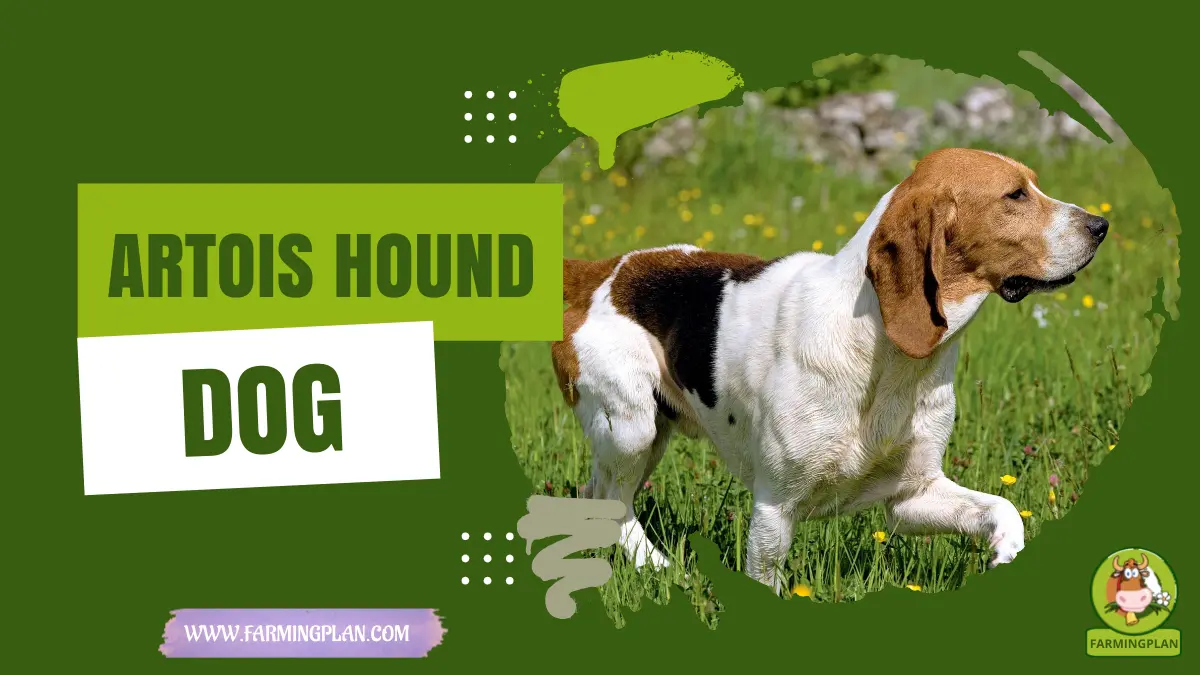
The Artois Hound Dog is a robust, well-proportioned hound displaying noticeable muscle definition without being excessively heavy or slow. Males measure 21 to 23 inches (53 to 58 cm) at the withers and weigh 62 to 66 lbs, while females stand 20 to 22 inches (50 to 55 cm) and weigh 55 to 62 lbs. The skull is broad and flat, featuring a pronounced stop and strong muzzle equipped with a powerful scissors bite.
Tricolor Coat & Ear Conformation
The coat is short, dense, and flat-lying, engineered to shed burrs, mud, and water effortlessly during intense woodland scours. Coloration is strictly tricolor: a dark fawn ground color with a black mantle (or large patches) and crisp white markings across the chest, muzzle, legs, and tail tip. The ears are set at eye level, flat and wide, reaching almost to the tip of the nose when drawn forward.
The chest is broad and deep, extending down to elbow level to house powerful lungs and an efficient cardiovascular system capable of sustained galloping pursuit. The tail is carried high in a saber curve, often ending in a white brush that remains clearly visible to hunters through thick brush and tall grass.
⚡ Artois Hound Dog Performance & Tracking Matrix
| Performance Benchmark | Target Breed Standard | Homestead & Field Utility |
|---|---|---|
| Scent Trailing Speed | Steady, deliberate ground tracking pace | Methodical pursuit without outrunning human handlers |
| Briar & Brush Penetration | Dense skin and tight short coat | Navigates thick blackberries and wild rose without skin tearing |
| Vocal Bay Resonance | Deep, melodious baritone hunting voice | Clear auditory locator call across miles of rolling timber and pasture |
| Pack Compatibility | High social cohesion; low inter-dog aggression | Integrates smoothly with livestock guardian dogs and herd hounds |
| Cardiovascular Endurance | 4 to 6 hours continuous field working stamina | All-day stamina during seasonal farm predator sweeps |
| Trainability & Focus | High food drive; responsive to consistent positive cues | Readily masters recall whistle and perimeter boundary rules |
Breed History, Heritage & French Hunting Tradition
The Artois Hound Dog traces its lineage back to ancient Bloodhounds and the legendary St. Hubert hounds of northern France. By the 16th century, the nobility of the historic Artois province cultivated these hounds for hare and deer hunting on horseback, prizing their ability to decipher faint, complex scent trails across chalk soils and dewy meadows.
During the 19th century, ill-conceived outcrosses with British pointers and foxhounds threatened the pure Artois type, diluting its methodical scenting instincts and heavy bone. Recognising the impending loss, French breed master Ernest Levair and his associates spent twenty years diligently collecting surviving pure specimens to reconstitute the authentic Chien d’Artois standard.
Following World War II, the breed experienced another catastrophic decline as rural kennels were abandoned. Dedicated French hunting associations, supported by modern kennel clubs, launched intensive recovery breeding programs. Today, Artois Hounds maintain an esteemed reputation among American sportsmen and rural acreage owners seeking a distinctive, authentic heritage hunting hound.
Housing, Kennel Dimensions & Perimeter Security
Because the Artois Hound Dog is governed by centuries of powerful scent-tracking instincts, secure physical containment is an absolute operational priority. Once an Artois Hound locks onto an intriguing wildlife trail, auditory recall can be overridden by scent focus, making free roaming dangerous near highways or unfenced property lines.
Enclosure Specs & Sleeping Quarters
Install perimeter fencing standing at least 5 to 6 feet tall constructed with heavy chain link or woven field wire. Bury an anti-dig skirt extending 12 inches into the ground or along the fence base, as curious scent hounds will readily dig beneath standard fence lines if an animal burrow is detected.
For outdoor kennel runs, provide a minimum of 100 square feet per dog with a covered concrete or gravel pad to promote hygiene and prevent mud wallows. Sleeping quarters should include an insulated, elevated dog house packed with clean cedar shavings or washable orthopedic bedding to protect joints from cold winter drafts.
Nutritional Requirements, Calorie Protocols & Diets
Maintaining the muscular athletic tone and stamina of an Artois Hound Dog requires high-density canine nutrition balanced for working and tracking breeds. Feeding low-protein, grain-heavy bargain kibbles leads to poor muscle recovery, dull coat condition, and energy depletion during strenuous tracking runs.
Protein, Fat & Joint Formulations
Active adult hounds require a diet supplying 26% to 28% crude protein and 16% to 18% crude fat derived from quality animal sources such as chicken, beef, or wild salmon. Daily caloric intake typically ranges from 1,400 to 1,800 kcal/day (approximately 3.0 to 4.0 cups of premium kibble), split into morning and evening rations to minimize gastric dilation volvulus (bloat) risk.
Supplement working hounds with glucosamine, chondroitin, and omega-3 fatty acids to protect cartilage and reduce joint inflammation following rugged field sessions. Compare nutritional approaches with other active working stockdogs like the Austrian Pinscher dog to establish balanced feeding routines. Smallholders comparing closely related stock can also review our detailed Barbet Dog guide.
Health Management, Common Conditions & Veterinary Standards
The Artois Hound Dog is a robust breed with few hereditary genetic abnormalities, having been selected strictly for functional field stamina. However, owners must maintain vigilant preventative care against common scent hound conditions including ear infections, tick-borne pathogens, and orthopedic wear.
Ear Hygiene & Parasite Defense
Due to their long pendulous ear flaps, Artois Hounds are prone to ear canal humidity, wax buildup, and bacterial otitis. Inspect and clean ear canals weekly using a veterinary drying wash, especially after dogs swim in farm ponds or run through wet tall grass. Maintain continuous monthly prophylaxis against heartworms, fleas, and deer ticks carrying Lyme disease.
Screen breeding stock for hip dysplasia via Orthopedic Foundation for Animals (OFA) evaluations before planned litters. For authoritative working canine care standards and rabies protocols, consult the American Veterinary Medical Association (AVMA) Canine Care Guidelines. Review working stockdog wellness in our Australian Cattle Dog training and care manual.
Breeding Protocols, Whelping & Puppy Development
Responsible breeding of the rare Artois Hound Dog requires pairing genetically screened, structurally sound adults with stable hunting and domestic temperaments. Bitches come into season every six months, with breeding best conducted on the 10th to 14th day of proestrus based on veterinary progesterone timing.
The gestation period spans 63 days, with litters averaging 6 to 8 healthy puppies. Whelping should occur in a quiet, temperature-controlled whelping box equipped with pig rails to prevent the dam from accidentally crushing puppies. Newborns require ambient temperatures of 85°F (29°C) during week one, gradually decreasing to 70°F by week four.
Introduce scent training and tactile obstacle courses at 6 to 8 weeks of age to stimulate natural olfactory problem-solving. Compare hound instincts and working styles with related European hunting hounds such as the Austrian Black and Tan Hound to broaden your kennel perspective.
US Ownership Budget & Annual Maintenance Costs
Raising a working Artois Hound Dog involves predictable initial acquisition expenses and ongoing operational maintenance for high-protein food, veterinary wellness, and containment hardware. The itemized financial breakdown below details realistic US owner costs.
⚡ Estimated Annual Budget & Maintenance Costs (USD)
| Expense Category | Budget Scope & Resource Allocation | Initial Outlay | Annual Recurring Cost |
|---|---|---|---|
| Puppy Acquisition | Purebred vaccinated puppy from health-tested lineage | $900 – $1,600 | $0 (one-time investment) |
| Secure Kennel & Fencing | 5-foot chain link pen, insulated dog house, shade tarp | $750 – $1,400 | $50 – $80 (hardware upkeep) |
| Premium Working Dog Food | High-protein/fat kibble (approx. 12 to 14 large bags/yr) | $75 | $680 – $920 |
| Veterinary & Preventatives | Annual exam, rabies/DHPP boosters, heartworm/tick meds | $120 | $240 – $380 |
| GPS Collar & Field Gear | Hunting GPS tracking collar, heavy tracking lead, harness | $350 – $700 | $40 – $70 (battery/replacements) |
| Training & Registry Dues | Club registrations, field entry fees, training scents | $60 | $80 – $140 |
| Total Hound Budget | Complete working canine investment model | $2,255 – $3,955 | $1,090 – $1,590 / year |
🐕 Artois Hound Dog Daily Calorie & Kibble Calculator
Calculate daily metabolizable energy (kcal/day), kibble cups, water, and monthly diet costs for your Artois Hound Dog.
Frequently Asked Questions (FAQ)
What type of dog is an Artois Hound Dog?
The Artois Hound Dog (Chien d’Artois) is a medium-sized French scent hound classified under FCI Group 6, traditionally bred for tracking hare and deer through forests and farmlands.
How much exercise does an Artois Hound Dog need?
They require at least 60 to 90 minutes of vigorous daily exercise, including brisk walks, tracking games, or secure open field runs to satisfy their high working stamina.
Are Artois Hound Dog dogs good with children and families?
Yes, they possess a calm, affectionate, and even-tempered disposition at home, interacting gently with children and bonding strongly with their human family.
Can an Artois Hound Dog be trusted off-leash in unfenced areas?
No, like most scent hounds, their powerful olfactory drive can override recall commands when tracking game scent. They should always be leashed or kept in 5-to-6-foot fenced areas.
How do you care for an Artois Hound Dog’s ears?
Inspect and clean their pendulous ears weekly with a veterinary drying solution to prevent moisture accumulation and bacterial or yeast infections.
Is the Artois Hound Dog a rare breed?
Yes, the Artois Hound Dog is a rare heritage breed both in Europe and North America, with dedicated preservation clubs working to maintain pure pedigree working lines.
Expert Verdict & Next Steps for Active Homesteaders
The Artois Hound Dog offers rural landowners and active sporting enthusiasts a masterclass in classic French scent hound elegance and unyielding field stamina. Their calm demeanor in the house paired with tenacious tracking drive makes them a multifaceted working companion for acreage life.
Prospective owners must commit to secure fencing, dedicated tracking exercise, and routine ear hygiene to ensure these aristocratic hounds flourish. Deepen your understanding of working canine management by consulting our comprehensive farm and working dogs guide.
📚Agricultural Reference & Scientific Citations
Standards and physiological data referenced in this guide comply with USDA Animal and Plant Health Inspection Service (APHIS), American Veterinary Medical Association (AVMA), and the FAO Domestic Animal Diversity Information System.