

📊 Arkhar-Merino Sheep at a Glance: Standards & Mountain Benchmarks
| Scientific Classification | Ovis aries × Ovis ammon karelini (Interspecific Wild Argali Hybrid) |
| Native Country of Origin | Kazakhstan & Kyrgyzstan (Tian Shan & Altai Alpine Mountain Ranges) |
| Breed Classification | Fine Wool Mountain Dual-Purpose (Meat and High-Altitude Fine Fleece) |
| Mature Ram Live Weight | 220 to 265 lbs (100 to 120 kg) — Heavy muscular shoulders & wide horns |
| Mature Ewe Live Weight | 130 to 165 lbs (60 to 75 kg) — Hardy maternal alpine brood ewes |
| Fleece Fiber Diameter | 19.5 to 23.0 microns (Apparel Fine Wool spinning quality) |
| Annual Greasy Fleece Weight | 9.0 to 14.5 lbs (4.0 to 6.5 kg) per adult sheep annually |
| Staple Length & Clean Yield | 3.0 to 3.8 inches (75 to 95 mm) with 55% to 62% clean scoured yield |
| Altitude Grazing Adaptation | Grazes year-round at 6,500 to 11,500 feet (2,000 to 3,500 meters) elevation |
| Breeding Stock Investment | $400 – $800 for registered pedigree breeding rams or foundation ewes |
The Arkhar-Merino Sheep (often spelled Kazakh Arkhar-Merino) is one of the most remarkable scientific achievements in 20th-century livestock genetics. Created through the hybridization of the wild Tien Shan argali mountain sheep (Ovis ammon karelini) with domestic fine-wool Rambouillet and Novocaucasian Merino ewes, this breed was engineered specifically to solve an age-old agricultural dilemma: how to produce luxury fine apparel wool on treacherous alpine crags where domestic sheep perish from exposure. Structured culling and biosecurity protocols strengthen Arkhar-Merino Sheep genetic quality.
Producers and high-altitude graziers studying our sheep farming and flock operations guide admire the Arkhar-Merino for its supernatural agility and cold hardiness. Inheriting the elongated limbs, powerful cardiopulmonary capacity, and stone-gripping hooves of its wild argali ancestors, the Arkhar-Merino effortlessly traverses 50-degree scree slopes while growing a dense blanket of fine merino wool. Maintaining clean feeders and sanitized equipment supports sustainable Arkhar-Merino Sheep care.
Unlike lowland Merinos that suffer severe respiratory distress, hypothermia, and foot rot in high mountain ecosystems, the Arkhar-Merino thrives on sparse alpine grasses, mountain wormwood, and sub-alpine lichens. Their wide lung volume allows them to graze comfortably at altitudes exceeding 10,000 feet without experiencing hypoxia.
Mastering the husbandry of Arkhar-Merino sheep involves providing low-stress mountain handling facilities, seasonal vertical transhumance pastures, mineral supplementation, and winter snowpack feeding management. Breeders interested in comparing housing, diet, and productivity traits should see our Bergamasca Sheep husbandry guide. Consistent daily observation helps keepers spot early changes in Arkhar-Merino Sheep health and behavior.
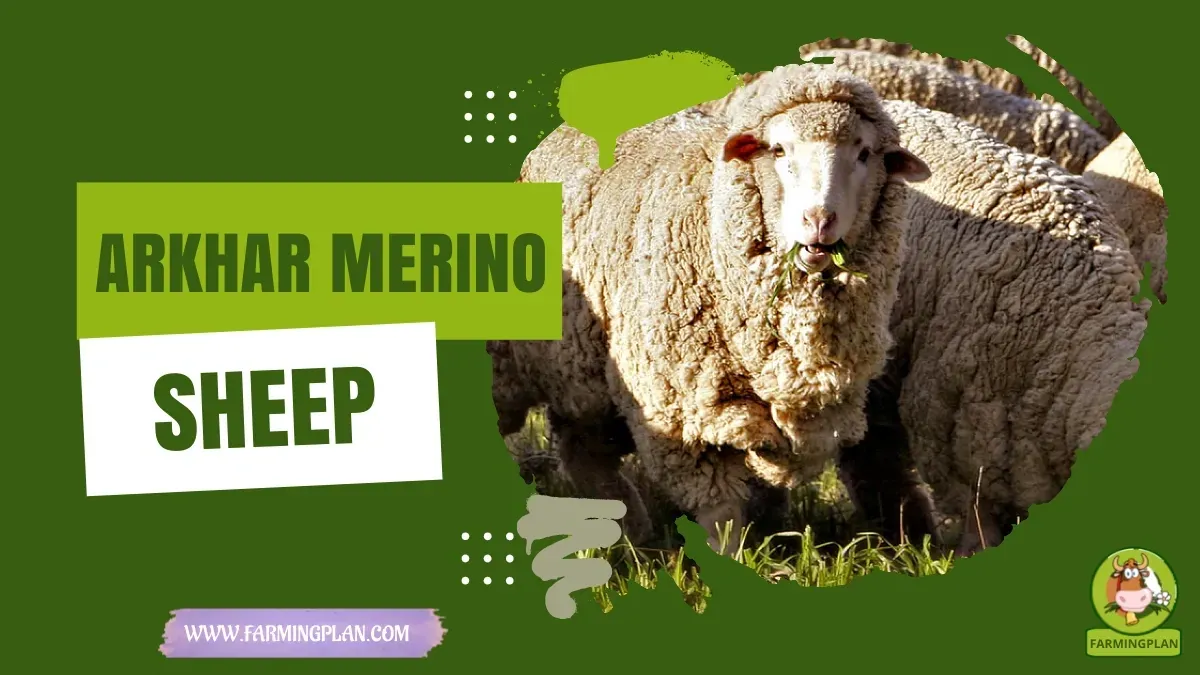
Breed Conformation, Wild Argali Hybridity & Fiber Matrix
The Arkhar-Merino displays a striking, athletic silhouette that clearly reveals its wild caprine-ovine hybrid origins. The body is long, deep, and heavily muscled, carried on strong, straight legs with exceptionally durable, shock-absorbing joints. Mature rams weigh up to 265 pounds, while mature ewes maintain functional body weights between 130 and 165 pounds. Clean housing, fresh water, and balanced nutrition remain essential for Arkhar-Merino Sheep productivity.
Rams possess magnificent spiral horns that curve outward and backward from the temples, echoing the wild argali, while ewes are mostly hornless or carry small crescent horns. The muzzle is refined, covered in fine white hair, with a slightly Roman nose profile that pre-heats sub-zero alpine air before inhalation into the lungs.
The fleece completely covers the trunk, neck, and upper limbs. Unlike the coarse double hair coat of the wild argali, the Arkhar-Merino coat consists of true fine wool with clear crimp, averaging 19.5 to 23 microns in fiber diameter, with kempy fibers almost entirely eliminated through generations of backcrossing and selective breeding. Tracking feed intake and body condition supports long-term Arkhar-Merino Sheep performance.
📊 Arkhar-Merino Alpine Conformation & Performance Benchmarks
| Morphological Feature | Mature Rams | Mature Ewes | Wild Argali Adaptive Trait |
|---|---|---|---|
| Live Body Weight | 220 – 265 lbs (100 – 120 kg) | 130 – 165 lbs (60 – 75 kg) | Heavy muscular mass yielding premium lean mountain mutton |
| Wither Height | 31 – 35 inches (80 – 90 cm) | 28 – 32 inches (70 – 82 cm) | High clearance for traversing deep mountain snow drifts |
| Fiber Diameter (Micron) | 20.5 – 23.5 microns | 19.5 – 22.0 microns | Fine apparel wool replacing coarse wild kemp fibers |
| Greasy Fleece Weight | 11.0 – 16.5 lbs (5.0 – 7.5 kg) | 8.0 – 11.0 lbs (3.6 – 5.0 kg) | Dense protective blanket shielding against alpine blizzards |
| Hoof Durability | Concave, rubbery sole, rock-hard rim | Self-trimming dark slate horn | Extreme traction on wet granite scree; zero foot rot |
| Cardiopulmonary Volume | Enlarged heart and lung capacity | High red blood cell count | Thrives in thin oxygen at 10,000+ ft elevations |
History, Genetic Creation & The Kazakh Scientific Triumph
The creation of the Arkhar-Merino began in 1934 under the leadership of renowned Soviet geneticists N. S. Butarin, A. Isenjulov, and their colleagues at the Institute of Experimental Biology of the Kazakh Academy of Sciences. The goal was to establish a breed capable of year-round utilization of the vast Tian Shan mountain pastures, which domestic Merinos could not access. Following biosecurity best practices reduces disease risk in any Arkhar-Merino Sheep operation.
Wild male argalis (arkhars) were captured as young lambs in the high Tien Shan cliffs, hand-reared, and conditioned to domestic livestock. Because natural mating proved difficult, researchers developed pioneering artificial insemination techniques, using wild argali semen to fertilize domestic Rambouillet and Novocaucasian Merino ewes.
Through systematic backcrossing of first-generation hybrid rams with Merino ewes and rigid culling for wool quality and mountain conformation, the breed was stabilized. In 1950, the Arkhar-Merino was officially recognized as an independent domestic breed, expanding across collective farms in Kazakhstan and Kyrgyzstan. Seasonal adjustments to shelter and diet keep Arkhar-Merino Sheep thriving year-round.
Today, purebred studs are preserved at scientific breeding stations, providing vital genetics for producers managing sheep across rugged, high-altitude ranges in Central Asia and the Caucasus. Proper record-keeping makes breeding and culling decisions easier for Arkhar-Merino Sheep keepers.
High-Altitude Housing, Vertical Transhumance & Fencing
Arkhar-Merino sheep are managed via seasonal vertical transhumance. In summer (June through September), flocks graze high alpine meadows (jailoo) situated between 8,000 and 11,500 feet. In late autumn, before snow accumulates beyond two feet, flocks migrate down to sheltered valleys and foothills (qyshtau) between 3,500 and 6,000 feet.
Winter housing consists of three-sided stone or timber barns (koshary) that provide wind protection while maintaining abundant natural ventilation. Total indoor confinement should be avoided, as stagnant air causes respiratory distress in sheep adapted to crisp alpine winds. Each adult ewe requires 12 to 15 square feet of indoor shelter space with clean, dry straw bedding. Providing adequate space and ventilation prevents common stress issues in Arkhar-Merino Sheep.
Perimeter fencing requires sturdy construction. Inheriting wild argali athleticism, Arkhar-Merinos can easily jump standard low fences if cornered. Construct perimeter boundaries using 54-inch woven field wire topped with two strands of high-tensile wire charged to 6,000 volts. Corrals must feature solid 6-foot sidewalls to keep stock calm during handling and sorting. Understanding breed-specific traits helps maximize Arkhar-Merino Sheep longevity and output.
Water systems in mountain valleys should incorporate freeze-proof spring collection tanks delivering fresh, running water that resists freezing down to sub-zero temperatures.
Alpine Forage Nutrition, Winter Hay Rations & Mineral Balance
During the short alpine summer, Arkhar-Merino sheep forage on diverse mountain vegetation, including alpine bluegrass (Poa alpina), mountain fescues, wild clover, alpine dandelion, and nutritious sub-alpine sedges. This diet provides high crude protein (16% to 20%) that supports rapid body condition gain and luxuriant fleece growth. Routine preventive care saves time and lowers veterinary costs for Arkhar-Merino Sheep.
When winter snow blankets foothills, supplement flocks with quality meadow grass hay (testing 9% to 12% crude protein) at a rate of 4 to 5 pounds per head daily, accompanied by 0.5 to 0.75 pounds of rolled barley or whole oats during late gestation. Graziers can compare European mountain sheep feeding protocols in our sheep feeding and winter nutrition handbook. Matching forage or ration quality to life stage optimizes Arkhar-Merino Sheep growth.
Provide weather-resistant loose trace minerals containing high levels of iodine, copper, sulfur, and selenium. Sulfur is vital for wool follicle development, while iodine supports thyroid thermoregulation in sub-zero alpine conditions.
Avoid feeding moldy or dusty hay inside koshary barns, which quickly irritates respiratory linings and triggers infectious pleuropneumonia in mountain flocks. Gradual dietary transitions protect digestive stability in Arkhar-Merino Sheep.
Flock Health, Pulmonary Resilience & Biosecurity Protocols
The Arkhar-Merino possesses an exceptionally robust natural immune constitution, demonstrating natural resistance against foot rot, sheep scab, and contagious ecthyma (sore mouth) that commonly plague lowland breeds in wet conditions. Selecting healthy foundation stock is the cornerstone of successful Arkhar-Merino Sheep management.
However, mountain flocks remain vulnerable to gastrointestinal roundworms (Haemonchus contortus) and lungworms (Dictyocaulus filaria) when grazing crowded foothill winter pastures. Implement rotational pasture resting and conduct targeted seasonal deworming in late autumn before housing.
Flock health standards must align with small ruminant management protocols maintained by the American Sheep Industry Association (ASI) and disease surveillance programs overseen by the USDA APHIS National Scrapie Program. Good predator-proofing and dry bedding safeguard Arkhar-Merino Sheep comfort in harsh weather.
Vaccinate all pregnant ewes annually with an 8-way Clostridial vaccine 30 days before lambing to ensure lambs ingest rich protective antibodies in their initial colostrum nursing. Monitoring water quality and mineral balance directly benefits Arkhar-Merino Sheep vitality.
Breeding Biology, Lambing Vigor & Interspecific Genetics
Arkhar-Merinos maintain a strictly defined seasonal breeding cycle synchronized with mountain topography. Breeding season commences in late autumn (November through December), with rams exhibiting intense courtship behaviors. A mature ram comfortably covers 30 to 45 ewes on open mountain slopes. Gestation averages 150 days.
Lambing occurs in spring (April through May) inside sheltered foothill pastures. Ewes demonstrate exceptional maternal devotion, with lambing ease averaging over 98%. Newborn lambs weigh 8 to 11 pounds, standing within minutes to nurse rich colostrum and exhibiting agile leaping instincts inherited from wild argalis. Review predator defense fencing for mountain flocks in our pasture fencing and predator protection guide. Practical hands-on husbandry ensures consistent results when raising Arkhar-Merino Sheep.
Lamb survival rates exceed 92% under harsh rangeland conditions. Lambs grow briskly on their dams’ generous milk supply, weaning at 120 days at weights of 55 to 70 pounds. Early intervention at the first sign of lethargy protects overall Arkhar-Merino Sheep flock or herd health.
Arkhar-Merino Enterprise Economics & 80-Ewe Alpine Budget
Operating an 80-ewe commercial Arkhar-Merino mountain enterprise provides strong economic stability through dual-purpose revenue streams: premium fine wool clips and robust grass-fed mountain lamb. Their ability to graze free alpine public lands during summer substantially slashes annual forage expenses.
📊 Estimated Annual Production Budget: 80-Ewe Arkhar-Merino Mountain Enterprise
| Operational Category | Description & Operational Scale | Initial Capital Setup | Annual Recurring Expense |
|---|---|---|---|
| Foundation Breeding Stock | 80 purebred Arkhar-Merino ewes ($260 ea) + 2 rams ($600 ea) | $22,000 | $0 |
| Winter Shelter & Corrals | 3-sided timber koshar barn & heavy 54-inch handling fences | $10,500 | $450 |
| Winter Meadow Hay Reserves | High-protein native meadow hay (90 days reserve feeding) | $0 | $3,200 |
| Mineral Lick & Grain Supplement | Sulfur-rich trace mineral lick tubs & late-gestation barley | $150 | $850 |
| Veterinary, Vaccines & Tags | Annual 8-way vaccines, dewormers & official identification tags | $0 | $920 |
| Alpine Grazing Permits & Shearing | Summer pasture fees ($4/hd) + professional shearing crew | $0 | $880 |
| Gross Projected Revenue | 850 lbs fine wool ($6.00/lb) + 72 grass-fed lambs ($165 ea) | $0 | +$16,980 |
| Net Operating Margin | Annual net margin excluding capital infrastructure amortization | — | +$10,680 |
🐑 Arkhar Merino Sheep Flock Forage & Pasture Calculator
Calculate winter hay bales, daily pasture forage intake, minerals, and water needs for your Arkhar Merino Sheep flock.
Frequently Asked Questions (FAQ)
What is the origin of the Arkhar-Merino sheep?
The Arkhar-Merino was developed in Kazakhstan by crossing wild Tien Shan argali rams (Ovis ammon karelini) with domestic Merino and Rambouillet ewes.
What kind of wool does an Arkhar-Merino produce?
It produces true fine apparel merino wool averaging 19.5 to 23 microns in diameter, free from the coarse kemp fibers typical of wild sheep.
How high in elevation can Arkhar-Merino sheep graze?
They thrive at altitudes between 6,500 and 11,500 feet (2,000 to 3,500 meters), navigating steep rocky terrain that domestic sheep cannot access.
Are Arkhar-Merino sheep good for meat production?
Yes, they possess heavy muscular frames inheriting wild argali muscle density, producing lean, flavorful mountain mutton and prime feeder lambs.
Expert Verdict & Next Steps for High-Altitude Graziers
The Arkhar-Merino Sheep stands as an enduring monument to scientific genetics, uniquely combining the athletic climbing ability and cold hardiness of wild argalis with the luxury textile fleece of fine Merinos. For livestock producers managing rough, high-altitude pastures where other breeds falter, the Arkhar-Merino delivers unmatched productivity per acre. Structured culling and biosecurity protocols strengthen Arkhar-Merino Sheep genetic quality.
Ensure your facilities feature tall, secure fences and dry winter windbreaks to support their natural hardiness. Explore our companion guide to heritage ruminants in our Gute sheep breed profile to discover complementary rustic grazing genetics for cold-climate homesteads.
📚Agricultural Reference & Scientific Citations
Standards and physiological data referenced in this guide comply with USDA APHIS Small Ruminant Health, The Livestock Conservancy, and the American Veterinary Medical Association (AVMA).


