

📊 Angeln Saddleback Pig at a Glance: Key Specifications & Production Benchmarks
| Zoological Classification | Sus scrofa domesticus (Heritage Pasture Meat Breed) |
| Breed Origin | Angeln peninsula, Schleswig-Holstein, Northern Germany (Established 1920s) |
| Primary Purpose | Pastured Gourmet Pork, Succulent Bacon & Maternal Crossbreeding |
| Adult Boar Weight | 700 to 850 pounds (320 to 390 kg); Large, muscular heritage frame |
| Adult Sow Weight | 550 to 650 pounds (250 to 300 kg); Deep maternal capacity |
| Color Pattern | Solid jet black with a continuous white saddle over shoulders and front legs |
| Ear Conformation | Large, broad, drooping lop ears protecting eyes during active foraging |
| Litter Size Fecundity | Highly prolific: 10 to 12 robust piglets with exceptional milk yield |
| Carcass Quality Metric | Superior intramuscular fat (IMF 2.8–3.5%) and rich culinary flavor |
| Conservation Status | Endangered German Heritage Breed (GEH Red List Endangered) |
The Angeln Saddleback Pig (German: Angler Sattelschwein) is one of Germany’s most famous and culturally treasured heritage livestock breeds. Originating on the fertile, maritime Angeln peninsula in the northern state of Schleswig-Holstein, this large, lop-eared, belted pig was created in the 1920s by crossing traditional local black-and-white landrace pigs with the famous British Wessex Saddleback. The goal was to establish the ultimate pastured mother breed: a sow of colossal milk production, supreme maternal calmness, and exceptional grazing efficiency. Good predator-proofing and dry bedding safeguard angeln saddleback pig comfort in harsh weather.
Whether you are operating an organic pasture-to-fork meat enterprise or preserving heritage livestock lines through our sustainable pastured pork production portal, the Angeln Saddleback represents perfection in traditional outdoor swine husbandry. Unlike modern confinement industrial white pigs that require climate-controlled barns and antibiotic-laced diets, Angler Sattelschwein thrive on fresh green pastures, clovers, and farm roots, turning simple roughages into deeply marbled, succulent pork.
Their iconic white belt circling jet-black shoulders, gentle drooping ears, and sweet temperament make them a pleasure to manage on small farms. In this authoritative technical breed manual, we evaluate pasture grazing ecology, farrowing mothering performance, balanced non-GMO rations, carcass fat composition, and endangered breed conservation. Monitoring water quality and mineral balance directly benefits angeln saddleback pig vitality.
Physical Characteristics & Breed Standards
The Angeln Saddleback displays a long, deep-bodied, and majestic physical conformation with broad shoulders and strong, muscular loins.
Their skeletal framework is robust and sound, supporting substantial body mass effortlessly while walking extensive pasture paddocks.
Conformation Standards & Anatomical Structure
The head is long and refined with a straight to gently dished snout and wide jowls. The ears are large, broad, and drooping (lop-eared), hanging forward over the eyes to shield them from sun glare, rain, and thorny hedgerows during outdoor grazing. Practical hands-on husbandry ensures consistent results when raising angeln saddleback pig.
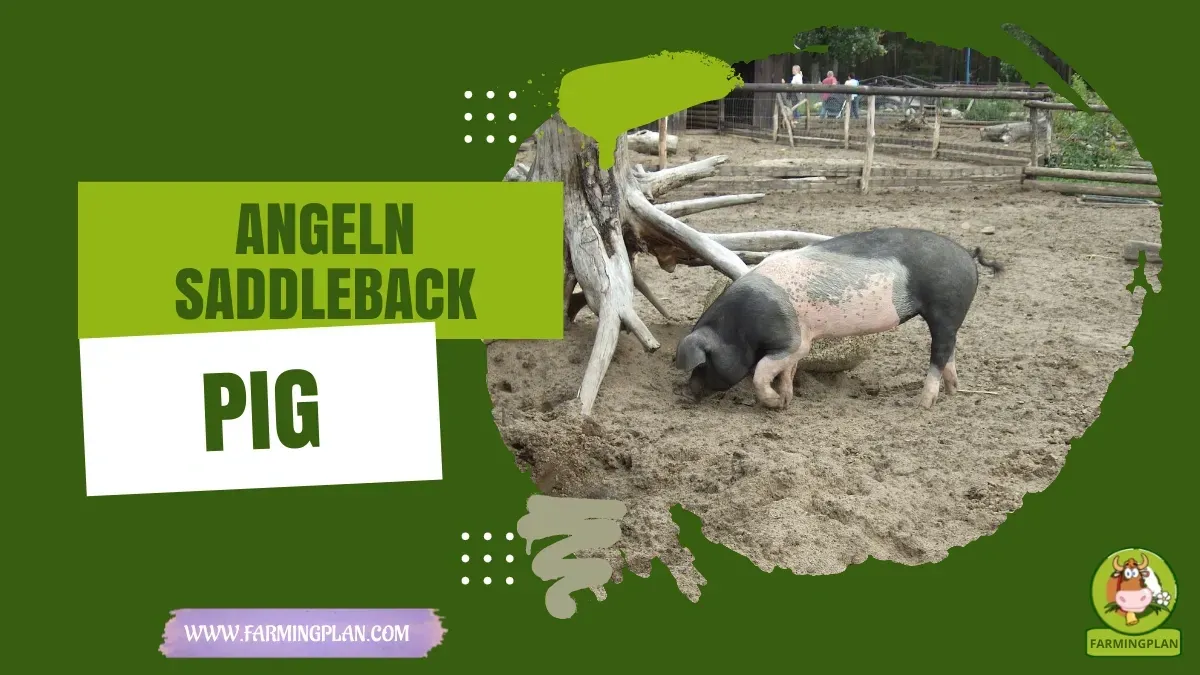
The defining color hallmark is the white saddle: a clean, uninterrupted white band that completely encircles the shoulders and both front legs, contrasting sharply with the deep, glossy jet-black plumage of the head, neck, belly, and hindquarters.
The chest is deep and well-sprung, providing ample heart and lung capacity for continuous foraging. The topline is straight and muscular, transitioning smoothly into broad, plump hams that carry lean meat deep toward the hocks. Early intervention at the first sign of lethargy protects overall angeln saddleback pig flock or herd health.
The legs are clean, bone-dense, and straight, terminating in strong, hard hooves that resist cracking on wet maritime soils or clover pastures.
Sows possess long, supple underlines with at least 14 well-developed, evenly spaced teats capable of nursing large, demanding litters simultaneously.
The jowls are light and clean, preventing excessive feed waste around troughs. The tail is set moderately high, carried in a loose curl with a tuft of black bristles, reflecting calm disposition and overall metabolic vigor. Structured culling and biosecurity protocols strengthen angeln saddleback pig genetic quality.
Size, Weight Benchmarks & Color Variations
Mature Angeln Saddleback boars reach live weights of 700 to 850 pounds (320 to 390 kg), standing 34 to 36 inches tall at the shoulder.
Sows maintain a functional, roomy frame of 550 to 650 pounds (250 to 300 kg) with a body length averaging 68 to 72 inches. Maintaining clean feeders and sanitized equipment supports sustainable angeln saddleback pig care.
Market hogs finish at 230 to 250 pounds (105 to 115 kg) within 180 to 200 days on pasture-based management, yielding carcass dressing percentages above 78 percent.
📊 Angeln Saddleback Pig Performance & Production Matrix
| Trait Benchmark | Angeln Saddleback | German Landrace | Wessex Saddleback |
|---|---|---|---|
| Ear Orientation | Large Drooping Lop Ears | Drooping Lop Ears | Large Drooping Lop Ears |
| Color Pattern | Black with White Shoulder Saddle | Solid Pure White | Black with White Shoulder Saddle |
| Pasture Grazing Drive | Exceptional (Pasture Specialist) | Moderate (Confinement Adapted) | Exceptional (Forest & Pasture) |
| Intramuscular Fat (IMF) | High (2.8 to 3.5% Marbling) | Low (1.2 to 1.8% Lean) | High (3.0 to 3.6% Marbling) |
| Maternal Docility | Very Calm, Gentle Mother | Moderate Confinement Style | Very Docile Grazier |
Breed History, Heritage & North American Development
The development of the Angeln Saddleback took root in the 1920s when pig breeders in Schleswig-Holstein recognized that traditional regional swine lacked sufficient carcass length and meat quality. Fanciers imported British Wessex Saddleback boars to cross with local Black-and-White Landrace sows, rapidly establishing a distinct, stabilized regional breed.
By the 1930s and 1940s, the Angler Sattelschwein was the dominant breed in northern Germany, renowned as the ideal pig for small family holdings because sows produced enormous volumes of milk and fattened on pasture, skim milk, and potatoes. Consistent daily observation helps keepers spot early changes in angeln saddleback pig health and behavior.
However, during the post-war ‘economic miracle’ of the 1950s and 1960s, consumer preferences shifted drastically toward ultra-lean industrial pork, pushing the breed to near-extinction by the late 1980s. Dedicated conservationists, organic farmers, and the GEH intervened, establishing conservation registries that have restored sustainable breeding populations across Germany.
Housing, Shelter Dimensions & Winter Hardiness
Housing architecture for Angeln Saddleback pigs focuses on spacious pasture access, robust outdoor huts, and natural thermal insulation. Clean housing, fresh water, and balanced nutrition remain essential for angeln saddleback pig productivity.
Spatial Density & Enclosure Engineering
Maintain stocking densities of 4 to 8 adult sows per acre on rotational clover, orchard grass, and alfalfa pastures to allow vegetative recovery and maintain clean sod cover.
Provide heavy-duty timber or double-walled polyethylene A-frame farrowing huts (8×9 ft) equipped with heavy wooden base skids, an access door flap, and internal piglet anti-crush safety bars.
Perimeter fencing should consist of 32-inch woven wire reinforced with a high-tensile electric wire offset 8 inches inward and 6 inches off the ground to deter digging and rooting around fence lines. Tracking feed intake and body condition supports long-term angeln saddleback pig performance.
Pasture huts must be oriented with doorways facing away from prevailing northwesterly winds, equipped with deep straw bedding that allows pigs to nest and conserve body heat during chilly nights. Provide outdoor shade sails or plant deciduous trees along paddock borders to provide reliable midday sun protection.
Nutritional Requirements, Daily Rations & Feeding Protocols
Angeln Saddleback pigs are efficient grazers whose digestive physiology extracts high nutritional value from pasture legumes, forage brassicas, and farm grains. Following biosecurity best practices reduces disease risk in any angeln saddleback pig operation.
Crude Protein Benchmarks Across Life Stages
Gestating sows on lush pasture maintain optimal body score on 2.5 to 3.5 pounds daily of farm cereal grain (rolled barley, oats, and wheat) providing 12 to 13 percent crude protein.
During lactation, sows need 12 to 15 pounds daily of a nutrient-dense ration supplying 16 to 17 percent crude protein, balanced with calcium, phosphorus, and zinc to support heavy milk yields.
Growing pigs respond well to diversified pasture feeds: supplement grazing with field peas, soaked beans, pumpkins, and whey, which impart a sweet, clean fat profile and rich marbling to pork. Seasonal adjustments to shelter and diet keep angeln saddleback pig thriving year-round.
Ensure abundant clean water through frost-proof nipple waterers or heavy galvanized troughs; lactating sows require 10 to 12 gallons of water daily to maintain peak milk production.
Introduce seasonal root crops such as fodder beets, carrots, and turnips into winter feeding programs to stimulate natural foraging behavior and provide digestible carbohydrates when pasture clover is dormant. Proper record-keeping makes breeding and culling decisions easier for angeln saddleback pig keepers.
Health Management, Common Diseases & Biosecurity Standards
The breed enjoys rugged constitution and disease hardiness, but pastured herds require diligent biosecurity and parasite management.
Biosecurity Protocols & Veterinary Defenses
Vaccinate breeding herds semi-annually against Swine Erysipelas, Porcine Parvovirus (PPV), and Leptospirosis, boosting gilts twice prior to first mating.
Implement strategic rotational deworming with fenbendazole or ivermectin, alternating pastures every 4 to 6 weeks to disrupt life cycles of the large roundworm (Ascaris suum). Providing adequate space and ventilation prevents common stress issues in angeln saddleback pig.
Maintain clean, well-drained wallow areas in summer to allow pigs to coat their skin with mud for natural thermal cooling and UV sun protection. Consult certified swine health protocols via the Iowa State University Swine Health and Management Network. To evaluate alternative bloodlines and practical management routines, check our Krsko Polje Pig overview.
Quarantine newly acquired breeding stock for 30 days in an isolated pen, testing for PRRS, Swine Dysentery, and Pseudorabies before integration into the primary herd. Understanding breed-specific traits helps maximize angeln saddleback pig longevity and output.
Maternal Farrowing Excellence & Piglet Rearing
Angeln Saddleback sows are celebrated as peerless mothers: they remain exceptionally calm during farrowing, lie down with careful deliberation, and rarely exhibit aggressive savaging behavior toward newborn piglets.
Litters average 10 to 12 large, vigorous piglets weighing 3.0 to 3.5 pounds (1.3 to 1.6 kg) at birth. Piglets nurse readily, benefiting from the sow’s abundant milk yield and high colostral antibody levels.
Weaning takes place naturally between 6 and 8 weeks in pastured systems, with piglets weighing 40 to 48 pounds (18 to 22 kg), demonstrating high weaning survival rates above 92 percent. Routine preventive care saves time and lowers veterinary costs for angeln saddleback pig.
US Ownership Budget & Annual Maintenance Costs
Investing in Angeln Saddleback breeding stock offers superior economic returns through direct-to-consumer gourmet pork sales, heritage restaurant contracts, and breeding stock premiums.
Developing an outdoor pastured enterprise with Angeln Saddleback swine delivers rapid cash returns through direct farmgate sales, certified organic pork premiums, and high-demand breeding stock sales to smallholders. Matching forage or ration quality to life stage optimizes angeln saddleback pig growth.
💰 Estimated Annual Budget & Maintenance Costs (USD)
| Budget Category | Item Description & Scope | Initial Capital Outlay | Annual Recurring Expense |
|---|---|---|---|
| Registered Breeding Trio (1B/2G) | Purebred registered boar and two pregnant gilts | $1,000 – $2,000 | $0 |
| Pasture Arcs & Electric Fencing | Two heavy pasture huts and multi-strand electric fencing | $700 – $1,400 | $75 – $150 |
| Farm Grains & Mineral Premix | Non-GMO barley, field peas, and swine mineral tubs | $140 – $250 | $500 – $800 |
| Swine Vaccines & Vet Care | Annual erysipelas, parvo, lepto vaccines, and dewormers | $60 – $100 | $80 – $140 |
| Watering System & Wallows | Automatic float waterers, plumbing, and wallow basins | $180 – $320 | $40 – $70 |
🐖 Angeln Saddleback Pig Swine Daily Feed Calculator
Calculate daily grower/finisher rations (lbs), monthly 50-lb feed bags, pen space, and water needs for your Angeln Saddleback Pig pigs.
Frequently Asked Questions (FAQ)
What is the origin of the Angeln Saddleback pig?
The breed was developed in the 1920s in the Angeln region of Schleswig-Holstein, northern Germany, by crossing local Landrace sows with British Wessex Saddleback boars.
Why are Angeln Saddleback sows considered superior mothers?
They possess an exceptionally calm, docile temperament, produce massive quantities of milk from 14+ teats, and carefully lie down to avoid crushing their piglets.
What does Angeln Saddleback pork taste like?
Angeln Saddleback pork is celebrated for its deep red color, succulent marbling (IMF over 3%), firm white fat, and intense, rich traditional pork flavor that never dries out during cooking.
Is the Angeln Saddleback pig an endangered breed?
Yes, it is listed on the German GEH Red List as an endangered heritage breed, protected through dedicated conservation herdbooks and organic pasture-based farming programs.
Expert Verdict & Next Steps for Heritage Pasture Keepers
The Angeln Saddleback Pig represents the gold standard in sustainable, pasture-based pork production. With its picturesque white saddle, docile maternal nature, unmatched mothering capability, and world-class marbled meat, this German heritage breed transforms pasture farming into a profitable culinary triumph.
Advance your pastured swine expertise by exploring our companion guides to hardy Aksai Black Pied Swine, lean-meat Hampshire Belts, productive Duroc Pork Sires, and curly-coated Mangalitsa Lard Pigs.
📚Agricultural Reference & Scientific Citations
Standards and physiological data referenced in this guide comply with USDA APHIS Swine Health, FAO Domestic Animal Diversity Information System, and the American Veterinary Medical Association (AVMA).


