

⚡ American Paint Horse at a Glance: Key Specifications & Benchmarks
| Scientific Name | Equus caballus (American Stock Horse Subtype) |
| Breed Origin | North American Western Plains and Southwest (APHA founded 1962 in Texas) |
| Parent Lineage | Quarter Horse and Thoroughbred foundation bloodlines with pinto coloration |
| Average Mature Height | 14.2 to 15.3 hands (58 to 63 inches / 147 to 160 cm) |
| Average Mature Weight | 1,000 to 1,250 lbs (450 to 565 kg) |
| Primary Pattern Classes | Tobiano, Overo (Frame, Sabino, Splashed White), and Tovero combinations |
| Primary Working Disciplines | Ranch work, cutting, reining, roping, barrel racing, western pleasure, trail |
| Registration Requirement | Must verify Quarter Horse, Thoroughbred, or Paint pedigree with qualifying white markings |
The American Paint Horse is one of the most popular, versatile, and visually iconic equine breeds on the North American continent. Combining the heavy muscling, quick acceleration, and natural ‘cow sense’ of the American Quarter Horse with the striking color patterns of pinto coats, the Paint Horse is the quintessential western ranch partner and competitive show athlete. Maintaining clean feeders and sanitized equipment supports sustainable American Paint Horse care.
Formally organized in 1962 with the founding of the American Paint Horse Association (APHA) in Fort Worth, Texas, the breed registry has grown to become the second-largest equine breed organization in the world. Deepen your stock horse management knowledge through our authoritative equine horses husbandry and care resource center.
What defines the Paint Horse beyond its breathtaking splashes of white and dark color is its athletic versatility and willing disposition. Whether working cattle on sprawling western rangelands, competing in reining and barrel racing, or carrying trail riders over rugged mountains, the Paint Horse executes every task with calm focus.
Their balanced, compact build and powerful hindquarters provide explosive speed over short distances, while their sensible minds make them wonderful family mounts for riders of all ages. Consistent daily observation helps keepers spot early changes in American Paint Horse health and behavior.
Physical Characteristics & Breed Standards
The American Paint Horse possesses classic western stock horse conformation characterized by heavy muscling, a deep heart girth, low-set hocks, and a low center of gravity. The horse is built for rapid stops, explosive turns, and powerful acceleration.
Conformation evaluations emphasize skeletal balance, clean joints, a short back, and a broad chest floor that anchors powerful foreleg reach without interference.
Conformation Standards & Anatomical Structure
The head is short and clean-cut with a flat forehead, wide-set luminous eyes, a refined muzzle, and firm jaw muscling that reflects Quarter Horse heritage. The neck is medium-length and flexible, blending cleanly into well-sloped 45-degree shoulders. Clean housing, fresh water, and balanced nutrition remain essential for American Paint Horse productivity.
The back is short, strong, and closely coupled with deep loins and a powerfully muscled, rounded croup. Legs are straight with clean, substantial bone, short cannon bones, and well-developed stifles. Hooves are round, deep-heeled, and durable.
The gaskin and forearm musculature is prominently defined, providing the athletic power required for quick stops and rollback turns in cattle work.
Size, Weight Benchmarks & Color Variations
Most mature Paint Horses stand 14.2 to 15.3 hands at the withers, with larger hunter-type individuals reaching 16.0 to 16.2 hands, weighing 1,000 to 1,250 lbs. Tracking feed intake and body condition supports long-term American Paint Horse performance.
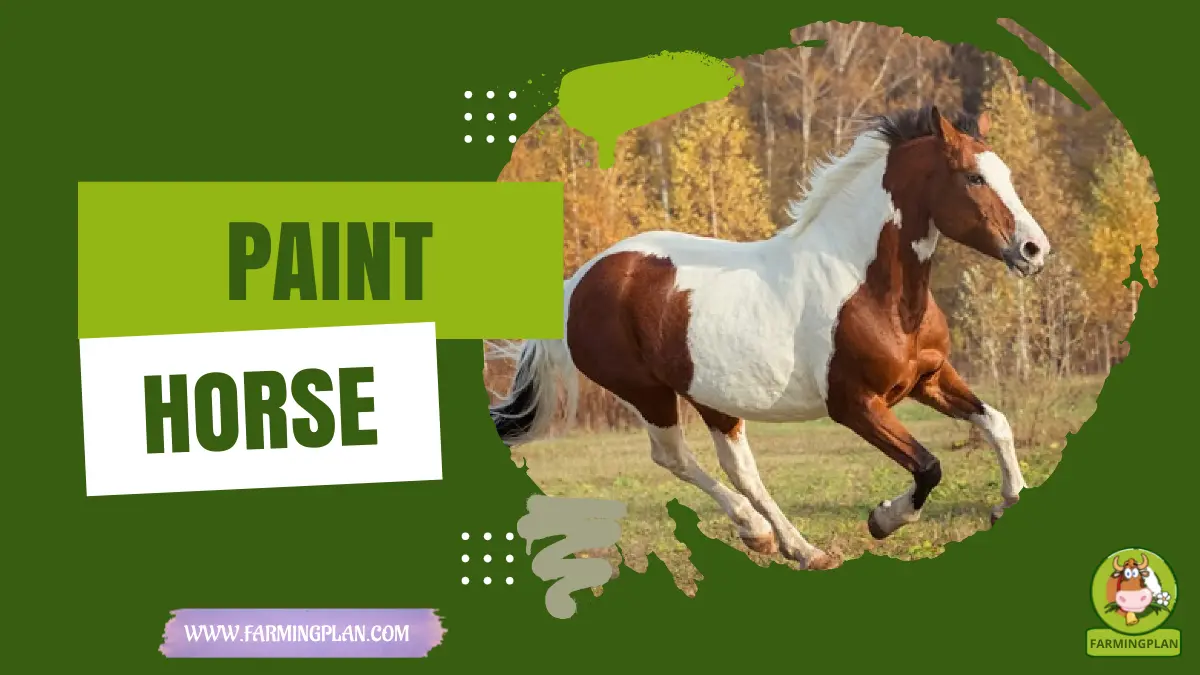
Coat patterns divide into two primary categories: **Tobiano** (white crosses the topline between withers and tail; dark head; white legs) and **Overo** (white rarely crosses the topline; dark legs; irregular markings; includes Frame Overo, Sabino, and Splashed White).
Base coat colors encompass all equine shades, including black, bay, chestnut, sorrel, palomino, buckskin, dun, grullo, and roan.
⚡ American Paint Horse Performance & Production Matrix
| Evaluation Metric | APHA Breed Standard Benchmark | Ranch / Competition Advantage | Husbandry Consideration |
|---|---|---|---|
| Withers Height | 14.2 – 15.3 hands | Ideal low center of gravity for cattle handling and roping | Fits standard 12×12 foot stalls and two-horse trailers |
| Muscular Conformation | Heavy Stock Horse Build | Explosive acceleration, sprinting speed, and cow sense | Maintain lean body condition to protect hock joints |
| Color Pattern | Tobiano, Overo, Tovero | High market demand and dramatic visual appeal | Screen for Lethal White Overo (LWO) in frame overos |
| Hoof Density | Tough, Round Stock Hoof | Excellent footing on varied ranch terrain and arena sand | Maintain regular 6-week farrier trimming schedule |
| Temperament Score | 9.4 / 10 Sensible & Bold | Level-headed under pressure in arena and cattle pens | Thrives with consistent, goal-oriented training tasks |
Breed History, Heritage & North American Development
The origins of the Paint Horse trace back to the Spanish horses brought to the Americas by Hernando Cortés and subsequent Spanish explorers in the early sixteenth century. Many of these Iberian mounts carried two-toned pinto patterns and dispersed across the western plains.
Comanche and other Plains Native American nations revered painted horses for their natural camouflage, extraordinary stamina, and spiritual significance. In the nineteenth and twentieth centuries, western cowboys prized colorful cow horses for ranch work. Following biosecurity best practices reduces disease risk in any American Paint Horse operation.
When the American Quarter Horse Association (AQHA) was formed in 1940, it excluded horses with ‘excessive white’ markings. Recognizing the loss of elite stock horse bloodlines, Rebecca Tyler Lockhart and fellow breeders organized the American Paint Horse Association in 1962.
Today, APHA registers hundreds of thousands of horses worldwide, maintaining an open connection with AQHA and Jockey Club Thoroughbred registries through approved outcross regulations.
Housing, Shelter Dimensions & Winter Hardiness
American Paint Horses are hardy western equines that adapt comfortably to varied housing systems, from professional show barns to open ranch pasture paddocks. A standard 12×12 foot box stall bedded with pine shavings provides clean shelter. Seasonal adjustments to shelter and diet keep American Paint Horse thriving year-round.
Stall construction should feature heavy wood planks and secure sliding doors. In moderate climates, large pipe-panel paddock runs (12×24 feet) with attached shade covers provide ideal mental relaxation and movement.
Spatial Density & Enclosure Engineering
Pasture turnout is essential for psychological well-being and digestive regularity. Provide at least one to two acres of grazing per horse enclosed with safe four-board wooden fencing, pipe panels, or smooth polymer rail.
Avoid barbed wire, which can easily tear shoulder muscles and ruin show coats. In regions with intense summer sun, provide run-in sheds, as horses with large white facial patches are prone to sunburn. Proper record-keeping makes breeding and culling decisions easier for American Paint Horse keepers.
Keep mud managed around waterers with crushed gravel pads to protect lower white socks from scratches and fungal dermatitis.
Nutritional Requirements, Daily Rations & Feeding Protocols
Paint Horses inherit the efficient metabolism of stock horse breeds, meaning they convert forage into muscle easily. Overfeeding high-calorie grains to a horse without heavy daily exercise will quickly lead to obesity.
Feed high-grade grass hay (Bermuda, Timothy, or Orchard mix) with moderate alfalfa content (10% to 15%) at 1.5% to 2.0% of body weight daily. For comparison with their foundation lineage, review our Quarter Horse care and feeding profile. Providing adequate space and ventilation prevents common stress issues in American Paint Horse.
Crude Protein Benchmarks Across Life Stages
Performance ranch horses and show athletes require a low-starch, fat-supplemented concentrate (12% crude protein) containing flaxseed, beet pulp, and stabilized rice bran to provide cool, sustained energy.
Supply free-choice white salt and equine trace minerals year-round. Provide constant access to clean, fresh water maintained at 45°F to 65°F.
Incorporate biotin and zinc supplements to support strong hoof walls, especially for horses with white hooves that may appear softer in wet climates.
Health Management, Common Diseases & Biosecurity Standards
American Paint Horses are naturally sound and robust, but they carry genetic vulnerabilities linked to stock horse and color genes. The most critical is **Lethal White Overo Syndrome (LWOS)**, an autosomal recessive fatal condition occurring when two frame overos carrying the mutated endothelin receptor B gene are bred. Understanding breed-specific traits helps maximize American Paint Horse longevity and output.
Additionally, lines tracing to Quarter Horse ancestry must be screened for HYPP, PSSM1, and HERDA. Access equine biosecurity updates through the USDA Animal and Plant Health Inspection Service (APHIS).
Biosecurity Protocols & Veterinary Defenses
Conduct APHA 6-panel genetic testing on all breeding stock to eliminate lethal white overo, HYPP, PSSM1, MH, GBED, and HERDA carriers from risky pairings. Establish annual core vaccinations and dental floating.
Maintain professional farrier care every six weeks to balance stock horse hooves, preventing strain on navicular bones and deep flexor tendons. Apply sunblock to unpigmented pink noses during summer. Routine preventive care saves time and lowers veterinary costs for American Paint Horse.
Implement strategic deworming based on biannual fecal egg count diagnostics rather than calendar rotations.
Breeding Management, Color Genetics & Foal Development
Breeding American Paint Horses requires thorough knowledge of equine color genetics. To avoid Lethal White Overo syndrome, never breed two frame overo horses carrying the N/O mutation; breed frame overos only to solid or non-carrier horses (N/N).
Mares have a gestation period of 335 to 345 days, foaling easily and exhibiting protective maternal instincts. For comparative stock breed insights, see our guide on the Spotted Saddle Horse care and gaited trail guide. Matching forage or ration quality to life stage optimizes American Paint Horse growth.
Foals are born with distinctive pinto markings already clearly visible. Handle foals gently within their first hours, introducing halters, gentle touch, and foot lifting to instill calm manners.
Weanlings require balanced creep feed with appropriate calcium and phosphorus ratios to support sound joint development without causing epiphysitis.
US Ownership Budget & Annual Maintenance Costs
Investing in an American Paint Horse is an accessible entry into equestrian sports and ranching, with a wide range of prices depending on pedigree, training, and color pattern. Gradual dietary transitions protect digestive stability in American Paint Horse.
The budget schedule below itemizes typical startup purchase investments and annual recurring operational expenses for maintaining an American Paint Horse.
💰 Estimated Annual Budget & Maintenance Costs (USD)
| Budget Category | Item Description & Scope | Initial Capital Outlay | Annual Recurring Expense |
|---|---|---|---|
| Registered Purebred Purchase | APHA registered ranch/trail gelding or show-quality breeding mare | $4,500 – $16,000 | $0.00 |
| Western Tack & Saddle | Western stock saddle, bridle, bit, wool pad, halters, leads | $1,200 – $3,500 | $100 – $250 |
| Quality Forage & Hay | 4.5 tons of tested grass hay (Bermuda/Timothy/Alfalfa mix) | $0.00 | $1,150 – $1,850 |
| Concentrates & Ration Balancer | Low-starch performance grain, flaxseed, salt, mineral balancer | $0.00 | $400 – $750 |
| Professional Farrier Care | Stock horse trimming and front shoeing every 6 weeks (8 visits) | $0.00 | $550 – $1,100 |
| Veterinary Care & 6-Panel DNA | Annual vaccines, dental float, Coggins, APHA genetic panel | $0.00 | $450 – $850 |
🧮 American Paint Horse Daily Feed & Hay Intake Calculator
Calculate recommended daily dry grass hay (lbs), clean water intake, and estimated monthly forage costs tailored specifically for your American Paint Horse.
Frequently Asked Questions (FAQ)
What is the difference between a Paint Horse and a Pinto?
A Paint Horse is a specific breed that must have registered American Quarter Horse, Thoroughbred, or American Paint Horse pedigree with stock horse conformation, whereas a ‘pinto’ is simply any horse of any breed displaying a two-toned spotted coat pattern.
What is the difference between Tobiano and Overo coat patterns?
Tobianos have white that crosses the topline between the withers and tail with dark heads and white legs, while Overos have white that rarely crosses the topline, darker legs, and irregular, splashy markings with white on the face.
What is Lethal White Overo (LWO) syndrome?
Lethal White Overo is a fatal genetic condition that occurs when a foal inherits two copies of the frame overo gene, causing an incomplete nerve system in the intestines that prevents digestion. DNA testing prevents carrier matings.
Can an American Paint Horse be registered in AQHA?
A horse with Paint registration cannot be registered in AQHA unless both parents were registered AQHA Quarter Horses that produced a horse with excess white (formerly known as ‘crop-out’ Quarter Horses).
Are American Paint Horses good for beginners?
Yes. Most Paint Horses inherit the calm, sensible, and willing temperament of Quarter Horses, making them exceptional, patient mounts for beginners, youth riders, and families.
Expert Verdict & Next Steps for US Homesteaders
The American Paint Horse is a triumphant icon of western heritage, uniting brilliant color, genuine working ranch athletic ability, and a gentle, trustworthy heart. For riders seeking a horse that turns heads on the trail and gets down to business in the arena, the Paint Horse has no equal.
Before purchasing a Paint Horse, verify APHA registration papers and review 6-panel genetic health test results. Compare other versatile American breeds by reading our guide on the Morgan horse care and versatility profile.
📚Agricultural Reference & Scientific Citations
Standards and physiological data referenced in this guide comply with USDA Animal and Plant Health Inspection Service (APHIS), American Veterinary Medical Association (AVMA), and the FAO Domestic Animal Diversity Information System.


