

📊 Aachen Lacquer Shield Owl Pigeon at a Glance: Key Specifications & Production Benchmarks
| Zoological Classification | Columba livia domestica (Owl Pigeon Subgroup) |
| Breed Origin | Aachen and Rhineland regions of Germany (Developed 18th Century) |
| Primary Purpose | Exhibition Fancy Breed & Heritage Aviculture |
| Adult Weight Metric | 11 to 13 ounces (310 to 370 grams); Compact cobby stature |
| Signature Plumage Trait | Lacquer shield coloration with high vitreous sheen and chest frill |
| Crest Formation | Peak crest (Spitzkappe) at back of skull ending in distinct point |
| Beak Conformation | Short, stout, blunt beak forming an obtuse angle with forehead |
| Temperament Profile | Docile, gentle, calm aviary companion; easily socialized |
| Loft Space Standard | 3 to 4 sq ft per adult bird in dry, well-ventilated loft |
| Average Breeding Life | 7 to 10 years under dedicated nutritional and sanitary management |
The Aachen Lacquer Shield Owl Pigeon (German: Aachener Lackschildmövchen) represents the pinnacle of German columbicultural refinement, developed in the ancient imperial spa city of Aachen near the western German-Belgian border during the eighteenth century. Belonging to the prestigious international family of ‘owl pigeons’ (Mövchen), this breed is universally celebrated for its breathtaking contrast between an immaculate, snow-white body and intensely saturated, enamel-gloss wing shields known as ‘lacquer’ shields. Maintaining clean feeders and sanitized equipment supports sustainable aachen lacquer shield owl pigeon care.
Whether you are constructing a dedicated exhibition loft or incorporating heritage avian varieties through our heritage poultry and aviary livestock portal, mastering Aachen Lacquer Shield husbandry requires specialized knowledge. Unlike utility or racing pigeons, owl pigeon breeds feature shortened facial architecture, delicate breast frills (jabots), and pointed peak crests that necessitate customized grain mixtures, shallow grit containers, and protective loft ventilation. Consistent daily observation helps keepers spot early changes in aachen lacquer shield owl pigeon health and behavior.
Their gentle temperament, compact cobby body, and striking visual elegance make them prized favorites among exhibition fanciers and companion aviculturists. In this definitive technical breed manual, we evaluate columbine conformation genetics, loft bio-engineering, micro-seed nutritional balance, foster-parenting squab protocols, and feather luster biosecurity. For additional husbandry benchmarks and feeding standards, explore our complete Black English Magpie Pigeon care guide.
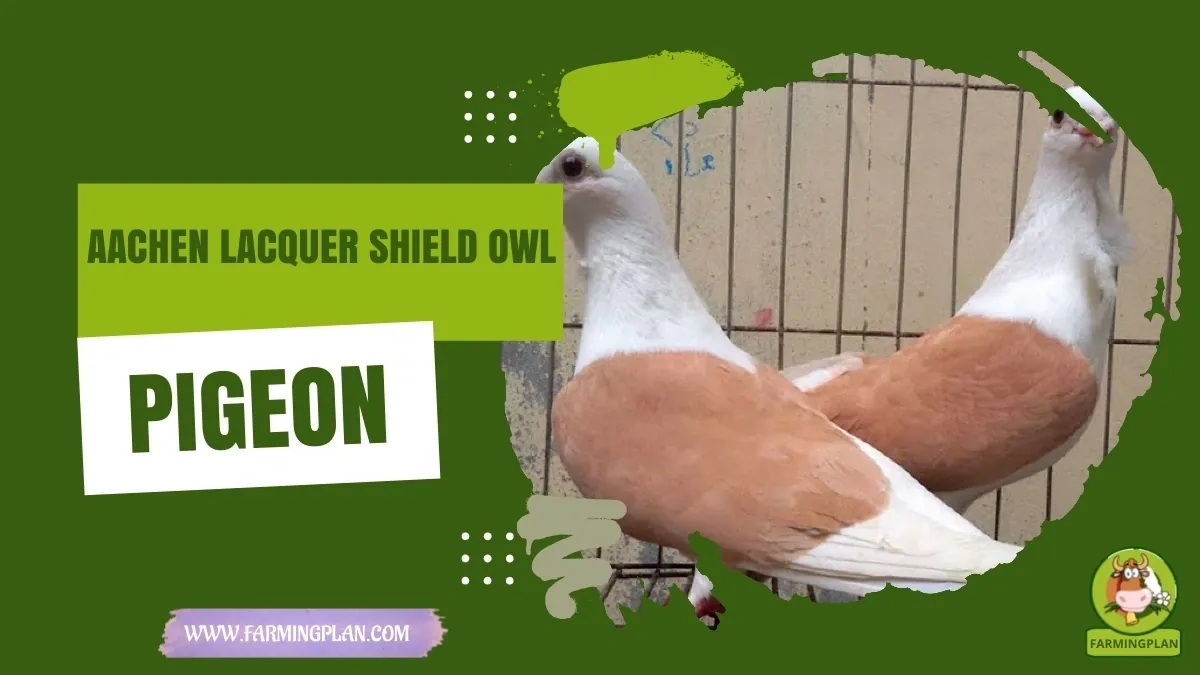
Physical Characteristics & Breed Standards
The Aachen Lacquer Shield Owl Pigeon exhibits a cobby, compact, and horizontal physical conformation with an impressively broad chest held proud and upright. Clean housing, fresh water, and balanced nutrition remain essential for aachen lacquer shield owl pigeon productivity.
The head structure is broad, arched, and crowned with a sharp pointed peak crest rising seamlessly from the nape without lateral rosettes.
Conformation Standards & Anatomical Structure
The signature hallmark of the breed is the chest frill or jabot: a central vertical parting of feathers along the breastbone where feathers curl outward in a refined rosette. The skull is well-rounded with a moderately high forehead meeting a stout, blunt beak set at an obtuse downward angle. Tracking feed intake and body condition supports long-term aachen lacquer shield owl pigeon performance.
The plumage is firm, tight, and extraordinarily lustrous. While the head, neck, body, tail, and primary flight feathers remain pure snow white, the wing coverts (the shields) display vivid lacquer pigmentation: intense jet black, fiery deep red, rich yellow, or blue with crisp black wing bars.
The eyes are large, prominent, and deep ruby-red or dark bull-eye depending on shield color variety, encircled by narrow, pale-flesh eye ceres that highlight the breed’s gentle expression. Following biosecurity best practices reduces disease risk in any aachen lacquer shield owl pigeon operation.
Wing flights are broad and carried resting comfortably on top of the tail without crossing. The legs and feet are bright coral red, completely clean and free of feathers (clean-legged), terminating in pale horn nails that match beak color.
Size, Weight Benchmarks & Color Variations
Adult cocks weigh between 11.5 and 13.0 ounces (325 to 370 grams), maintaining a sturdy, blocky outline. Seasonal adjustments to shelter and diet keep aachen lacquer shield owl pigeon thriving year-round.
Hens are slightly more petite, weighing 10.5 to 12.0 ounces (300 to 340 grams), displaying delicate head contours while preserving equal shield luster.
Their compact length from the tip of the beak to the end of the tail rarely exceeds 11 to 12 inches, epitomizing the classic European miniature owl stature. Proper record-keeping makes breeding and culling decisions easier for aachen lacquer shield owl pigeon keepers.
📊 Aachen Lacquer Shield Owl Pigeon Performance & Production Matrix
| Breed Benchmark | Aachen Lacquer Shield | African Owl Pigeon | Old German Owl |
|---|---|---|---|
| Crest Structure | Sharp Pointed Peak Crest | Smooth Head (No Crest) | Full Shell Crest |
| Shield Color Saturation | Ultra-High Lacquer Enamel | Soft Pastel & Barred Tones | Standard Saturated Tones |
| Beak Length Profile | Short to Medium Blunt | Extremely Short & Down-turned | Medium Short Wedge |
| Breeding Ease (Squabs) | Moderate (Can rear own young) | Difficult (Requires Foster Parents) | Easy (Dependable Parent) |
| Adult Weight Average | 11 to 13 Ounces | 9 to 11 Ounces | 12 to 14 Ounces |
Breed History, Heritage & North American Development
The historical lineage of the Aachen Lacquer Shield Owl Pigeon connects directly to the ancient Anatolian and Persian short-faced owl pigeons transported across Mediterranean trade corridors into Central Europe during the sixteenth and seventeenth centuries. German fanciers in the Aachen region crossed these early Turkish imports with local clean-legged shield pigeons to enhance cold hardiness and create an intense, lacquer-like feather sheen. Providing adequate space and ventilation prevents common stress issues in aachen lacquer shield owl pigeon.
By the mid-1800s, specialized breed clubs in the Rhineland codified the official standard, emphasizing pure white body plumage with strictly defined colored shields, demanding an absence of white feathers in the shield coverts and zero stray colored feathers on the body.
Following World War II, dedicated breeders preserved surviving bloodlines, establishing rigorous breeding programs under the auspices of the Association of German Pigeon Breeders (VDP). Today, international exhibition standards maintained by the National Pigeon Association honor the breed’s historical refinement. Understanding breed-specific traits helps maximize aachen lacquer shield owl pigeon longevity and output.
Housing, Shelter Dimensions & Winter Hardiness
Loft architecture for fancy owl pigeons requires absolute dryness, draft-free ventilation, and predator-proof construction to preserve delicate feather frills.
Spatial Density & Enclosure Engineering
Allocate a minimum of 3 to 4 square feet of floor space per bird in the loft, alongside individual box perches (10 inches wide by 8 inches high) that prevent birds from perching above one another and soiling plumage. Routine preventive care saves time and lowers veterinary costs for aachen lacquer shield owl pigeon.
Install wire-mesh aviary flights oriented toward morning sunlight, surfaced with removable sand trays or kiln-dried pine shavings. Because their short beaks make picking up grains from deep litter challenging, feeding troughs must be shallow, flat-bottomed, and fitted with wire grid dividers to prevent grain contamination.
Provide dry dust-bath areas and bi-weekly shallow water baths containing dissolved bath salts or natural apple cider vinegar, which cleans feather sheaths, intensifies shield luster, and eliminates feather lice. Matching forage or ration quality to life stage optimizes aachen lacquer shield owl pigeon growth.
Nutritional Requirements, Daily Rations & Feeding Protocols
Because owl pigeons have shortened beaks, their daily rations must be custom-blended with small, round seeds that are easily ingested.
Crude Protein Benchmarks Across Life Stages
Formulate a premium small-grain mix containing 15 to 16 percent crude protein during resting and exhibition seasons, incorporating Canadian field peas, small red milo, hard red wheat, safflower seed, white proso millet, and canary seed. Gradual dietary transitions protect digestive stability in aachen lacquer shield owl pigeon.
During the summer molt, elevate crude protein to 18 percent with the addition of toasted soy bits, sunflower kernels, and hempseed to supply methionine and cysteine for lustrous feather regeneration.
Supply high-mineral columbine grit daily, containing crushed oyster shell, red brick dust, charcoal, and steamed bone meal. Provide clean drinking water in enclosed gravity founts with small drinking apertures that prevent birds from wetting their breast frills. Selecting healthy foundation stock is the cornerstone of successful aachen lacquer shield owl pigeon management.
Supplement drinking water once weekly with a balanced vitamin complex containing vitamin A for mucous membrane health, vitamin D3 for calcium absorption, and biotin for feather elasticity. Good predator-proofing and dry bedding safeguard aachen lacquer shield owl pigeon comfort in harsh weather.
Health Management, Common Diseases & Biosecurity Standards
Aachen Lacquer Shield Owls are robust when kept dry, but their compact facial anatomy makes them susceptible to respiratory congestion if lofts become damp.
Biosecurity Protocols & Veterinary Defenses
Administer annual vaccinations against Pigeon Paramyxovirus (PMV-1) and Pigeon Pox, using subcutaneous injections administered high in the back of the neck under veterinary supervision. Monitoring water quality and mineral balance directly benefits aachen lacquer shield owl pigeon vitality.
Implement routine biosecurity screenings for trichomoniasis (canker) and coccidiosis. Treat canker with approved ronidazole or dimetridazole pulses before the breeding season to prevent transmission to squabs during crop-milk feeding.
Maintain immaculate loft hygiene through weekly scraping and dusting with food-grade diatomaceous earth. Access clinical columbine pathology and veterinary guidelines via the Penn State Extension Avian Health & Biosecurity Network. Practical hands-on husbandry ensures consistent results when raising aachen lacquer shield owl pigeon.
Isolate new birds in a dedicated quarantine coop for a minimum of 30 days before integration into the primary loft, checking fecal samples for internal parasites and treating prophylactically for feather mites.
Selective Breeding, Shield Genetics & Squab Rearing
Pair breeding birds based on complementary head contours, crest sharpness, and shield color depth. Avoid mating two birds with loose, split crests or poorly demarcated shield margins. Early intervention at the first sign of lethargy protects overall aachen lacquer shield owl pigeon flock or herd health.
Aachen Owls are generally capable parents, but pairs with extremely short beaks may struggle to feed day-old squabs effectively. Experienced breeders maintain a concurrent team of foster parents (such as Homer or Racing pigeons) to foster valuable eggs when necessary.
Hens lay two smooth white eggs, incubated by both parents for 17 to 18 days. Squabs are fed protein-rich crop milk for the first five days, transitioning to softened soaked grains by day seven. Band young birds with official NPA size-7 seamless aluminum bands at 6 to 8 days of age. Structured culling and biosecurity protocols strengthen aachen lacquer shield owl pigeon genetic quality.
US Ownership Budget & Annual Maintenance Costs
Establishing a breeding loft of pedigree Aachen Lacquer Shield Owl Pigeons involves upfront coop carpentry followed by modest ongoing grain and healthcare expenses.
💰 Estimated Annual Budget & Maintenance Costs (USD)
| Budget Category | Item Description & Scope | Initial Capital Outlay | Annual Recurring Expense |
|---|---|---|---|
| Pedigreed Breeding Pair | Exhibition-quality banded Aachen Lacquer Shield pair | $120 – $250 | $0 |
| Loft Construction & Aviary | 6×8 ft timber aviary with wire flight and box perches | $400 – $800 | $40 – $75 |
| Specialty Micro-Seed Mix | Premium small-grain pigeon feed, safflower, and hemp | $30 – $50 | $150 – $220 |
| Columbine Grit & Minerals | Red mineral grit, pick-stones, and oyster shell | $20 – $35 | $30 – $50 |
| Veterinary Care & Vaccines | PMV-1 vaccination, canker tests, and dewormers | $45 – $80 | $50 – $85 |
🕊️ Aachen Lacquer Shield Owl Pigeon Loft & Grain Mix Calculator
Estimate daily grain ration (lbs), mineral grit, monthly 50-lb feed bags, and minimum indoor loft and outdoor aviary space (sq ft) for your Aachen Lacquer Shield Owl Pigeon loft.
Frequently Asked Questions (FAQ)
What distinguishes the Aachen Lacquer Shield from other owl pigeons?
The breed is characterized by its pointed peak crest, cobby compact body, clean legs without feathers, and intensely glossy lacquer-like colored wing shields contrasted against an otherwise pure white body.
Do Aachen Lacquer Shield Owl Pigeons require foster parents to raise squabs?
Unlike extremely short-faced breeds like the African Owl, most Aachen Lacquer Shield pairs have sufficient beak length to feed their own young, though foster homers are kept as backup for prized bloodlines.
What should you feed an owl pigeon with a short beak?
Feed a small-grain specialty pigeon blend containing small Canadian peas, red milo, wheat, safflower, and millet in flat, shallow feeding dishes that allow easy grain retrieval without beak damage.
Can Aachen Lacquer Shield pigeons fly outdoors freely?
While they can fly short distances, their compact cobby body and high show value make them highly vulnerable to birds of prey like Cooper’s hawks; they should be housed in enclosed predator-proof aviaries.
Expert Verdict & Next Steps for Columbiculture Keepers
The Aachen Lacquer Shield Owl Pigeon stands as an aristocratic treasure in fancy columbiculture, uniting centuries of German breeding art, vibrant color contrast, and an affectionate, gentle demeanor. For aviculturists seeking an exhibition-worthy fancy pigeon that thrives in clean, dedicated loft environments, this breed is an outstanding choice. Maintaining clean feeders and sanitized equipment supports sustainable aachen lacquer shield owl pigeon care.
Continue your journey in heritage aviculture and farm companion animal management by exploring our comprehensive guides to the miniature African Owl Pigeon, majestic Dominique Chicken, heritage Orpington Chicken, and docile Frizzle Chicken.
📚Agricultural Reference & Scientific Citations
Standards and physiological data referenced in this guide comply with American Poultry Association (APA), The Livestock Conservancy, and USDA APHIS Avian Biosecurity Standards.


