

⚡ Mong Cai Pig at a Glance: Key Specifications & Benchmarks
| Native Breed Designation | Mong Cai Pig (Lợn Móng Cái); indigenous to Quảng Ninh Province, Northern Vietnam |
| Climate Hardiness Adaptation | Tropical heat, monsoonal humidity, and flooded coastal river valley tolerance |
| Primary Agricultural Purpose | High-fertility maternal dam line, smallholder subsistence, forage utilization |
| Mature Boar Weight Range | 200 – 265 lbs (90 – 120 kg) with compact, stocky frame and muscular shoulders |
| Mature Sow Weight Range | 175 – 220 lbs (80 – 100 kg) with swayback conformation and pendulous belly |
| Distinctive Color Pattern | Pied coloration: black head/ears, black saddleback patch, white body and blaze |
| Ear Conformation Trait | Small to medium erect to semi-lop forward-pointing ears with sharp alert orientation |
| Average Farrowing Litter Size | 11 to 14 piglets per parity; exceptional lifetime maternal longevity (10+ litters) |
| Functional Teat Matrix | 12 to 14 uniform, prominent milk teats with rapid letdown and docile maternal care |
| Dietary Roughage Utilization | Superior fiber conversion: digests water spinach, cassava leaf silage, and rice bran |
The Mong Cai pig (Lợn Móng Cái) stands as the foundational cornerstone of smallholder swine husbandry across Southeast Asia. Originating in the lush coastal borders of Quảng Ninh Province in northern Vietnam, this hardy pied swine has sustained rural communities for generations through its exceptional reproductive fertility, heat tolerance, and biological ability to convert low-grade agricultural byproducts into nourishing meat and culinary lard. Following biosecurity best practices reduces disease risk in any mong cai pig operation.
Unlike industrialized Western swine breeds bred exclusively for fast lean tissue accumulation in climate-controlled barns, the Mong Cai excels in pasture-based and integrated smallholder farming systems. Sows reach sexual maturity at early ages, consistently farrow large litters of vigorous piglets, and demonstrate mothering instincts that keep pre-weaning mortality minimal even under rudimentary housing conditions. Seasonal adjustments to shelter and diet keep mong cai pig thriving year-round.
Across modern sustainable farming operations, interest in Mong Cai genetics has surged. Smallholders, agroecologists, and crossbreeding programs appreciate the breed’s resistance to tropical parasites, gentle temperament, and high foraging drive. Producers practicing integrated pig farming techniques frequently utilize Mong Cai sows crossed with terminal sires to produce vigorous feeder pigs with excellent feed efficiency.
Historical Roots and Vietnamese Heritage of the Mong Cai Pig
The Mong Cai pig developed along the coastal plains and mountainous river valleys of Móng Cái district in northern Vietnam, bordering southern China. For centuries, rural Vietnamese farming households practiced closed-cycle animal husbandry, selecting pigs that could survive on household food scraps, freshwater aquatic plants, sweet potato vines, and rice milling waste without requiring imported cereal grains. Proper record-keeping makes breeding and culling decisions easier for mong cai pig keepers.
During the mid-twentieth century, the Vietnamese Ministry of Agriculture recognized the extraordinary maternal traits of the Mong Cai and established centralized breeding conservation centers across the Red River Delta. These state-supervised breeding programs preserved purebred nucleuses while deploying Mong Cai dams across provincial villages to support national rural food security and income generation. Providing adequate space and ventilation prevents common stress issues in mong cai pig.
In international livestock research, the Mong Cai is celebrated as a genetic reservoir for maternal prolificacy, disease resistance, and gastrointestinal resilience. While large commercial production facilities in Southeast Asia have imported exotic European breeds, the purebred Mong Cai remains the irreplaceable genetic bedrock for commercial F1 maternal crossbreeding across tropical farm environments.
Breed Conformation, Distinctive Saddleback Markings, and Anatomical Traits
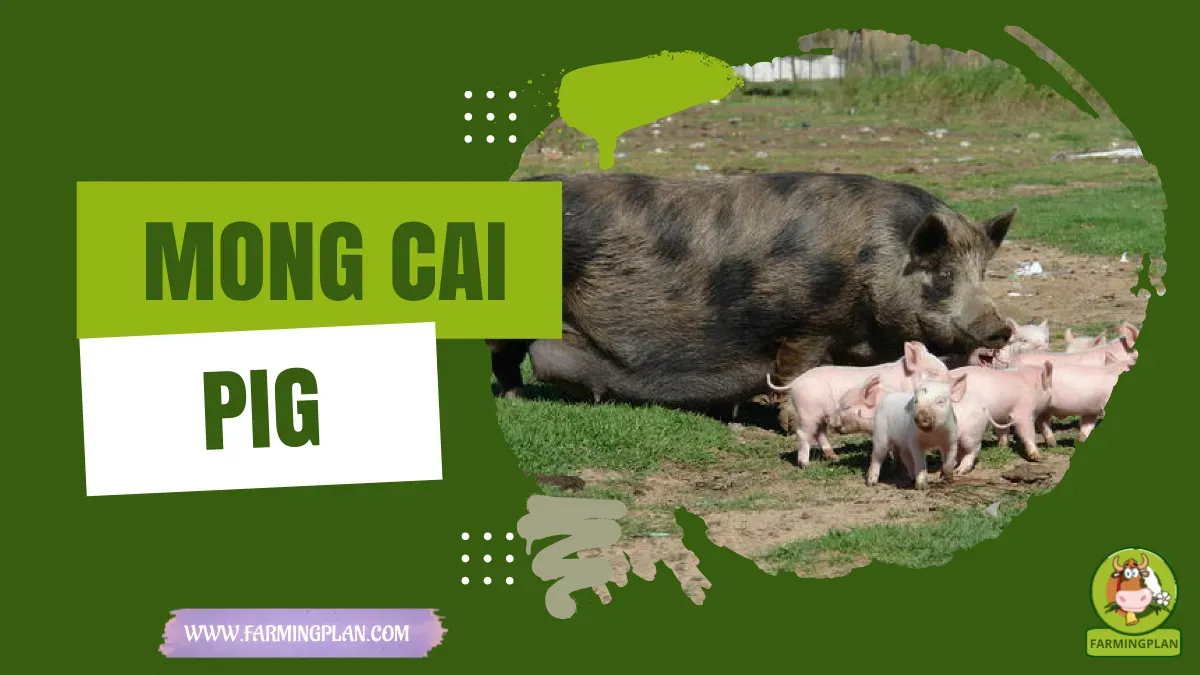
The visual appearance of the Mong Cai pig is immediately recognizable due to its distinct pied coloration and regional physical conformation. Animals possess a solid white ground body with a jet-black head, black patches across the ears, and a characteristic saddleback band of black pigment extending across the middle of the back and rump. A prominent white blaze runs down the center of the snout between the eyes. Understanding breed-specific traits helps maximize mong cai pig longevity and output.
Physically, the breed exhibits a medium to compact stature. Mature boars weigh between 200 and 265 lbs (90 to 120 kg), while mature sows average 175 to 220 lbs (80 to 100 kg). The back displays a mild swayback curve, complemented by a pendulous belly that allows ample abdominal expansion during pregnancy without putting undue strain on the skeletal structure. Routine preventive care saves time and lowers veterinary costs for mong cai pig.
The head features a slightly dished face, wide forehead, and small to medium erect or semi-erect ears directed forward. The snout is medium in length, sturdy, and equipped with a firm rooting disk. Sows exhibit well-spaced, prominent underline configurations typically presenting 12 to 14 functional teats that provide balanced milk distribution across full nursing litters.
Temperament, Maternal Behavior, and Pasture Grazing Habits
Mong Cai swine are renowned for their docile, friendly, and manageable disposition. Raised in close proximity to human dwellings for centuries, they respond calmly to regular handling and herd management routines. Even mature breeding boars display predictable, even-tempered attitudes when managed with respectful stockmanship and routine social interaction. Matching forage or ration quality to life stage optimizes mong cai pig growth.
Maternal behavior in Mong Cai sows is exceptionally gentle and attentive. During farrowing, sows remain quiet and calm, permitting handlers to assist with piglet drying and cord care without defensive aggression. Sows construct protective nesting structures from dry grass and straw, demonstrating careful foot placement when lying down, which dramatically reduces crushing losses in unconfined pens. Gradual dietary transitions protect digestive stability in mong cai pig.
In outdoor runs and paddock enclosures, the Mong Cai exhibits an active foraging drive. They explore pasture margins, grazing tender grasses, broadleaf legumes, and rooted tubers. When provided adequate forage and environmental enrichment, they demonstrate minimal destructive fence rooting compared to heavier commercial breeds.
Nutritional Requirements: Forage Utilization, Rations, and Byproduct Feeding
The gastrointestinal anatomy of the Mong Cai pig features an enlarged cecum and colon designed for microbial fermentation of complex dietary fiber. Unlike modern fast-growing white pigs that require concentrated grain formulations, Mong Cai stock can derive up to 40% of their daily maintenance nutritional intake from ensiled roughages, leafy greens, and farm byproducts. Selecting healthy foundation stock is the cornerstone of successful mong cai pig management.
A balanced commercial ration for growing Mong Cai feeder pigs combines cooked sweet potato tubers, rice bran, and brewery spent grains with a protein supplement such as soybean meal or fish meal to achieve 14% to 15% crude protein. Gestating sows thrive on bulky, fiber-dense rations that prevent excessive adipose accumulation while maintaining rumen fullness and digestive motility. Good predator-proofing and dry bedding safeguard mong cai pig comfort in harsh weather.
During lactation, nutritional energy must be increased to sustain milk output for large litters. Feeding lactating sows a 16% protein diet supplemented with essential minerals, dicalcium phosphate, and fresh forage ensures robust milk flow and rapid piglet growth rates without compromising sow body condition.
Housing Infrastructure, Ventilation, and Tropical Heat Management
Proper housing for Mong Cai swine prioritizes natural ventilation, moisture drainage, and sun shade. In humid climates, elevated or well-sloped concrete flooring with non-slip grooved textures allows rapid cleaning and sanitization. Open-sided barn structures with deep roof overhangs protect pigs from torrential rains while maximizing cooling breezes. Monitoring water quality and mineral balance directly benefits mong cai pig vitality.
Providing pasture wallows or shallow concrete bathing pools is essential for thermoregulation during hot weather. Because pigs lack functional sweat glands, access to clean wallows or overhead drip misting lines prevents heat stress and maintains feed intake during hot seasonal peaks. Integrating sturdy shelter alongside livestock systems like mulefoot pig grazing layouts promotes resilient farm infrastructure. Practical hands-on husbandry ensures consistent results when raising mong cai pig.
Pen dimensions should allocate at least 25 to 30 square feet (2.3 to 2.8 square meters) of covered resting space per mature sow, with outdoor run access providing an additional 50 to 80 square feet. Fencing must be built with heavy-gauge woven wire or sturdy wooden rails secured to solid posts to maintain secure boundary control.
Breeding Management, Early Maturity, and Crossbreeding Applications
Reproductive precocity is the crowning hallmark of the Mong Cai breed. Young gilts exhibit their first estrus cycle at just 4 to 5 months of age, weighing approximately 80 to 95 lbs (36 to 43 kg). Best management practices recommend delaying initial breeding until the third heat cycle at 7 to 8 months of age, ensuring the gilt has attained adequate skeletal frame size to carry a full litter. Early intervention at the first sign of lethargy protects overall mong cai pig flock or herd health.
Average litter size ranges from 11 to 14 live piglets, with mature sows frequently delivering 15 or more vigorous young. The gestation period follows the standard 114 days (3 months, 3 weeks, 3 days). Piglets exhibit rapid colostrum uptake and strong survival vigor, reaching weaning weights of 15 to 20 lbs (7 to 9 kg) at 6 to 8 weeks of age on natural maternal milk. Structured culling and biosecurity protocols strengthen mong cai pig genetic quality.
In commercial terminal crossbreeding operations, purebred Mong Cai sows are crossed with Landrace, Yorkshire, or Duroc boars. The resulting F1 offspring inherit the maternal hardiness and disease resistance of the dam alongside the rapid growth rates and superior carcass muscling of the sire, delivering exceptional commercial performance across diversified livestock holdings similar to integrated dairy farming and swine setups.
Estimated Annual Budget & Maintenance Costs (USD)
Establishing and maintaining a Mong Cai breeding unit requires careful financial planning. Thanks to their compact body size, low maintenance energy demands, and high forage conversion efficiency, annual operating expenses remain substantially lower than those of conventional industrial swine operations. Smallholders comparing closely related stock can also review our detailed Mukota Pig guide. Maintaining clean feeders and sanitized equipment supports sustainable mong cai pig care.
| Expense Category | Description & Operational Inputs | Estimated Annual Cost (USD) |
|---|---|---|
| Feed & Concentrates | Commercial balanced grower ration, soybean meal, and grain supplements | $340 – $480 |
| Forage & Byproducts | Rice bran, cassava silage, fresh pasture crops, and green forage chopping | $110 – $180 |
| Veterinary & Vaccines | Deworming protocols, erysipelas vaccination, iron injections, and routine care | $65 – $110 |
| Housing & Bedding | Dry straw, timber pen repairs, shade netting, and trough maintenance | $85 – $140 |
| Fencing & Paddock Utilities | Woven wire maintenance, wallow upkeep, solar energizers, and waterers | $75 – $125 |
| Miscellaneous & Registration | Breeding records, herd tags, handling supplies, and contingency buffer | $50 – $90 |
| Total Projected Cost | Estimated annual maintenance cost per mature breeding sow | $725 – $1,125 |
Operating costs can be reduced further when herds graze rotationally on cover crops, fallow vegetable plots, or orchard understories alongside multispecies livestock enterprises like raising sheep or heritage poultry flocks. Consistent daily observation helps keepers spot early changes in mong cai pig health and behavior.
🐖 Mong Cai Pig Swine Daily Feed Calculator
Calculate daily grower/finisher rations (lbs), monthly 50-lb feed bags, pen space, and water needs for your Mong Cai Pig pigs.
Frequently Asked Questions (FAQ)
What makes the Mong Cai pig unique compared to Western swine breeds?
The Mong Cai pig is distinctive for its exceptional maternal prolificacy, early sexual maturity at 4 to 5 months, and rugged tropical heat tolerance. It easily digests high-fiber agricultural byproducts like sweet potato vines and rice bran that commercial Western breeds cannot effectively utilize.
How many piglets do Mong Cai sows typically farrow per litter?
Mong Cai sows average 11 to 14 healthy piglets per kindle, with mature sows regularly farrowing 15 to 18 pigs in later parities. Their 12 to 14 functional teats and attentive mothering behavior ensure high weaning survival rates.
What is the average mature weight of a Mong Cai pig?
Mature Mong Cai boars weigh between 200 and 265 lbs (90 to 120 kg), while mature sows weigh between 175 and 220 lbs (80 to 100 kg), making them a manageable medium-sized heritage swine breed.
Can Mong Cai pigs be raised in cold climates?
While Mong Cai swine evolved in subtropical northern Vietnam and thrive in hot, humid weather, they can adapt to temperate climates provided they have well-insulated, draft-free winter shelters, deep dry bedding, and increased winter caloric rations.
How is the Mong Cai pig utilized in commercial crossbreeding?
Mong Cai sows are frequently used as maternal dams crossed with terminal sires like Duroc, Large White, or Yorkshire. The crossbred progeny inherit maternal vigor and disease resilience along with improved muscle growth and leaner commercial carcass cuts.
Best Practices for Mong Cai Breeding and Herd Management
Achieving outstanding productivity with Mong Cai swine requires balancing high-fiber grazing with appropriate trace mineral and protein supplementation. Because this breed possesses an innate metabolic efficiency for storing calories as backfat, producers must avoid overfeeding free-choice carbohydrate rations to non-lactating breeding stock.
Implementing disciplined rotational pasture management allows foraging paddocks to regenerate while disrupting parasitic life cycles. Pairing sanitary paddock rotation with proper water sanitation and farm biosecurity equipment, similar to standards used in poultry equipment and livestock facilities, preserves peak herd health across seasonal transitions. Clean housing, fresh water, and balanced nutrition remain essential for mong cai pig productivity.
Selecting replacement gilts from dams that exhibit steady 12-plus piglet weaned cohorts, sound leg conformation, and docile maternal temperaments ensures long-term genetic excellence. By honoring the evolutionary adaptations of the Mong Cai, smallholders and sustainable livestock enterprises establish a resilient, highly fertile pork enterprise.
📚Agricultural Reference & Scientific Citations
Standards and physiological data referenced in this guide comply with USDA APHIS Swine Health, FAO Domestic Animal Diversity Information System, and the American Veterinary Medical Association (AVMA).


