

⚡ Hogan Pig at a Glance: Key Specifications & Benchmarks
| Scientific Name | Sus scrofa domesticus (Pastured Heritage Subtype) |
| Breed Type | Hardy woodland pasture grazer and woodlot rooter |
| Average Mature Boar Weight | 450 to 600 lbs (205 to 270 kg) |
| Average Mature Sow Weight | 350 to 475 lbs (160 to 215 kg) |
| Primary Production Purpose | Pastured artisan red pork, bacon, timber stand clearing |
| Coat Conformation | Dense, coarse bristle coat with seasonal winter underfur |
| Average Litter Size | 7 to 10 vigorous, self-reliant piglets reared on pasture |
| Market Finishing Age | 8 to 10 months on rotational forage and grain supplementation |
The Hogan pig represents one of North America’s most resilient, resourceful, and cost-effective heritage pastured swine breeds. Forged through generations of natural selection in rural outdoor woodlots, this rugged landrace hog was cultivated by homesteaders who required an animal capable of thriving on rough timber pasture, seasonal acorn mast, and garden surplus without demanding climate-controlled confinement barns. Tracking feed intake and body condition supports long-term Hogan Pig performance.
Homesteaders exploring our comprehensive pig farming and swine herd management guides will discover in the Hogan pig the ultimate low-input pork producer. Unlike delicate white industrial confinement breeds that sunburn easily and succumb to respiratory ailments in wet outdoor soil, the Hogan pig carries thick, pigmented skin and a protective double coat of coarse bristles that shields it from freezing rain, snow, and thorny brush.
Their foraging drive makes them exceptional partners for silvopasture and regenerative agroforestry systems. Managed rotationally behind portable electric fencing, Hogan pigs till compacted subsoil, consume fallen fruit and invasive grubs, and deposit fertility without creating permanent moonscapes. To evaluate alternative bloodlines and practical management routines, check our Forest Mountain Pig overview. Following biosecurity best practices reduces disease risk in any Hogan Pig operation.
In this detailed breed guide, we examine the Hogan pig’s historical landrace roots, physical conformation, timber shelter designs, pastured feeding rations, and breeding management to help you establish a sustainable pork enterprise.
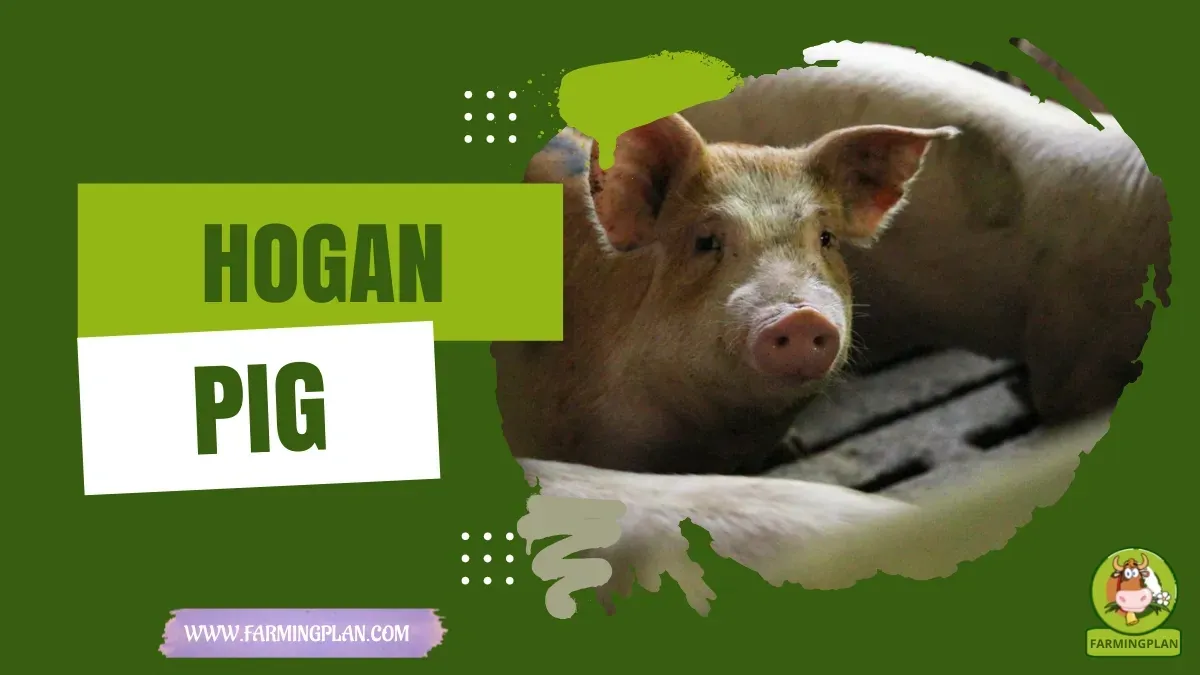
Physical Characteristics & Breed Standards
The Hogan pig presents an athletic, medium-framed, and deep-bodied silhouette that reflects its outdoor foraging ancestry. The body is moderately long and compact, supported by strong, straight legs that end in hard black hooves built for walking through muddy woodlots. Seasonal adjustments to shelter and diet keep Hogan Pig thriving year-round.
The head is long and straight, terminating in a strong, cartilaginous snout designed for rooting up roots, tubers, and grubs from forest soil. The ears are medium in size, carried semi-erect or slightly pricked forward to shield the eyes from brush while remaining alert to sounds.
Conformation Standards & Anatomical Structure
The shoulders are well-developed and deep, blending smoothly into a straight, muscular topline that houses thick, well-marbled pork loins. The ribs show excellent spring, providing ample internal volume for processing fibrous forage and acorns.
The hams are clean, muscular, and deep, carrying meat well down toward the hocks. The skin is thick, dark, and clothed in a dense bristle coat that sheds water easily, supported by a dense layer of underfur during winter months. Proper record-keeping makes breeding and culling decisions easier for Hogan Pig keepers.
Size, Weight Benchmarks & Color Variations
Mature Hogan boars average 450 to 600 lbs (205 to 270 kg), while mature sows weigh between 350 and 475 lbs (160 to 215 kg), maintaining an agile frame that minimizes joint injuries during active pasture life.
Plumage coloration is predominantly black, dark reddish-brown, or belted with white shoulder bands. Solid black and dark mahogany variants are favored by outdoor producers because dark pigmentation offers complete protection against solar dermatitis. Providing adequate space and ventilation prevents common stress issues in Hogan Pig.
⚡ Hogan Pig Performance & Production Matrix
| Pastured Swine Benchmark | Hogan Pig Standard | Confinement Industrial Swine | Woodlot Advantage |
|---|---|---|---|
| Outdoor Foraging Efficiency | Exceptional / browses rough brush | Poor / requires pure grain | Converts woodlot acorns, roots, and pasture into meat |
| Sunburn / Sun Sensitivity | Zero sunburn (pigmented skin) | High sunburn risk (white skin) | Thrives in open unshaded summer pastures |
| Farrowing Maternal Index | Unassisted pasture nest farrowing | Requires farrowing crates | Gentle mothers that rear 8 to 10 piglets in simple huts |
| Pork Culinary Quality | Deeply marbled ruby-red pork | Pale, soft, exudative (PSE) | Artisan chef demand for rich heritage bacon and roasts |
| Structural Leg Soundness | Heavy dense bone / hard hooves | Brittle joints / soft hooves | Moves easily over rocky timber and frozen mud |
Breed History, Heritage & North American Development
The roots of the Hogan pig trace to the hardy settler hogs that accompanied pioneers into the American wilderness during the eighteenth and nineteenth centuries. Settlers turned their breeding herds loose into oak forests to fatten on autumn acorn drops, gathering them in late winter for home butcher operations.
In isolated rural pockets, farmers maintained these resilient bloodlines, selecting for calm barnyard manners, unassisted farrowing in outdoor huts, and superior meat flavor over extreme lean mass. Understanding breed-specific traits helps maximize Hogan Pig longevity and output.
During the late twentieth century, when corporate mega-facilities replaced independent family hog farms, passionate heritage swine conservationists recognized the Hogan pig’s irreplaceable genetic value for sustainable agriculture.
Today, the Hogan pig is experiencing a strong resurgence among regenerative homesteaders and pastured pork producers, celebrated for restoring health to degraded soil and delivering exceptional gourmet pork.
Housing, Shelter Dimensions & Winter Hardiness
Housing for Hogan pigs should focus on simple, mobile, and well-ventilated field shelters. Locking these active outdoor pigs inside dark concrete pens causes boredom, tail-biting, and joint stiffness. Routine preventive care saves time and lowers veterinary costs for Hogan Pig.
Provide mobile A-frame huts or arch-style Port-A-Huts offering 45 to 60 square feet of covered space per mature sow. Construct shelters on heavy wooden skids so they can be towed to clean pasture paddocks with a tractor or pickup truck.
During winter months, pack shelters deeply with clean wheat straw or wood shavings; pigs burrow into the bedding to create a warm communal microclimate, staying comfortable even at -15°F without artificial heat lamps. Matching forage or ration quality to life stage optimizes Hogan Pig growth.
Spatial Density & Enclosure Engineering
Fencing requires two strands of high-tensile electric wire positioned at 6 and 18 inches above the ground, charged to at least 5,500 volts. Hogan pigs learn to respect electric wire quickly when trained in a small, secure training corral before turnout.
Paddock stocking density averages 6 to 8 feeder pigs per acre on rotational woodland or pasture, moving herds every 10 to 14 days to prevent root damage to mature trees. Ensure outdoor wallow areas or automatic nipple waterers have dry gravel pads to prevent mud erosion. Gradual dietary transitions protect digestive stability in Hogan Pig.
Nutritional Requirements, Daily Rations & Feeding Protocols
Hogan pigs are true omnivorous foragers that obtain a significant portion of their daily dietary calories from pasture legumes, dandelion greens, chicory, roots, earthworms, and seasonal tree mast (acorns, walnuts, and hickory nuts).
Reviewing swine nutrition within our Berkshire heritage pig pasture management guide highlights how outdoor forage improves meat marbling. Supplementing with balanced grain rations ensures steady average daily gains.
Crude Protein Benchmarks Across Life Stages
Provide growing feeder pigs with a 15% to 16% crude protein (CP) ground grain ration composed of cracked corn, rolled oats, field peas, and a complete swine vitamin-mineral premix, fed at approximately 3.0% to 3.5% of body weight daily. Selecting healthy foundation stock is the cornerstone of successful Hogan Pig management.
Gestating sows maintain prime body condition on pasture supplemented with 4 to 5 lbs of a 13% CP maintenance feed daily. Nursing sows require free-choice 16% lactation feed to sustain heavy milk flow for large litters.
Always provide clean, fresh drinking water using frost-proof pressurized waterers. A market hog consumes 3 to 5 gallons of water daily, while a lactating sow requires up to 8 gallons daily to prevent dehydration. Good predator-proofing and dry bedding safeguard Hogan Pig comfort in harsh weather.
Health Management, Common Diseases & Biosecurity Standards
Hogan pigs possess robust natural immunity and rarely suffer the respiratory complexes that plague indoor confinement herds. However, grazing on natural soil exposes outdoor swine to internal parasites like roundworms (*Ascaris suum*) and kidney worms.
Flock and herd managers must enforce biosecurity protocols conforming to the USDA Animal and Plant Health Inspection Service (APHIS) Swine Health Protection Program to prevent African Swine Fever and Pseudorabies. Monitoring water quality and mineral balance directly benefits Hogan Pig vitality.
Quarantine all newly acquired breeding stock in a secure paddock for 30 days before herd integration, performing prophylactic deworming and veterinary health checks.
Biosecurity Protocols & Veterinary Defenses
Administer annual vaccinations against Erysipelas and Leptospirosis to all breeding boars and sows 4 weeks before the breeding season. Treat outdoor herds for internal parasites twice annually using targeted ivermectin or fenbendazole protocols.
Inspect skin and ears periodically for swine lice (*Haematopinus suis*) or mange mites, treating immediately with topical or injectable antiparasitics. Provide clean pasture wallows during summer heat to allow pigs to coat their skin in protective mud against biting flies. Practical hands-on husbandry ensures consistent results when raising Hogan Pig.
Breeding Management, Pasture Farrowing & Piglet Vigor
Hogan gilts reach breeding maturity at 7 to 8 months of age, but mating is best deferred until 9 months and 260 lbs to ensure full physical maturity. Sows possess calm maternal instincts, building deep hay nests inside A-frame huts without farrowing crates.
Gestation lasts the standard 114 days (3 months, 3 weeks, 3 days). Sows deliver litters averaging 7 to 10 vigorous piglets that stand and nurse colostrum within 15 minutes of birth, showing high natural survival rates. Early intervention at the first sign of lethargy protects overall Hogan Pig flock or herd health.
Wean piglets naturally at 7 to 8 weeks onto pasture and creep feed, allowing them to develop strong digestive tracts, mirroring weaning practices in our Duroc pastured swine production guide.
US Ownership Budget & Annual Maintenance Costs
Establishing a pastured swine enterprise with Hogan pigs involves low initial capital for portable huts and electric fencing. Below is an itemized annual budget in US dollars. Structured culling and biosecurity protocols strengthen Hogan Pig genetic quality.
💰 Estimated Annual Budget & Maintenance Costs (USD)
| Budget Category | Item Description & Scope | Initial Capital Outlay | Annual Recurring Expense |
|---|---|---|---|
| Registered Breeding Gilt | Purebred pastured breeding gilt from verified lines | $300 – $550 | Initial investment |
| Supplemental Swine Grain Feed | Corn, oats, peas, and mineral premix (650 lbs/pig) | $110 – $170 | $140 – $220 per head annually |
| Electric Fencing & Solar Energizer | Polywire, step-in posts, and solar fence charger | $180 – $350 | $30 – $60 maintenance |
| Veterinary Vaccines & Dewormers | Erysipelas vaccine, dewormers, and health exams | $20 – $35 | $25 – $45 per head |
| Mobile A-Frame Huts & Straw Bedding | Portable plywood hut and clean wheat straw bedding | $120 – $250 | $30 – $50 annually |
🐖 Hogan Pig Swine Daily Feed Calculator
Calculate daily grower/finisher rations (lbs), monthly 50-lb feed bags, pen space, and water needs for your Hogan Pig pigs.
Frequently Asked Questions (FAQ)
Can Hogan pigs live outdoors all year round?
Yes, Hogan pigs possess thick skin and a dense bristle coat that allows them to live outdoors comfortably year-round, tolerating winter freezes down to -15°F when provided with dry, straw-bedded shelters.
Do Hogan sows need farrowing crates?
No, Hogan sows have excellent maternal instincts and spacious body awareness, farrowing cleanly and safely in simple A-frame field huts on clean straw bedding without crates.
What does pastured Hogan pork taste like?
Pastured Hogan pork is deeply marbled, dark ruby-red, and succulent, boasting a rich, nutty flavor influenced by their diverse diet of acorns, clover pasture, and farm forage.
How long does it take a Hogan pig to reach market weight?
Raised outdoors on pasture and supplemental grain, Hogan feeder pigs reach ideal slaughter weights of 250 to 280 lbs in 8 to 10 months, yielding excellent butcher cuts.
Are Hogan pigs destructive to pastures and trees?
When managed rotationally and provided with adequate supplemental nutrition, Hogan pigs root with moderation, aerating soil and clearing invasive brush without killing established timber.
Expert Verdict & Next Steps for Pastured Pork Producers
The Hogan pig is a premier heritage swine breed that transforms woodlots and rough pastures into profitable, high-quality artisanal red pork with minimal infrastructure overhead. For homesteaders seeking a self-reliant outdoor pig that excels in regenerative farming systems, this breed delivers outstanding value.
To begin your herd, establish a solar electric training pen, construct a mobile skid hut, and source verified heritage stock from reputable pasture breeders. Comparing operations with other top heritage hogs like the Red Wattle hog pastured management guide will help you build a profitable, sustainable swine enterprise.
📚Agricultural Reference & Scientific Citations
Standards and physiological data referenced in this guide comply with USDA APHIS Swine Health, FAO Domestic Animal Diversity Information System, and the American Veterinary Medical Association (AVMA).


