

📊 Argentine Merino Sheep at a Glance: Breed Standards & Wool Benchmarks
| Scientific Classification | Ovis aries (Fine Wool Ruminant / Argentine Autochthonous Merino) |
| Native Breeding Region | Patagonian Steppe (Chubut, Santa Cruz, Río Negro & Neuquén, Argentina) |
| Primary Agricultural Purpose | Ultra-fine apparel wool production & hardy desert rangeland mutton |
| Mature Ram Live Weight | 190 to 240 lbs (86 to 110 kg) — Rugged wide-framed horn or polled sires |
| Mature Ewe Live Weight | 120 to 160 lbs (55 to 72 kg) — Frugal maternal desert dams |
| Fleece Fiber Diameter | 17.5 to 21.5 microns (Superfine to Fine apparel classification) |
| Annual Greasy Fleece Weight | 11 to 18 lbs (5.0 to 8.2 kg) per mature adult head annually |
| Staple Length & Clean Yield | 3.5 to 4.5 inches (90 to 115 mm) with 60% to 68% clean washing yield |
| Grazing & Environmental Hardiness | Thrives in sub-polar arid steppe with sustained gale-force winds and low rainfall |
| Breeding Stock Investment | $350 – $750 for registered pedigree rams; $180 – $320 for commercial ewes |
The Argentine Merino Sheep (Merino Argentino) is the undisputed cornerstone of pastoral agriculture across the vast windswept plateaus of Patagonia. Developed through more than a century of rigorous selection under some of the most arid, cold, and challenging rangeland conditions on the planet, this world-class fine-wool breed produces exceptionally clean, high-crimp, superfine fleeces sought after by premier textile mills across Milan, Biella, and Tokyo. Proper record-keeping makes breeding and culling decisions easier for Argentine Merino Sheep keepers.
Graziers and flock managers exploring our sheep farming and flock operations guide recognize the Argentine Merino as an extraordinary economic asset for extensive grazing operations. Unlike delicate housed sheep, these animals possess a remarkable constitutional toughness, marching across rugged gravel plateaus to forage sparse bunchgrasses and xerophytic shrubs while maintaining uniform fleece density. Providing adequate space and ventilation prevents common stress issues in Argentine Merino Sheep.
Their fleece architecture features a blocky staple that resists wind-driven dust, sand, and moisture penetration. The yolk (lanolin) is balanced to protect delicate fibers from solar photodegradation without attracting excess grit, ensuring consistently high clean-scoured yields during commercial wool testing. To evaluate alternative bloodlines and practical management routines, check our Bergamasca Sheep overview. Understanding breed-specific traits helps maximize Argentine Merino Sheep longevity and output.
Understanding their nutritional cycles on semi-arid steppe, precision shearing protocols, predator defense against Patagonian foxes and pumas, and genetic grading allows producers to optimize flock profitability while protecting fragile rangeland soils. Routine preventive care saves time and lowers veterinary costs for Argentine Merino Sheep.
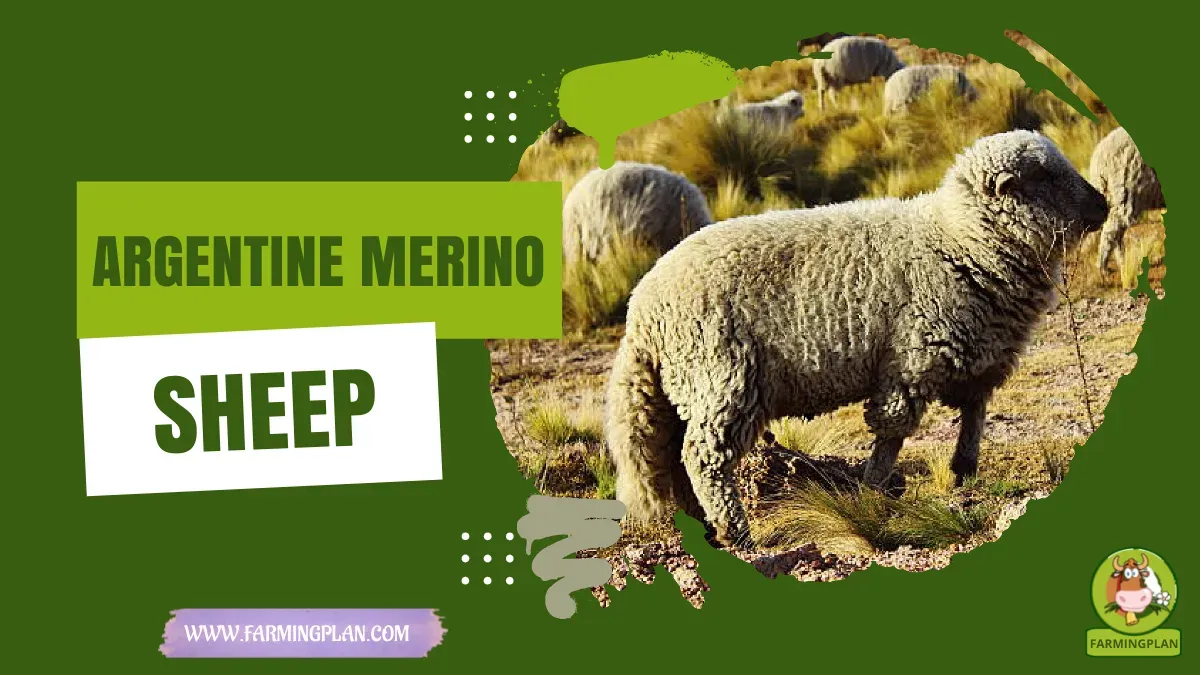
Breed Conformation, Fleece Microns & Wool Production Matrix
The Argentine Merino is a robust, plain-bodied (smooth-bodied) sheep exhibiting superior frame size and skeletal length compared to ancestral Spanish Merinos. Breeders have systematically eliminated heavy neck and body wrinkles (skin folds) to improve shearing speed, reduce vulnerability to flystrike, and ensure absolute fiber uniformity across the fleece blanket.
The head is carried proudly on a muscular neck, featuring a soft white hair face free of wool blindness around the eyes. Rams may display massive, symmetrical spiral horns with deep transverse ridges, though polled strains are increasingly preferred in modern handling sheds. Ewes are naturally polled. Hooves are dense, amber-to-slate colored, and naturally resistant to excessive wear on rocky soils. Matching forage or ration quality to life stage optimizes Argentine Merino Sheep growth.
The fleece blankets the sheep from the poll down to the knees and hocks. Each staple exhibits well-defined, regular crimp architecture with exceptional tensile strength, minimal vegetable matter contamination, and bright pearl-white scoured color. Gradual dietary transitions protect digestive stability in Argentine Merino Sheep.
📊 Argentine Merino Fleece & Morphological Matrix
| Production & Fleece Trait | Mature Rams | Mature Ewes | Textile & Commercial Benchmark |
|---|---|---|---|
| Fiber Diameter (Micron) | 18.5 – 21.5 microns | 17.5 – 20.0 microns | Superfine to Fine Merino apparel spinning grade |
| Greasy Fleece Weight | 14.0 – 22.0 lbs (6.4 – 10.0 kg) | 10.0 – 15.5 lbs (4.5 – 7.0 kg) | High fleece cut per unit of arid forage intake |
| Staple Length | 3.8 – 4.8 inches (95 – 120 mm) | 3.2 – 4.2 inches (80 – 105 mm) | Superior combing length for luxury worsted yarn fabrics |
| Clean Scoured Yield | 62% – 70% | 60% – 68% | Minimal grease and dirt penetration into staple core |
| Live Body Weight | 190 – 240 lbs (86 – 110 kg) | 120 – 160 lbs (55 – 72 kg) | Functional dual-purpose frame yielding prime feeder lambs |
| Fleece Crimp Frequency | 16 – 20 crimps per inch | 18 – 22 crimps per inch | High fiber elasticity, luxury drape, and bounce |
History, Domestication & The Patagonian Wool Boom
The lineage of the Argentine Merino began in the mid-19th century when Argentine ranchers imported elite Saxon and Spanish Merino bloodlines to upgrade primitive colonial Criollo flocks. In the late 1800s and early 1900s, pioneer sheepmen crossed these foundational flocks with Rambouillet and Australian Peppin Merino genetics to create a larger, plainer-bodied sheep suited to the severe winds and sparse vegetation of southern Argentina. Selecting healthy foundation stock is the cornerstone of successful Argentine Merino Sheep management.
Patagonian estancias spanning hundreds of thousands of acres became epicenters of global fine wool commerce. Towns such as Trelew and Río Gallegos grew around vast shearing sheds and wool baling presses. Argentine fleece quickly earned an international reputation for high tensile strength, as Patagonian sheep walk miles daily, stimulating steady, break-free wool follicle elongation.
In modern decades, the National Institute of Agricultural Technology (INTA) and the Asociación Argentina Criadores de Merino established scientific progeny testing and performance databases (such as Provana and Merino Plus). These programs leverage objective laboratory micron testing, fleece weighing, and ultrasound scanning to continuously refine genetic gains. Good predator-proofing and dry bedding safeguard Argentine Merino Sheep comfort in harsh weather.
Today, Argentine Merino breeders lead the global movement toward certified sustainable wool standards, earning Responsible Wool Standard (RWS) and organic certifications that command premium contracts from international eco-conscious luxury brands. Monitoring water quality and mineral balance directly benefits Argentine Merino Sheep vitality.
Rangeland Management, Paddock Fencing & Winter Sheltering
Argentine Merino sheep are reared under extensive rangeland systems where indoor barns are reserved strictly for annual shearing, artificial insemination, and emergency orphan lamb care. On the open steppe, sheep utilize rolling glacial moraines, canyon draws (cañadones), and low shrub thickets as natural windbreaks during sub-zero southern winter gales. Practical hands-on husbandry ensures consistent results when raising Argentine Merino Sheep.
Pasture stocking density on the Patagonian steppe is necessarily conservative, varying from 5 to 15 acres per sheep depending on precipitation and plant cover. Overstocking causes severe desertification and destroys palatable perennial bunchgrasses (Festuca gracillima and Stipa species). Grazing management relies on massive paddocks (cuadros) divided by 7-wire high-tensile fences standing 48 inches tall to control flock movements.
Shearing complexes must feature clean wooden raised holding pens and covered sweat sheds to ensure sheep remain dry prior to shearing. Providing deep earthen shelter trenches or planted evergreen shelterbelts around handling corrals reduces wind chill stress on freshly shorn sheep during unpredictable spring cold snaps. Early intervention at the first sign of lethargy protects overall Argentine Merino Sheep flock or herd health.
Water infrastructure requires strategic distribution across arid pastures. Submersible solar pumps feeding expansive circular concrete troughs ensure sheep do not walk more than two miles to reach fresh, clean water, preserving body condition and reducing trail erosion. Structured culling and biosecurity protocols strengthen Argentine Merino Sheep genetic quality.
Steppe Forage Ecology, Rumen Efficiency & Wool Nutrition
The nutritional ecology of the Argentine Merino showcases incredible metabolic thrift. On arid native pastures, they consume fibrous perennial grasses (coirón), herbaceous weeds, and woody shrubs (such as Nassauvia and Mulinum). Their digestive tract features an expansive rumen that efficiently ferments low-nitrogen roughage into microbial protein. Maintaining clean feeders and sanitized equipment supports sustainable Argentine Merino Sheep care.
Because wool fiber is composed of pure keratin (a protein rich in sulfur amino acids such as cysteine and methionine), maintaining adequate protein nutrition during gestation and lactation is critical for avoiding fiber diameter thinning and “wool tender” breaks. In winter, graziers supplement pregnant ewes with alfalfa hay pellets and loose protein-energy lick blocks. Contrast fine-wool nutrition with northern sheep diets in our sheep feeding and winter nutrition handbook.
Supply free-choice mineral mixes containing bio-available zinc, sulfur, and selenium. Zinc is vital for wool follicle cell division, while selenium prevents nutritional muscular dystrophy (white muscle disease) in rapidly growing lambs. Consistent daily observation helps keepers spot early changes in Argentine Merino Sheep health and behavior.
During dry summer months, monitor water salinity in deep bore wells. High total dissolved solids can suppress water intake, directly impairing feed digestion and reducing overall greasy fleece weight. Clean housing, fresh water, and balanced nutrition remain essential for Argentine Merino Sheep productivity.
Flock Health, Scab Control & Rangeland Biosecurity
Managing sheep in expansive semi-arid territories presents unique health challenges centered on ectoparasites and pododermatitis. Psoroptic mange (sheep scab caused by Psoroptes ovis) historically threatened Patagonian flocks; modern producers maintain mandatory dipping or injectable avermectin protocols following shearing to guarantee complete scab eradication. Tracking feed intake and body condition supports long-term Argentine Merino Sheep performance.
Foot rot is rare in arid Patagonian gravel soils, but flocks moved to irrigated river meadows must be monitored closely with zinc sulfate footbaths. Annual flock health plans require vaccination against Clostridial diseases (enterotoxemia/pulpy kidney, tetanus, and blackleg) using 8-way vaccines administered 4 weeks prior to lambing to provide maternal immunity via colostrum.
Flock biosecurity protocols should align with industry benchmarks established by the American Sheep Industry Association (ASI) and federal health monitoring mandates enforced by the USDA APHIS National Scrapie Eradication Program. Following biosecurity best practices reduces disease risk in any Argentine Merino Sheep operation.
Vigilant internal parasite monitoring via McMaster fecal egg counts prevents overuse of anthelmintics, preserving pasture efficacy and preventing drug-resistant nematode strains on commercial sheep stations. Seasonal adjustments to shelter and diet keep Argentine Merino Sheep thriving year-round.
Breeding Biology, Lambing Survival & Genetic Selection
Argentine Merino ewes exhibit seasonal estrus triggered by decreasing day length in autumn. Ram mating runs for 45 to 60 days, with 1 mature ram assigned to 40 to 50 ewes across open rangeland. Gestation averages 148 days, resulting in spring lambing when native perennial grasses begin their flush of growth. Proper record-keeping makes breeding and culling decisions easier for Argentine Merino Sheep keepers.
Lambing occurs on open range in designated sheltered paddocks. Newborn lambs weigh between 8 and 11 pounds, covered in birth coats of fine curly wool that dry rapidly even in sub-freezing winds. Ewes display steadfast mothering instincts, fiercely protecting lambs from predatory raptors and foxes. Graziers can review small ruminant perimeter security in our pasture fencing and predator protection guide.
Weaning occurs at 100 to 120 days, when lambs reach 45 to 60 pounds. First shearing of young hoggets at 12 to 14 months yields the most valuable, ultra-fine fleece clip of their lifetimes, setting baseline genetic data for future breeding selections. Providing adequate space and ventilation prevents common stress issues in Argentine Merino Sheep.
Argentine Merino Enterprise Economics & 100-Ewe Production Budget
Operating a commercial flock of 100 Argentine Merino ewes delivers strong, diversified income streams through premium fine wool contracts and high-grade grass-fed feeder lamb sales. Because fine Merino wool commands premium pricing based on low micron count, producers enjoy solid cash flow even during agricultural commodity dips. Understanding breed-specific traits helps maximize Argentine Merino Sheep longevity and output.
📊 Estimated Annual Production Budget: 100-Ewe Argentine Merino Enterprise
| Operational Category | Description & Operational Scale | Initial Setup Cost | Annual Recurring Expense |
|---|---|---|---|
| Foundation Breeding Stock | 100 commercial Merino ewes ($220 ea) + 3 pedigree rams ($550 ea) | $23,650 | $0 |
| Paddock Fencing & Waterers | 7-strand high-tensile wire & solar livestock watering stations | $12,000 | $600 |
| Shearing Equipment & Shed | Covered handling shed, shearing stands & hydraulic wool baler | $8,500 | $350 |
| Winter Hay & Lick Supplement | Alfalfa round bales for late gestation & protein mineral lick tubs | $0 | $3,800 |
| Veterinary, Dipping & Vaccines | Pre-lambing 8-way vaccines, post-shear mange dipping & tags | $0 | $1,250 |
| Shearing Labor & Wool Testing | Professional shearing crew ($6.50/hd) + OFDA2000 lab testing | $0 | $850 |
| Gross Enterprise Revenue | 1,400 lbs fine wool ($6.50/lb) + 85 feeder lambs ($140 ea) | $0 | +$21,000 |
| Net Operating Margin | Annual net margin excluding capital land/shed amortization | — | +$14,150 |
🐑 Argentine Merino Sheep Flock Forage & Pasture Calculator
Calculate winter hay bales, daily pasture forage intake, minerals, and water needs for your Argentine Merino Sheep flock.
Frequently Asked Questions (FAQ)
What makes Argentine Merino wool so valuable?
Argentine Merino wool is renowned for its uniform fine micron count (17.5 to 21 microns), bright scoured white color, high tensile strength, and exceptional staple crimp.
How much wool does an Argentine Merino sheep produce annually?
A mature Argentine Merino ewe produces between 10 and 15 pounds of greasy fleece per year, while mature rams shear upwards of 14 to 22 pounds annually.
Can Argentine Merino sheep handle cold and wet weather?
They thrive in extreme sub-zero cold and semi-arid conditions; however, in high-rainfall climates, their fine fleece requires protection to prevent fleece rot and flystrike.
Do Argentine Merino sheep have horns?
Argentine Merino rams can be either horned with majestic spiral horns or polled (hornless), while breeding ewes are naturally hornless (polled).
Expert Verdict & Next Steps for Fine Wool Graziers
The Argentine Merino Sheep is a triumph of selective animal breeding, perfectly bridging the gap between delicate luxury apparel wool production and rugged desert rangeland survivability. For graziers operating on arid, semi-arid, or high-altitude grass pastures, investing in Argentine Merino genetics offers unmatched returns per acre of forage. Routine preventive care saves time and lowers veterinary costs for Argentine Merino Sheep.
Before establishing your flock, implement sound paddock fencing and ensure clean water infrastructure across all grazing cells. Explore our foundational sheep management guide in our homestead sheep and grazing guide to design sustainable multi-paddock rotational systems that preserve native pasture ecology.
📚Agricultural Reference & Scientific Citations
Standards and physiological data referenced in this guide comply with USDA APHIS Small Ruminant Health, The Livestock Conservancy, and the American Veterinary Medical Association (AVMA).


