

⚡ American Saddlebred Horse at a Glance: Key Specifications & Benchmarks
| Scientific Name | Equus caballus (American Gaited Light Horse Subtype) |
| Historic Nickname | ‘The Horse America Made’ (Kentucky Saddler) |
| Breed Origin | Kentucky, United States (developed from Galloway, Narragansett Pacer, and Thoroughbred stock) |
| Average Mature Height | 15.1 to 16.3 hands (61 to 67 inches / 155 to 170 cm) |
| Average Mature Weight | 1,000 to 1,200 lbs (450 to 545 kg) |
| Recognized Gaits | Three-Gaited (Walk, Trot, Canter) and Five-Gaited (adding Slow Gait and Rack) |
| Primary Disciplines | Saddle seat show ring, fine harness, pleasure driving, trail riding, eventing |
| Hallmark Features | Long arched swan neck, level croup, high tail carriage, animated knee action |
The American Saddlebred, proudly hailed as ‘The Horse America Made,’ is one of the most storied, athletic, and versatile light horse breeds developed in the United States. Originating in eighteenth-century Kentucky and Virginia, this spirited aristocrat was refined by pioneer planters who required a comfortable, smooth-gaited horse capable of overseeing vast plantations all day and driving gracefully into town on Sundays. Tracking feed intake and body condition supports long-term American Saddlebred Horse performance.
Renowned for its proud upright neck carriage, fiery animation, and impeccably smooth riding gaits, the Saddlebred is the undisputed premier breed of the saddle seat show ring. Equestrian enthusiasts can deepen their knowledge through our comprehensive equine horses management and breed profile collection. Following biosecurity best practices reduces disease risk in any American Saddlebred Horse operation.
Despite their dazzling showmanship and expressive ears in the show arena, American Saddlebreds are gentle, intelligent, and highly affectionate horses. Their deep willingness to bond with human handlers makes them versatile family riding mounts, elegant driving horses, and dependable companions on scenic trails.
Their historic resilience is legendary. From crossing the Appalachian wilderness with early settlers to carrying Civil War officers through arduous military campaigns, the Saddlebred unites show-ring glamour with genuine athletic stamina. Seasonal adjustments to shelter and diet keep American Saddlebred Horse thriving year-round.
Physical Characteristics & Breed Standards
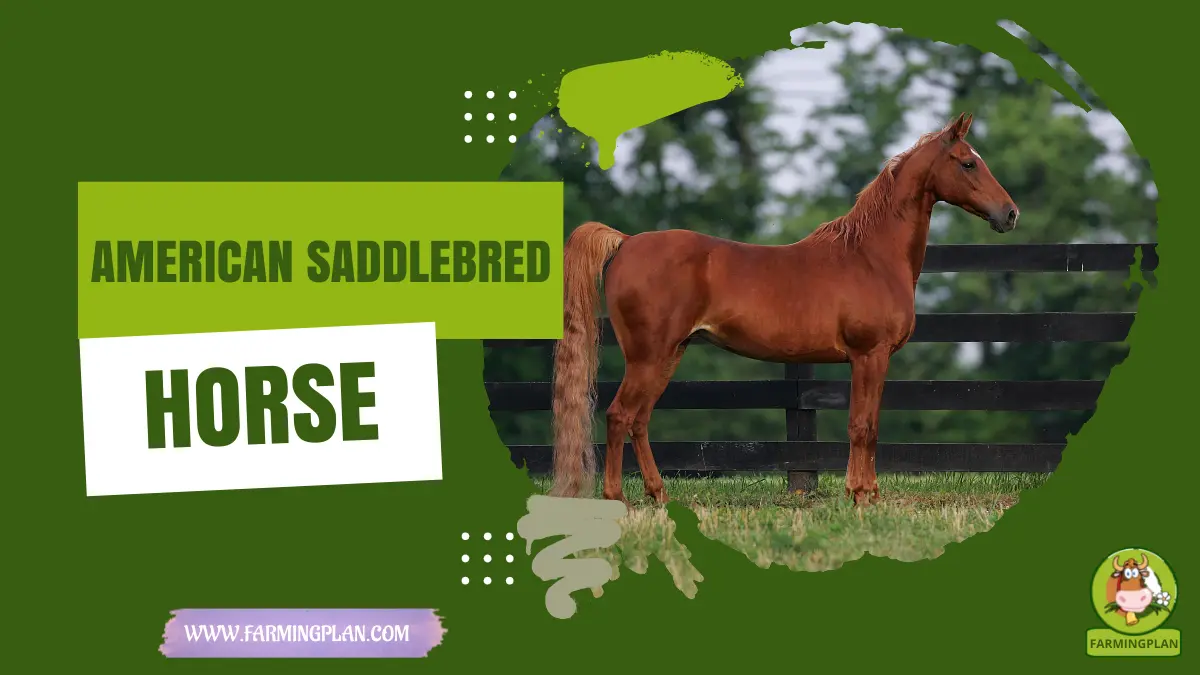
The American Saddlebred possesses an unmistakable conformation characterized by extreme elegance, vertical neck carriage, and refined skeletal balance. The horse appears alert, proud, and poised for animated movement even when standing at rest.
Breed evaluators inspect the harmony of line from the poll through the withers, back, and croup. The overall outline exudes athletic poise, clean joint definition, and refined bone density. Proper record-keeping makes breeding and culling decisions easier for American Saddlebred Horse keepers.
Conformation Standards & Anatomical Structure
The head is finely chiseled with a straight profile, large wide-set eyes radiating intelligence, and small, alert ears set closely together on the poll. The neck is long, slender, gracefully arched, and carried vertically out of well-sloped shoulders.
The back is short and strong with a level topline and a flat, horizontal croup. The tail is set high and carried naturally elevated. Legs are straight and flat-boned with sloping pasterns that provide elastic spring and cushion to every stride. Providing adequate space and ventilation prevents common stress issues in American Saddlebred Horse.
Shoulders are deep and sloping, allowing extreme range of motion in the forelegs that produces the breed’s signature elevated knee action without stiffness.
Size, Weight Benchmarks & Color Variations
Most mature Saddlebreds stand between 15.1 and 16.3 hands at the withers, with exceptional individuals reaching 17.0 hands, weighing between 1,000 and 1,200 lbs. Understanding breed-specific traits helps maximize American Saddlebred Horse longevity and output.
Recognized coat colors include chestnut, bay, black, brown, and grey, alongside striking pinto and palomino patterns. The mane and tail are kept long, flowing, and silky, enhancing the horse’s dramatic motion in the arena.
Hooves are well-shaped with deep frogs and thick walls, supporting the concussion of animated gaits across varied footing. Routine preventive care saves time and lowers veterinary costs for American Saddlebred Horse.
⚡ American Saddlebred Horse Performance & Production Matrix
| Trait Benchmark | ASHA Breed Standard Metric | Functional Equestrian Impact | Management Consideration |
|---|---|---|---|
| Withers Height | 15.1 – 16.3 hands | Superb riding visibility and athletic versatility | Requires standard 12×12 foot box stalls and tall trailers |
| Gaited Capabilities | 3-Gaited or 5-Gaited (Rack) | Ultra-smooth ground coverage without bounce | Requires experienced gaited equitation training |
| Neck Architecture | Long, Swan-Arched, Vertical | Natural elevation and effortless collection | Demands soft, balanced contact on a double bridle |
| Temperament | Curious, Spirited, Willing | High intelligence and enthusiasm for work | Sensitive to harsh cues; thrives with positive handling |
| Hoof Conformation | Naturally deep heel, sloping wall | Provides shock absorption during high-stepping trot | Regular farrier balancing maintains sound pastern angles |
Breed History, Heritage & North American Development
The American Saddlebred traces its ancestry to the colonial era, descending from Narragansett Pacers and Canadian Pacers crossed with imported English Thoroughbreds and Morgans. Originally called the American Saddle Horse or Kentucky Saddler, it served as an indispensable all-around utility mount.
During the American Civil War, Saddlebreds gained legendary status for endurance and courage. Renowned commanders on both sides rode Saddlebreds, including General Robert E. Lee’s ‘Traveller’ and General Ulysses S. Grant’s ‘Cincinnati.’ Their stamina on grueling marches proved decisive. Matching forage or ration quality to life stage optimizes American Saddlebred Horse growth.
In 1891, the American Saddlebred Horse Association (ASHA) was founded in Louisville, Kentucky, creating the first national breed registry for an American-developed horse. Today, the Saddlebred continues to captivate audiences worldwide in fine harness, five-gaited competition, and working western disciplines. Gradual dietary transitions protect digestive stability in American Saddlebred Horse.
Their versatile genetics have contributed to other American breeds, including the Tennessee Walking Horse and the Standardbred, securing the Saddlebred’s place as a cornerstone of American equestrian culture.
Housing, Shelter Dimensions & Winter Hardiness
American Saddlebreds thrive in clean, bright, well-ventilated stables with adequate ceiling clearance to accommodate their tall, vertical neck posture. A standard 12×12 foot box stall bedded with dust-screened pine shavings or wheat straw provides an ideal resting haven. Selecting healthy foundation stock is the cornerstone of successful American Saddlebred Horse management.
Stalls must feature safe, secure hardware, sliding doors, and barred partition windows that allow these curious, people-oriented horses to observe daily barn routines without developing stable vices.
Spatial Density & Enclosure Engineering
Pasture turnout is essential for psychological well-being and digestive health. Provide at least one to two acres of grazing per horse enclosed with safe four-rail wooden fencing, PVC vinyl boards, or polymer fencing. Good predator-proofing and dry bedding safeguard American Saddlebred Horse comfort in harsh weather.
Avoid barbed wire or thin electric wires that could injure high-stepping legs. In variable climates, provide a dry three-sided run-in shed and breathable turnout blankets during cold winter rainstorms.
Ensure riding rings and turnout paddocks feature consistent, shock-absorbing footing like washed sand or rubber mixtures to safeguard fetlock and hock joints. Monitoring water quality and mineral balance directly benefits American Saddlebred Horse vitality.
Nutritional Requirements, Daily Rations & Feeding Protocols
Saddlebreds possess active, energetic metabolisms that require clean, high-fiber forage supplemented with balanced concentrates to maintain optimal body condition and coat brilliance.
Feed high-grade grass hay (Timothy or Orchard mix) with moderate alfalfa content (10% to 15%) to supply digestible protein and calcium. For comparison with versatile American breeds, explore our Quarter Horse feeding and care profile. Practical hands-on husbandry ensures consistent results when raising American Saddlebred Horse.
Crude Protein Benchmarks Across Life Stages
Show horses in active training require a low-starch, fat-supplemented grain ration (12% to 14% crude protein) containing flaxseed meal, stabilized rice bran, and beet pulp to provide steady energy without nervous excitability.
Supply free-choice plain and mineralized salt blocks alongside clean, fresh water maintained at 45°F to 65°F. Supplementing biotin and zinc supports strong, resilient hoof walls and healthy skin. Early intervention at the first sign of lethargy protects overall American Saddlebred Horse flock or herd health.
Divide grain rations into three smaller meals daily for horses in heavy training to optimize digestive absorption and prevent gastric ulcers.
Health Management, Common Diseases & Biosecurity Standards
American Saddlebreds are naturally sound, tough horses capable of long, active careers well into their twenties. However, due to their energetic gaits and animated knee action, owners must pay close attention to leg and joint care. Structured culling and biosecurity protocols strengthen American Saddlebred Horse genetic quality.
Routine monitoring of digital pulses and hoof balance prevents concussive bruising and laminitis. Equine veterinary standards are coordinated through the USDA Animal and Plant Health Inspection Service (APHIS). Maintaining clean feeders and sanitized equipment supports sustainable American Saddlebred Horse care.
Biosecurity Protocols & Veterinary Defenses
Establish an annual preventative healthcare regimen with your equine veterinarian, including core vaccinations (rabies, tetanus, EEE/WEE, West Nile), dental floating, and targeted deworming based on fecal egg counts.
Farrier maintenance is essential. Whether barefoot or shod for performance, Saddlebred hooves must be trimmed every six weeks by an experienced farrier who respects natural angles without applying extreme artificial weights. Consistent daily observation helps keepers spot early changes in American Saddlebred Horse health and behavior.
Incorporate gentle post-workout leg wraps and cold hosing after intense schooling sessions to dissipate heat from deep flexor tendons and suspensory ligaments.
Breeding Management, ASHA Studbook & Foal Development
Breeding American Saddlebreds involves careful genetic pairing through ASHA pedigrees to preserve animated natural movement, refined beauty, and sensible temperaments. Artificial insemination and embryo transfer are widely utilized. Clean housing, fresh water, and balanced nutrition remain essential for American Saddlebred Horse productivity.
Saddlebred broodmares demonstrate high fertility rates and exceptional maternal instincts across their 335- to 345-day gestation period. For comparative gaited breed insights, review our article on Andalusian horse dressage standards and care.
Young Saddlebred foals are naturally playful and inquisitive, requiring early halter breaking and gentle foot handling within their first month. Provide balanced weanling rations to ensure steady, sound joint development. Tracking feed intake and body condition supports long-term American Saddlebred Horse performance.
Turn foals out in spacious, sloping pastures with other youngsters to promote natural athletic balance, bone density, and healthy social herd hierarchy.
US Ownership Budget & Annual Maintenance Costs
Investing in an American Saddlebred requires budgeting for purchase price, specialized saddle seat or driving tack, premium boarding or stable facilities, and professional training. Following biosecurity best practices reduces disease risk in any American Saddlebred Horse operation.
The budget schedule below details estimated startup capital and routine annual operational costs for keeping an American Saddlebred.
💰 Estimated Annual Budget & Maintenance Costs (USD)
| Budget Category | Item Description & Scope | Initial Capital Outlay | Annual Recurring Expense |
|---|---|---|---|
| Purebred Saddlebred Purchase | ASHA registered pleasure or show gelding/mare | $6,500 – $25,000 | $0.00 |
| Saddle Seat Tack & Bridles | Cutback saddle, Weymouth double bridle, show pad, sheets | $1,800 – $4,500 | $150 – $300 |
| Quality Forage & Grass Hay | 4.5 tons of tested Timothy/Orchard grass hay mix | $0.00 | $1,200 – $1,900 |
| Ration Balancer & Concentrates | Low-starch performance grain, flaxseed, hoof supplements | $0.00 | $500 – $850 |
| Professional Farrier Care | Specialized gaited trimming and balancing every 6 weeks | $0.00 | $650 – $1,300 |
| Veterinary Wellness & Vaccines | Annual exam, core vaccines, dental float, fecal diagnostics | $0.00 | $450 – $850 |
🧮 American Saddlebred Horse Daily Feed & Hay Intake Calculator
Calculate recommended daily dry grass hay (lbs), clean water intake, and estimated monthly forage costs tailored specifically for your American Saddlebred Horse.
Frequently Asked Questions (FAQ)
What is the difference between a 3-gaited and 5-gaited Saddlebred?
A 3-gaited Saddlebred performs the walk, trot, and canter with high animation and trimmed mane. A 5-gaited Saddlebred performs those three gaits plus two additional four-beat gaits: the slow gait and the high-speed rack, shown with a full mane and tail.
What is the rack gait in an American Saddlebred?
The rack is an exhilarating, highly animated four-beat lateral gait where each foot strikes the ground separately with equal intervals, giving the rider a sensation of floating without any vertical bounce.
Are American Saddlebreds high-strung or nervous horses?
No. While Saddlebreds display high energy and proud animation under saddle in the show arena, they are inherently intelligent, curious, and gentle horses that are affectionate and sensible on the ground.
Can an American Saddlebred be used for trail riding?
Yes, absolutely. Their smooth gaits, natural intelligence, and stamina make Saddlebreds comfortable, enjoyable trail riding companions capable of covering long distances with minimal rider fatigue.
Why do American Saddlebreds carry their heads so high?
Saddlebreds are anatomically bred with a high, vertical neck set that emerges cleanly from well-sloped shoulders, allowing them to carry their heads naturally high with proud, effortless balance.
Expert Verdict & Next Steps for US Homesteaders
The American Saddlebred is a triumphant celebration of American equestrian breeding, uniting electrifying presence with velvet-smooth gaited comfort and a deeply affectionate heart. For riders seeking an energetic partner for show, driving, or pleasure, the Saddlebred excels beyond compare. Seasonal adjustments to shelter and diet keep American Saddlebred Horse thriving year-round.
Before purchasing a Saddlebred, visit established training facilities and consult an experienced gaited horse instructor. Compare other historic American breeds by exploring our guide on the Morgan horse care and working utility profile.
📚Agricultural Reference & Scientific Citations
Standards and physiological data referenced in this guide comply with USDA Animal and Plant Health Inspection Service (APHIS), American Veterinary Medical Association (AVMA), and the FAO Domestic Animal Diversity Information System.


