

⚡ American Cream Draft Horse at a Glance: Key Specifications & Benchmarks
| Scientific Name | Equus caballus (American Heavy Draft Subtype) |
| Breed Origin | Story County, Iowa, United States (Foundation mare ‘Old Granny’) |
| Unique Genetic Hallmark | Champagne dilution gene (producing cream hair, pink pumpkin skin, amber eyes) |
| Conservation Status | Critical / Threatened on The Livestock Conservancy Priority List |
| Average Mature Height | 15.0 to 16.3 hands (60 to 67 inches / 152 to 170 cm) |
| Average Mature Weight | 1,600 to 2,000 lbs (725 to 907 kg) |
| Primary Agricultural Role | Plowing, carriage driving, hay rides, sustainable timber logging, exhibition |
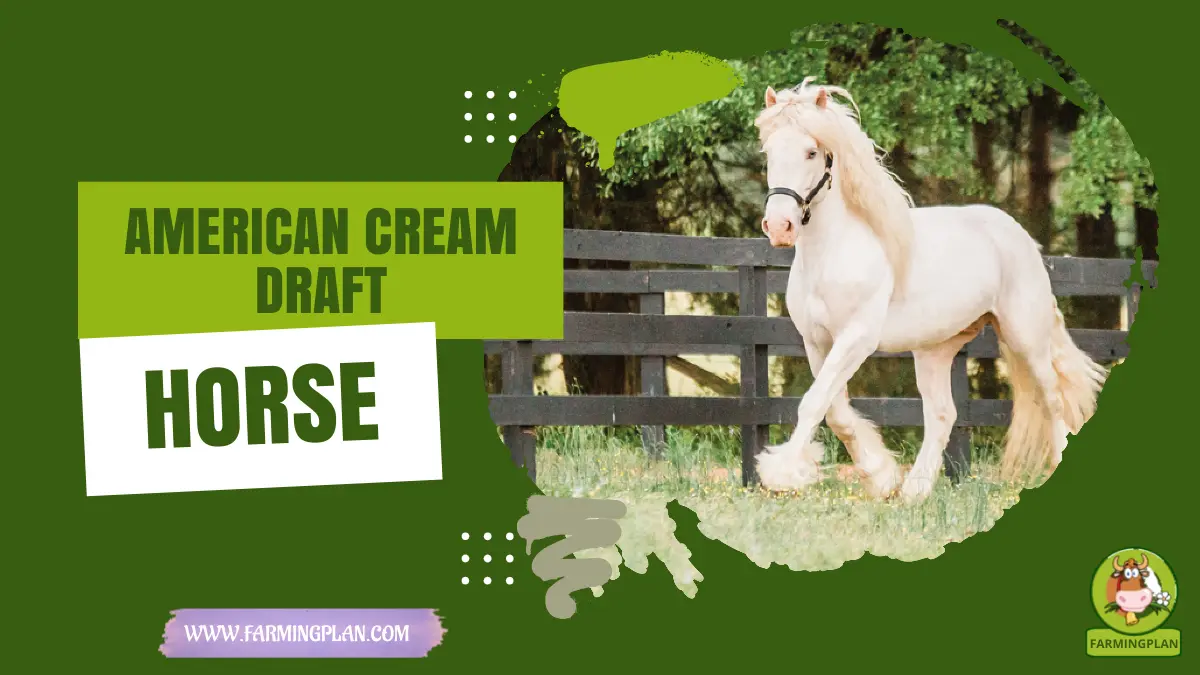
| Coat & Mane Color | Rich cream coat (light, medium, or dark) with white flaxen mane and tail |
The American Cream Draft Horse holds a singular, proud position in agricultural history as the only draft equine breed native to the United States that remains in existence today. Developed in early twentieth-century Iowa from a cream-colored foundation draft mare named ‘Old Granny,’ this magnificent breed is distinguished by its glowing cream coat, flaxen white mane and tail, pink skin, and striking amber-hazel eyes. Early intervention at the first sign of lethargy protects overall American Cream Draft Horse flock or herd health.
Celebrated for an exceptionally willing, docile temperament and easy-keeping foraging efficiency, the American Cream Draft was engineered by Midwestern farmers to plow fertile prairie fields and pull heavy farm wagons. Expand your equine management expertise through our comprehensive equine horses husbandry and care resource center.
Despite their immense strength, American Creams are renowned for their quiet, cooperative dispositions. They are patient around beginners, attentive in harness, and gentle around farm families, making them ideal horsepower for sustainable homesteads, heritage logging operations, and carriage tourism. Structured culling and biosecurity protocols strengthen American Cream Draft Horse genetic quality.
With fewer than 2,000 registered individuals in existence, every American Cream Draft horse represents a precious genetic treasure. Dedicated breeders across North America work passionately to preserve this gentle American icon for future agricultural generations.
Physical Characteristics & Breed Standards
The American Cream Draft Horse exhibits classic heavy draft proportions characterized by muscular thickness, deep chest width, and a low, stable center of gravity. Their overall appearance combines utilitarian power with breathtaking color elegance.
Registry standards emphasize structural soundness, clean bone, and quiet working demeanor over excessive height. The breed’s smooth, rolling walk and steady trot provide dependable traction under heavy harness. Maintaining clean feeders and sanitized equipment supports sustainable American Cream Draft Horse care.
Conformation Standards & Anatomical Structure
The head is refined with a straight facial profile, flat forehead, and large, expressive amber-hazel eyes that are characteristic of the champagne gene. The ears are well-proportioned and alert.
The neck is muscular and crested, flowing cleanly into well-laid-back shoulders capable of holding a heavy draft collar. The back is short, strong, and broad, with well-muscled loins and a powerfully rounded croup. Legs are straight with clean, heavy bone and tough, well-shaped hooves.
Skin is naturally pink (pumpkin skin) with slight freckling around the muzzle, eyes, and sheath, another distinct feature of the champagne dilution factor. Consistent daily observation helps keepers spot early changes in American Cream Draft Horse health and behavior.
Size, Weight Benchmarks & Color Variations
Mature stallions typically measure 16.0 to 16.3 hands and weigh 1,800 to 2,000 lbs, while mares stand 15.0 to 16.0 hands and weigh 1,600 to 1,800 lbs.
Coat shades range from light cream to rich medium and dark cream. The mane and tail must be white or flaxen, creating a dramatic visual contrast against green pasture fields.
Lower legs carry moderate, clean feathering that does not become excessively coarse or retain mud like heavier European draft breeds. Clean housing, fresh water, and balanced nutrition remain essential for American Cream Draft Horse productivity.
⚡ American Cream Draft Horse Performance & Production Matrix
| Trait Benchmark | ACDHA Breed Standard Metric | Homestead / Draft Advantage | Management Consideration |
|---|---|---|---|
| Mature Body Weight | 1,600 – 2,000 lbs | Immense pulling torque for farm implements and logging | Demands draft-sized harness, stalls, and trailers |
| Champagne Genetics | Dominant Dilution Gene | Stunning cream coat, pink skin, and amber eyes | Pink skin requires sunscreen or fly masks in intense sun |
| Temperament Score | 9.8 / 10 Docility & Heart | Exceptionally trustworthy around family and novices | Kind nature requires patient, gentle teamster cues |
| Forage Conversion | Superior ‘Easy Keeper’ | Thrives on pasture and quality grass hay with low grain | Prone to obesity; avoid rich clover or alfalfa overfeeding |
| Conservation Status | Critical Heritage Breed | Eligible for heritage livestock grants and support | Limited breeding stock requires strategic pedigree planning |
Breed History, Heritage & North American Development
The history of the American Cream Draft begins around 1911 in Story County, Iowa, with a cream-colored draft mare named ‘Old Granny.’ Known for her docile nature and tremendous pulling stamina, Old Granny consistently passed her striking cream color, pink skin, and white mane to her offspring.
A local veterinarian, Dr. Eric Nelson, recognized the distinct genetic consistency of these horses and encouraged local farmers to form a selective breeding program. In 1944, the American Cream Draft Horse Association (ACDHA) was incorporated in Iowa, establishing an official studbook. Tracking feed intake and body condition supports long-term American Cream Draft Horse performance.
The rapid mechanization of agriculture following World War II nearly extinguished all draft horse breeds in America. By the late 1950s, only a handful of dedicated farming families kept American Cream bloodlines alive. In 1982, the registry was reorganized, sparking a nationwide preservation movement.
Today, The Livestock Conservancy classifies the American Cream Draft as a priority conservation breed. Modern homesteaders, Amish farmers, and historical living farms actively deploy teams to preserve living American history.
Housing, Shelter Dimensions & Winter Hardiness
American Cream Draft Horses require sturdy, reinforced housing designed to accommodate massive body weight. Standard box stalls should measure 14×14 feet, built with two-inch oak planks and heavy steel posts to prevent structural damage when horses lean. Following biosecurity best practices reduces disease risk in any American Cream Draft Horse operation.
Provide ample ceiling clearance of at least ten feet to ensure adequate air circulation and ventilation. Bed stalls deeply with dust-free wood shavings or clean oat straw.
Spatial Density & Enclosure Engineering
Turnout pastures should provide at least two acres per draft horse, enclosed with heavy four-board wooden fencing or pipe panels. Electrified offset wires at chest height prevent drafts from pushing or rubbing against fence lines.
Because of their pink skin and light pigment, American Creams need ample shaded run-in shelters to protect them from sunburn and solar dermatitis during bright summer afternoons. Seasonal adjustments to shelter and diet keep American Cream Draft Horse thriving year-round.
Maintain mud-free sacrifice paddocks using gravel or geogrid mats around water troughs and feeding areas to protect hooves from softening in wet seasons.
Nutritional Requirements, Daily Rations & Feeding Protocols
Like many traditional draft breeds, the American Cream Draft is an extraordinarily efficient converter of rough forage into muscle. Feeding excessive grain or high-protein legumes easily induces metabolic issues and laminitis.
A balanced daily ration relies primarily on tested grass hay (Timothy, Orchard grass, or brome) providing 8% to 10% crude protein. Compare these feeding protocols to other heavy drafts in our Belgian draft horse feeding and management guide. Proper record-keeping makes breeding and culling decisions easier for American Cream Draft Horse keepers.
Crude Protein Benchmarks Across Life Stages
Working teams engaged in heavy field plowing or timber logging need 1.5% to 2.0% of their body weight daily in clean forage (approximately 30 to 40 lbs of hay), complemented by a low-starch, fat-supplemented ration balancer.
Provide constant access to clean, fresh water. A single mature draft horse requires 15 to 25 gallons of water daily. Supply free-choice trace mineral blocks containing selenium, zinc, and copper.
Maintain body condition scores at 5.5 to 6.0 on the Henneke scale, ensuring the ribs can be easily felt beneath a smooth fat cover without bulging pads on the hips. Providing adequate space and ventilation prevents common stress issues in American Cream Draft Horse.
Health Management, Common Diseases & Biosecurity Standards
American Cream Draft Horses are inherently sound, sturdy, and long-lived, often working past twenty years of age. However, their unique champagne genetics and pink skin require proactive management against sunburn and squamous cell carcinoma around the eyelids.
Additionally, breeders must screen for Junctional Epidermolysis Bullosa (JEB), a fatal genetic skin disorder found in some draft lineages. Review livestock health standards through the USDA Animal and Plant Health Inspection Service (APHIS). Understanding breed-specific traits helps maximize American Cream Draft Horse longevity and output.
Biosecurity Protocols & Veterinary Defenses
Establish a biannual vaccination regimen covering tetanus, rabies, West Nile virus, and encephalomyelitis. Administer targeted dewormers based on routine fecal egg counts.
Employ an experienced draft farrier on a strict six-week schedule to trim and balance their large, dinner-plate hooves. Regular exercise promotes digestive peristalsis and prevents impaction colic.
Apply veterinary-grade zinc oxide or equine sunblock to pink muzzles during peak summer ultraviolet hours to prevent painful sunburn blistering. Routine preventive care saves time and lowers veterinary costs for American Cream Draft Horse.
Breeding Management, Champagne Genetics & Foal Care
Breeding American Cream Draft Horses requires careful genetic planning through the ACDHA registry. The champagne dilution gene (Ch) is a simple dominant trait; homozygous creams produce 100% cream offspring, while heterozygous creams produce a 50% chance of cream foals when bred to non-dilute drafts.
Mares have a gestation period of 335 to 345 days, producing large, vigorous foals weighing 110 to 135 lbs at birth. For related draft horse breeding strategies, consult our guide on Clydesdale horse breeding and farm draft techniques.
Foals are born with pale blue-green eyes that gradually darken to hazel or amber over their first year. Handle foals gently from day one, imprinting trust and manners so they learn to stand quietly for foot handling before reaching immense adult size. Matching forage or ration quality to life stage optimizes American Cream Draft Horse growth.
Weanlings require balanced creep rations with appropriate calcium and phosphorus ratios to foster sound skeletal growth without developmental orthopedic lesions.
US Ownership Budget & Annual Maintenance Costs
Acquiring an American Cream Draft Horse supports an important national conservation mission, though owners must prepare for draft-sized equipment and handling costs.
The budget table below itemizes typical startup investments and ongoing annual maintenance expenses for keeping an American Cream Draft Horse. Gradual dietary transitions protect digestive stability in American Cream Draft Horse.
💰 Estimated Annual Budget & Maintenance Costs (USD)
| Budget Category | Item Description & Scope | Initial Capital Outlay | Annual Recurring Expense |
|---|---|---|---|
| Registered Purebred Purchase | ACDHA registered breeding mare or trained working gelding | $6,000 – $15,000 | $0.00 |
| Heavy Draft Harness & Tack | Work harness, collar, hames, heavy lines, draft halter | $1,600 – $3,500 | $150 – $300 |
| Quality Grass Hay Rations | 6.0 tons of tested grass hay (Timothy/Orchard/Brome mix) | $0.00 | $1,300 – $2,000 |
| Ration Balancer & Minerals | Low-starch amino balancer, flaxseed, salt, vitamin E | $0.00 | $400 – $700 |
| Heavy Draft Farrier Care | Draft trimming and corrective balancing every 6 weeks (8 visits) | $0.00 | $650 – $1,100 |
| Veterinary Care & DNA Testing | Annual vaccines, dental float, fecal counts, JEB/DNA panel | $0.00 | $450 – $850 |
🧮 American Cream Draft Horse Daily Feed & Hay Intake Calculator
Calculate recommended daily dry grass hay (lbs), clean water intake, and estimated monthly forage costs tailored specifically for your American Cream Draft Horse.
Frequently Asked Questions (FAQ)
Why is the American Cream Draft Horse so rare?
The breed was established just as tractors replaced farm horses in the 1940s and 1950s. Only a small group of preservationist breeders kept the lineage alive, keeping global numbers under 2,000 individuals today.
What causes the unique cream color of the American Cream Draft?
The cream coat is caused by the champagne dilution gene acting on a base chestnut coat, producing a rich cream body, flaxen white mane and tail, pink pumpkin skin, and amber-colored eyes.
How does an American Cream Draft compare in size to a Belgian or Percheron?
American Creams are medium-heavy drafts, standing 15.0 to 16.3 hands and weighing 1,600 to 2,000 lbs. They are slightly more compact than modern hitch-type Belgians and Percherons, making them more agile for farm work.
Are American Cream Draft Horses calm enough for beginners?
Yes. American Creams are renowned for their extraordinarily quiet, gentle, and cooperative temperament, making them one of the safest and most enjoyable draft breeds for family farms and new teamsters.
Can American Cream Draft Horses be ridden under saddle?
Yes. In addition to heavy draft and carriage driving, their calm disposition and broad, comfortable back make American Creams wonderful, steady pleasure riding mounts on scenic trails.
Expert Verdict & Next Steps for US Homesteaders
The American Cream Draft Horse is an authentic American living treasure, uniting historical rarity, breathtaking champagne beauty, and unmatched working docility. For homesteaders dedicated to sustainable farming or heritage preservation, the American Cream delivers peerless satisfaction.
Before acquiring stock, contact the American Cream Draft Horse Association to connect with reputable preservation breeders. Compare other historic American breeds by exploring our guide on the Morgan horse care and versatile utility profile.
📚Agricultural Reference & Scientific Citations
Standards and physiological data referenced in this guide comply with USDA Animal and Plant Health Inspection Service (APHIS), American Veterinary Medical Association (AVMA), and the FAO Domestic Animal Diversity Information System.


