

⚡ Kaluga Goose at a Glance: Key Specifications & Benchmarks
| Scientific Name | Anser anser domesticus (Russian Heavy Table Subtype) |
| Russian Breed Name | Kaluzhskaya Gus (Калужский гусь) |
| Breed Origin | Kaluga Oblast, Central Federal District, Russian Federation |
| Average Mature Gander Weight | 17.5 to 22.0 lbs (8.0 to 10.0 kg) |
| Average Mature Goose Weight | 14.5 to 17.5 lbs (6.5 to 8.0 kg) |
| Primary Production Purpose | Heavy holiday roasting meat, rich goose fat, luxury down and feathers |
| Annual Egg Production | 35 to 50 large white eggs (160 to 180 grams each) |
| Winter Hardiness Rating | Extreme (thrives outdoors down to -25°F with simple dry bedding) |
The Kaluga goose, known natively as the Kaluzhskaya Gus, is one of the most rugged, economically practical, and historically renowned heavy heritage waterfowl breeds of Central Russia. Developed in the historic Kaluga region southwest of Moscow, this formidable domestic goose was bred by Russian peasants and estate owners who required an animal capable of converting rough riverside pasture, stubble fields, and aquatic weeds into succulent holiday roasting meat and luxurious down. Routine preventive care saves time and lowers veterinary costs for Kaluga Goose.
Homesteaders exploring our comprehensive goose farming and waterfowl care guides will discover in the Kaluga goose an exceptional utility partner. Possessing dense plumage, a thick subcutaneous layer of fat, and powerful cardiovascular health, Kaluga geese endure sub-zero continental blizzards with serene composure, grazing frozen meadows where other waterfowl require indoor heating.
Beyond cold hardiness, the Kaluga goose serves as an effective biological weed-control and pasture-management animal. Their ravenous appetite for coarse grasses, dandelions, dock weeds, and marsh reeds allows smallholders to maintain clean, weed-free orchards and pastures without chemical herbicides.
In addition to holiday table meat, mature Kaluga geese yield dense, ultra-soft down that has been harvested by Russian farming families for generations to fill traditional winter featherbeds and cold-weather clothing without compromising bird welfare. Matching forage or ration quality to life stage optimizes Kaluga Goose growth.
Their rich, succulent meat, abundant culinary goose fat, and dense white down make them an exceptionally versatile and profitable asset for diversified homestead enterprises.
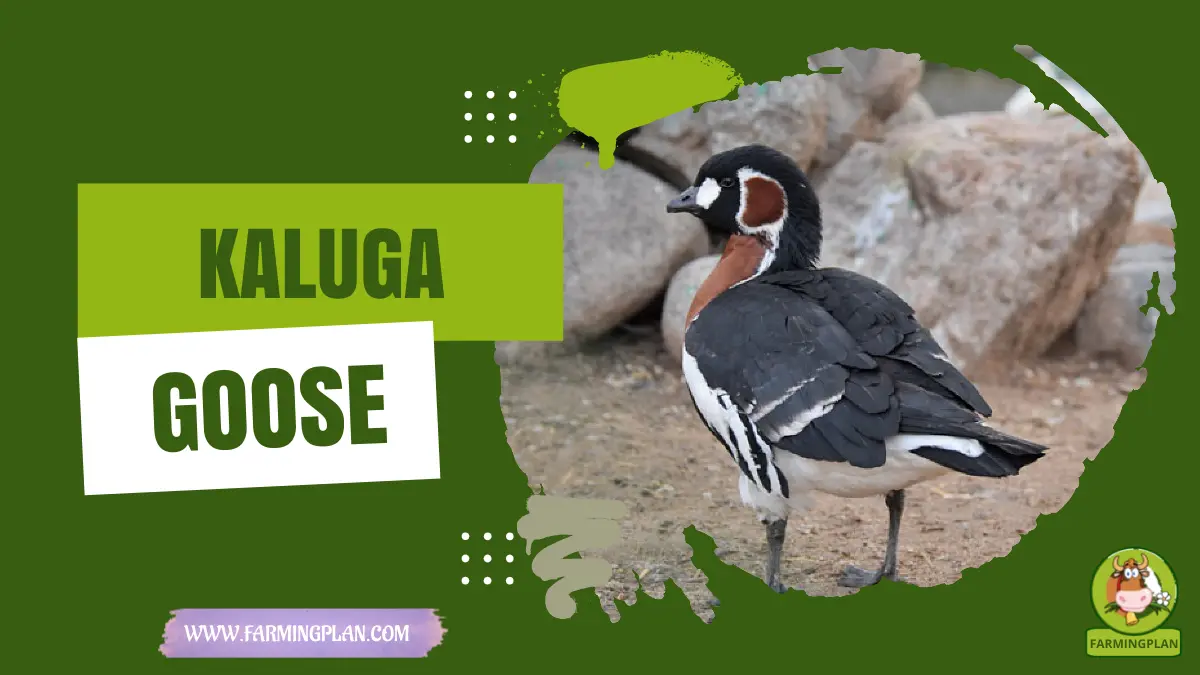
Physical Characteristics & Breed Standards
The Kaluga goose presents an imposing, heavy, and boat-shaped body conformation that immediately conveys physical mass and muscle density. The body is carried low to the ground and slightly tilted upward, supported by short, stout orange-red legs. Smallholders comparing closely related stock can also review our detailed Grey Back Goose guide.
The head is large, broad, and clean, featuring a stout, bright orange-yellow bill with a light bean at the tip. The eyes are dark hazel or brown, set into smooth facial skin that displays calm, dignified composure.
Conformation Standards & Anatomical Structure
The neck is medium-long, thick, and gracefully arched, flowing into broad, massive shoulders. The breast is deep, full, and prominent, free of an exaggerated keel, while the abdomen features a deep, well-developed double paunch that nearly touches the grass. Gradual dietary transitions protect digestive stability in Kaluga Goose.
The wings are large, powerful, and closely folded against the sides, while the tail is short, wide, and carried horizontally. Legs are widely spaced and strong-boned, terminating in broad, webbed feet with dark claws that provide excellent propulsion in water.
Size, Weight Benchmarks & Color Variations
Mature Kaluga ganders reach live weights of 17.5 to 22.0 lbs (8.0 to 10.0 kg), while mature geese weigh between 14.5 and 17.5 lbs (6.5 to 8.0 kg). Their heavy frame provides substantial meat yield per dressed bird.
Color variants are predominantly grey (seriy) and white (bely), with grey birds displaying deep brownish-grey plumage on the head, neck, back, and wings, edged with clean white lacing, while the breast and underbelly are pale grey fading to white. Selecting healthy foundation stock is the cornerstone of successful Kaluga Goose management.
⚡ Kaluga Goose Performance & Production Matrix
| Waterfowl Trait Benchmark | Kaluga Goose Standard | Commercial Embden Comparison | Homestead Benefit |
|---|---|---|---|
| Sub-Zero Cold Hardiness | Extreme (tolerates -25°F) | Moderate cold hardiness | Zero indoor heating required in severe northern winters |
| Pasture Grazing Appetite | Aggressive weed & brush grazer | Moderate grazer | Chemical-free weeding for orchards, vineyards, and pastures |
| Roaster Dressing Percentage | 68% – 72% dressed yield | 65% – 70% | Substantial heavy carcass yield for holiday table markets |
| Goose Down Quality | Dense, ultra-warm arctic down | Standard commercial down | Luxury natural fill for winter quilts, jackets, and pillows |
| Flock Guardian / Alarm Voice | Deep, resonant alarm honk | High-pitched honk | Dependable acoustic early-warning alarm against predators |
Breed History, Heritage & North American Development
The history of the Kaluga goose is deeply intertwined with traditional Russian peasant agriculture along the Oka River basin. For centuries, rural villagers selected native grey geese that could forage along riverbanks all summer and fatten on autumn rye stubble.
During the nineteenth century, Russian breeders refined the breed by selecting for rapid gosling growth, heavy body mass, and unassisted brooding instincts. The Kaluga goose became a staple of regional markets, driven in large flocks to Moscow for autumn poultry fairs.
Following the collectivization of agriculture in the Soviet Union, state breeding farms maintained the Kaluga goose as a valued regional genetic resource, ensuring that its natural hardiness and disease resistance were preserved.
Today, the Kaluga goose remains a cherished heritage breed across Central Russia and Eastern Europe, gaining attention from international permaculture farmers who value its self-reliance and superior meat quality. Good predator-proofing and dry bedding safeguard Kaluga Goose comfort in harsh weather.
Housing, Shelter Dimensions & Winter Hardiness
Housing Kaluga geese is simple and inexpensive, as they prefer living outdoors in all weather conditions. Confining them in tight, humid barns is unnatural and leads to wet, soiled plumage and respiratory ailments.
Provide a low, well-ventilated three-sided shed or pole barn offering 10 to 12 square feet of covered space per adult bird. The shelter should face south or southeast, protected from prevailing north winter winds, and be deeply bedded with clean wheat straw or wood shavings.
Geese do not require deep swimming ponds for breeding or health, but they must have access to clean water deep enough to submerge their entire head and bill to clean their nasal passages and eyes.
Spatial Density & Enclosure Engineering
Pasture fencing requires heavy 36-to-48-inch woven field wire or poultry netting. Geese are heavy birds and cannot fly over a 4-foot fence, but the fence must be predator-proof to exclude foxes, coyotes, and stray dogs. Monitoring water quality and mineral balance directly benefits Kaluga Goose vitality.
Pasture allocation averages 15 to 20 geese per acre on quality rotational pasture. Providing shade trees or open shelters during hot summer afternoons keeps the flock cool and comfortable.
Nutritional Requirements, Daily Rations & Feeding Protocols
Kaluga geese are dedicated herbivores that obtain up to 70% to 80% of their daily nutrition from fresh pasture grass, clover, dandelion greens, and aquatic plants during the spring and summer grazing season.
Reviewing waterfowl nutrition in our Toulouse goose care and feeding guide shows how grazing lowers feed expenses. Supplementing with whole grains in evening hours encourages steady flock habits. Practical hands-on husbandry ensures consistent results when raising Kaluga Goose.
Crude Protein Benchmarks Across Life Stages
Provide adult breeding geese with a 15% to 16% crude protein (CP) waterfowl pellet during the spring laying season, supplemented with free-choice oyster shell for eggshell strength. During summer grazing, a handful of whole wheat, oats, or cracked corn (1/4 lb per bird daily) is sufficient.
Finishing holiday roasting geese during the final 4 weeks requires an energy-dense diet of cracked corn, rolled barley, and pasture, allowing them to deposit the rich fat layer that makes roast goose famous.
Always supply clean drinking water in heavy, non-tip rubber tubs or galvanized troughs placed outdoors on gravel pads to prevent mud wallows. An adult goose drinks up to a half-gallon of water daily.
Health Management, Common Diseases & Biosecurity Standards
Kaluga geese are extraordinarily hardy birds with powerful natural resistance to common poultry diseases. However, flock owners must maintain basic biosecurity to protect them from environmental hazards. Early intervention at the first sign of lethargy protects overall Kaluga Goose flock or herd health.
Biosecurity standards should comply with the USDA Animal and Plant Health Inspection Service (APHIS) Waterfowl Health Guidelines to prevent avian influenza.
Quarantine any newly purchased waterfowl for at least 30 days before introducing them to resident farm flocks.
Biosecurity Protocols & Veterinary Defenses
Keep water troughs clean and scrub them weekly to prevent algae accumulation and botulism. Provide clean pasture rotations to prevent heavy gizzard worm (*Amidostomum anseris*) infestations. Structured culling and biosecurity protocols strengthen Kaluga Goose genetic quality.
Inspect webbed feet periodically for bumblefoot (pododermatitis) caused by rough gravel or thorns, treating early with antiseptic soaks and bandaging.
Breeding Management, Natural Brooding & Gosling Care
Kaluga geese form loyal, long-term mating bonds, with ganders typically mated to two or three geese in a breeding harem. Breeding activity begins in late winter (February to March) as daylight increases.
Geese lay 35 to 50 large white eggs during spring, building deep ground nests lined with soft down. Kaluga geese are attentive, protective brooders that incubate 10 to 12 eggs for 28 to 30 days with high hatchability.
Goslings hatch vigorous and alert, standing to graze tender grass shoots within 24 hours under the vigilant protection of both parents, mirroring natural brooding practices in our Chinese goose breeding guide. Maintaining clean feeders and sanitized equipment supports sustainable Kaluga Goose care.
US Ownership Budget & Annual Maintenance Costs
Raising a flock of Kaluga geese is highly economical due to their grazing nature and low shelter requirements. Below is an itemized annual budget in US dollars for a breeding trio (1 gander, 2 geese).
💰 Estimated Annual Budget & Maintenance Costs (USD)
| Budget Category | Item Description & Scope | Initial Capital Outlay | Annual Recurring Expense |
|---|---|---|---|
| Breeding Trio (1 Gander, 2 Geese) | Purebred Kaluga waterfowl breeding stock | $180 – $320 | Initial investment |
| Supplemental Winter Grain & Pellets | Whole wheat, oats, corn, and breeder pellets (450 lbs) | $90 – $140 | $90 – $140 annually |
| Water Troughs & Low Shelter Skid | Heavy rubber tubs, float valve, and open skid shed | $120 – $220 | $25 – $50 maintenance |
| Pasture Fencing & Electric Netting | Portable poultry netting and solar energizer | $150 – $300 | $30 – $50 maintenance |
| Vitamins, Oyster Shell & Health Care | Calcium shell, gizzard grit, and first aid supplies | $25 – $45 | $25 – $45 annually |
🦆 Kaluga Goose Flock Feed & Water Intake Calculator
Estimate daily balanced feed (lbs), fresh drinking/rinsing water requirements (Gal), indoor shelter, and monthly 50-lb feed bags for your Kaluga Goose flock.
Frequently Asked Questions (FAQ)
How large does a Kaluga goose grow?
Mature Kaluga ganders weigh between 17.5 and 22.0 lbs (8 to 10 kg), while mature geese weigh between 14.5 and 17.5 lbs (6.5 to 8 kg), making them a heavy table waterfowl breed.
Can Kaluga geese live outdoors in sub-zero winters?
Yes, developed in Central Russia, they possess dense down and thick skin that allows them to live outdoors comfortably down to -25°F when provided with dry straw bedding and wind protection.
Are Kaluga geese good for weed control?
Yes, they are voracious grazers that enthusiastically consume orchard weeds, dandelions, dock, and marsh grasses without damaging tree trunks or mature crops.
How many eggs does a Kaluga goose lay per year?
A healthy Kaluga goose lays between 35 and 50 large white eggs during the spring laying season, with eggs averaging 160 to 180 grams each.
Do Kaluga geese make good farm watchdogs?
Yes, ganders possess keen territorial awareness and sound deep, trumpet-like alarm honks whenever unfamiliar humans or predators approach the homestead.
Expert Verdict & Next Steps for Waterfowl Producers
The Kaluga goose is a superb heavy heritage waterfowl breed that combines extreme cold hardiness, efficient pasture weeding, succulent holiday meat yields, and dependable natural brooding instincts. For homesteaders seeking a low-maintenance, pasture-based poultry enterprise, this Russian breed offers exceptional utility.
Before acquiring stock, erect predator-proof field fencing, install heavy rubber water tubs, and designate pasture grazing zones. Reviewing management systems with other classic heavy breeds like the Embden goose care guide will help you build a profitable, sustainable waterfowl flock.
📚Agricultural Reference & Scientific Citations
Standards and physiological data referenced in this guide comply with American Poultry Association (APA), The Livestock Conservancy, and USDA APHIS Avian Biosecurity Standards.


