

⚡ Surti Goat at a Glance: Key Specifications & Production Benchmarks
| Breed Classification | Autochthonous Indian dairy goat; specialized milk and backyard dairy breed |
| Geographical Origin | Surat, Bharuch, and Navsari districts, southern Gujarat, India |
| Mature Buck Body Mass | 65 – 85 lbs (30 – 39 kg); compact, refined, muscular dairy stature |
| Mature Doe Body Mass | 55 – 70 lbs (25 – 32 kg); graceful, small-to-medium dairy frame |
| Coat Color & Texture | Predominantly pure white (some individuals with light brown speckling); short smooth hair |
| Horn Conformation | Medium-length horns curving backward and outward (some polled does occur) |
| Daily Milk Production | 4.0 – 6.0 lbs (1.8 – 2.7 kg) per day during peak lactation |
| Lactation Yield (180 Days) | 450 – 700 lbs (200 – 320 kg) with exceptional 4.5% to 5.5% butterfat |
| Prolificacy & Kidding | 1.5 – 1.8 kids per kidding; twinning rates exceed 55% in mature does |
Dairy Goat Husbandry & Urban Milk Breeds • 2026 Breed Guide Providing adequate space and ventilation prevents common stress issues in surti goat.
Raising the surti goat introduces commercial goat dairymen, urban homesteaders, and smallholders to one of the most docile, compact, and high-butterfat dairy caprine breeds in South Asia. Indigenous to the fertile coastal plains of Surat, Bharuch, and Vadodara in southern Gujarat, India, this elegant, predominantly pure white goat is celebrated for its quiet disposition, high feed conversion efficiency, and ability to thrive under zero-grazing stall-fed conditions. Often described as the “homesteader’s dairy cow,” the Surti goat produces rich, sweet milk with high solids in a manageable, space-efficient frame.
Coastal Gujarat Heritage & Urban Pastoral Origins
The developmental lineage of the Surti goat is linked to the historical port city of Surat and the surrounding Arabian Sea coastal plain. As an ancient international trading hub, Surat fostered dense urban and peri-urban populations that required high-quality fresh milk produced within compact household compounds where keeping large dairy cows was impossible. Understanding breed-specific traits helps maximize surti goat longevity and output.
Generations of careful family selection produced a small, docile goat that thrived on kitchen vegetable scraps, lopped garden foliage, and modest grains, generating rich milk without wandering pasturelands. Recognized by the NBAGR as a premier indigenous dairy breed, the Surti remains a vital caprine genetic resource for peri-urban agriculture and smallholder poverty alleviation programs.
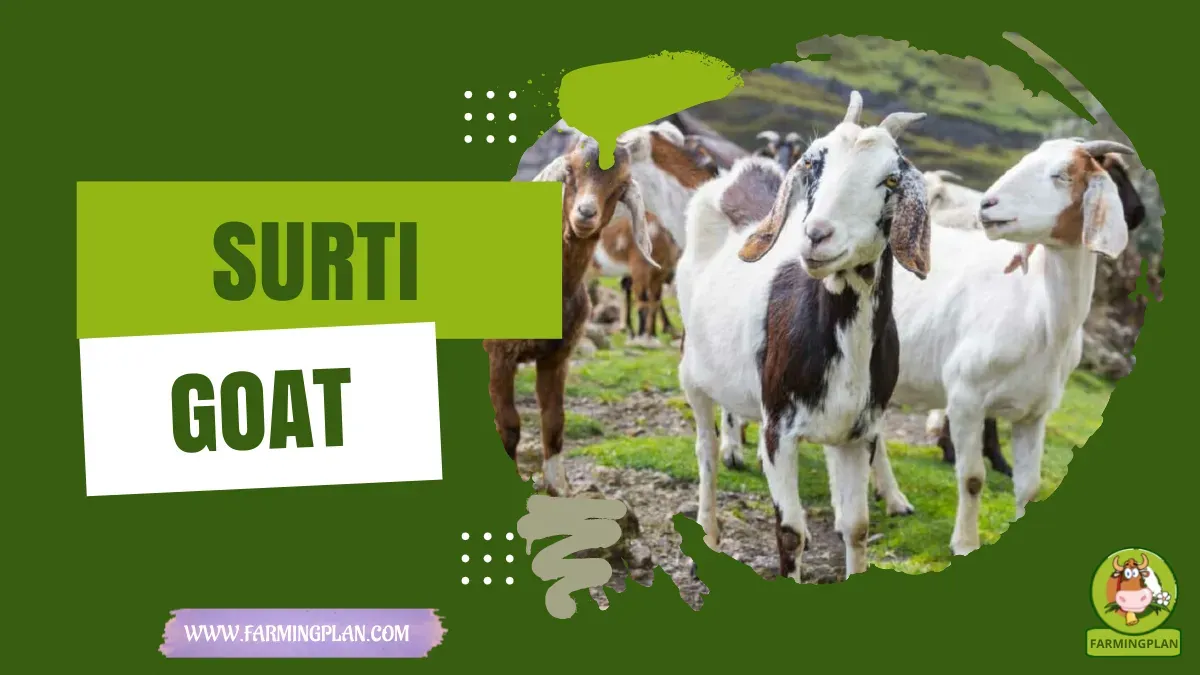
Physical Characteristics, Conformation & Udder Symmetry
The Surti goat presents a graceful, compact dairy silhouette characterized by fine bone structure, a straight backline, and prominent feminine dairy wedges. The head is relatively small with a straight or slightly convex nasal bridge, an alert forehead, and medium-length flat ears that droop downward with a gentle forward tilt. Routine preventive care saves time and lowers veterinary costs for surti goat.
The coat is short, smooth, and lustrous, predominantly pure white, although occasional light fawn or creamy markings appear on the ears and muzzle. Both sexes carry horns of medium length that curve upward and backward, though naturally polled individuals occasionally appear in purebred bloodlines.
The udder of a mature Surti doe is exceptionally well-developed relative to her compact body mass. It features a wide rear attachment, balanced symmetrical quarters, and cylindrical, well-placed teats that allow easy hand milking. The skin is soft, thin, and pliable with prominent milk veins traversing the abdominal wall. For additional husbandry benchmarks and feeding standards, explore our complete Fainting Goat care guide. Matching forage or ration quality to life stage optimizes surti goat growth.
The legs are straight, cleanly boned, and set squarely beneath the body, ending in dense, amber-colored hooves that resist foot rot in damp tropical monsoon environments when maintained on dry slatted floors.
Milk Yield, Butterfat Richness & Cheese Properties
From a dairy perspective, the Surti is celebrated for its high butterfat percentage and sweet flavor. A well-managed doe produces between 4.0 and 6.0 pounds (1.8 to 2.7 kg) of milk daily at peak production, with elite does surpassing 7.0 pounds under balanced stall-fed feeding. Gradual dietary transitions protect digestive stability in surti goat.
Standard lactations last 180 to 210 days, delivering 450 to 700 pounds of milk. The milk contains 4.5% to 5.5% butterfat and 3.6% protein, delivering a rich, creamy consistency without the pungent caproic off-flavor that deters some consumers. It is prized for artisanal cheese, paneer, and infant nutrition. Compare dairy caprines in our Jakhrana goat guide, Kutchi goat overview, and Argentata dell’Etna goat guide.
The high milk solids and small fat globule size enhance digestibility, making Surti milk popular in specialty wellness markets and direct-to-consumer farmgate sales. Selecting healthy foundation stock is the cornerstone of successful surti goat management.
Temperament, Docility & Zero-Grazing Confinement
The Surti goat possesses one of the calmest, gentlest dispositions of any caprine breed in the world. Unlike spirited mountain breeds that require high fences and constant supervision, Surtis are naturally quiet, tractable, and content within confined backyard pens.
They rarely challenge paddock fencing and bond closely with their caretakers, standing quietly on milking stands without kicking. This gentle temperament makes the Surti the ideal livestock choice for backyard homesteads, peri-urban micro-dairies, and educational farms. Review small ruminant management models in our livestock farming hub.
Their quiet vocalization and modest stall footprint make them acceptable in semi-suburban and rural-residential farming areas where loud livestock noise could cause neighbor friction. Good predator-proofing and dry bedding safeguard surti goat comfort in harsh weather.
Nutritional Requirements & Stall-Feeding Protocols
Surti goats thrive under intensive cut-and-carry (stall-feeding) systems. Because of their modest body mass (55 to 70 lbs), their daily dry matter intake is low, requiring only 2.2 to 3.2 pounds of dry matter per doe daily.
Supply high-quality green cultivated fodders such as lucerne (alfalfa), cowpea, hybrid Napier grass, and green maize, combined with dry legume hays and cereal straws. Supplement lactating does with 0.8 to 1.5 pounds of a 16% protein dairy ration containing crushed maize, wheat bran, groundnut cake, and 2% mineral salt mixture. Ensure constant access to clean, cool water; a mature Surti drinks 1.0 to 1.8 gallons daily. For cattle nutrition comparisons, explore our cattle farming overviews. Monitoring water quality and mineral balance directly benefits surti goat vitality.
Feeding fresh tree leaves such as Subabul, Neem, and Moringa provides valuable natural bypass protein and bioactive tannins that suppress internal parasite loads.
Because Surtis are ruminants with delicate microbial balance, introduce any new silage or grain concentrate gradually over a ten-day transition period. Providing consistent feeding times twice daily promotes steady rumen pH and maximizes daily milk synthesis. Practical hands-on husbandry ensures consistent results when raising surti goat.
Housing Infrastructure, Raised Slats & Hygiene Standards
Because Surtis are primarily maintained in stall-fed environments, housing design directly dictates herd health. Construct well-ventilated, covered sheds featuring elevated slatted wooden or heavy plastic flooring built 2 to 3 feet above ground level.
Slatted flooring allows manure pellets and urine to drop cleanly through, keeping bedding dry and eliminating ammonia fumes that compromise respiratory health. Provide 12 to 15 square feet of covered stall space per doe, along with an open exercise yard allowing 20 to 30 square feet per head. Perimeter fencing of 42 to 48 inches is sufficient for this calm breed. Explore sustainable shelter designs in our layer poultry equipment manual. Early intervention at the first sign of lethargy protects overall surti goat flock or herd health.
Elevated feeding mangers with keyhole stanchions prevent feed trampling and waste. Disinfecting stall surfaces monthly with hydrated lime spray eliminates bacterial pathogens and deters nuisance flies.
Reproduction, Kidding Prolificacy & Herd Health Protocols
Surti goats demonstrate exceptional reproductive prolificacy. Does reach sexual maturity at 9 to 11 months, with first kidding commonly achieved between 14 and 16 months of age. Kidding rates average 1.5 to 1.8 kids per doe, with twinning occurring in over 55% of kiddings in mature, well-fed does. Structured culling and biosecurity protocols strengthen surti goat genetic quality.
Gestation lasts approximately 148 to 150 days. Does are attentive, gentle mothers that produce abundant colostrum to nourish twin kids. Implement a strict preventative health protocol, including annual immunizations against PPR, Enterotoxemia, and Goat Pox. Deworm the herd biannually and monitor parasite loads using FAMACHA scoring. Review broader disease protocols in our anthrax livestock guidelines and poultry vaccination schedules.
Maintain clean, dedicated kidding pens with fresh straw bedding to protect newborn kids from coastal humidity chills. Dip naval cords in strong iodine solution immediately following delivery to guard against omphalophlebitis and joint infections. Maintaining clean feeders and sanitized equipment supports sustainable surti goat care.
Wean kids onto dry alfalfa hay and starter concentrate crumbles from four weeks of age, enabling complete weaning by 90 days while returning does to peak commercial milking routines.
⚡ Estimated Annual Budget & Maintenance Costs (USD)
Operating an urban or homestead dairy unit with a foundation herd of 6 Surti does and 1 registered buck involves modest capital investments and low annual feed expenses. Below is an itemized 2026 economic breakdown:
| Operational Expense Category | Initial Setup (USD) | Annual Recurring Cost (USD) |
|---|---|---|
| High-Producing Registered Breeding Stock (6 Does, 1 Buck) | $1,200 – $2,100 | $0 |
| Elevated Slatted-Floor Shed & Paddock Fencing | $900 – $1,700 | $70 – $130 |
| Feed Troughs, Stainless Milking Pails & Waterers | $160 – $300 | $20 – $40 |
| Cultivated Green Forage, Legume Hay & Dry Fodder | $0 | $650 – $1,050 |
| Dairy Concentrate Rations (16% CP) & Mineral Salt | $0 | $380 – $580 |
| Veterinary PPR, ET Vaccines, Deworming & Vet Care | $50 – $100 | $90 – $160 |
| Sanitation Lime Sprays & Slatted Floor Maintenance | $35 – $70 | $50 – $90 |
| Total Estimated Investment | $2,345 – $4,270 | $1,260 – $2,050 / year |
🐐 Surti Goat Herd Feed & Pasture Calculator
Calculate daily forage, monthly hay bales, loose minerals, and clean water needs for your Surti Goat herd.
Frequently Asked Questions (FAQ)
Where does the Surti goat breed originate?
The Surti goat originates in the Surat, Bharuch, and Vadodara districts of southern Gujarat, India, developed specifically for high milk yields in urban and stall-fed environments.
What do Surti goats look like?
They are small-to-medium sized goats with a clean white coat, medium drooping ears, backward-curving horns, and a refined, graceful dairy wedge silhouette.
How much milk does a Surti goat produce daily?
A mature Surti doe typically yields between 4.0 and 6.0 pounds (1.8 to 2.7 kg) of rich milk daily during peak lactation, containing 4.5% to 5.5% butterfat.
Are Surti goats good for backyard homesteads and small pens?
Yes, Surti goats are famous for their calm, docile temperament and small body size, making them the premier choice for zero-grazing, stall-fed backyard dairy production.
What is the twinning rate of Surti does?
Surti does are highly prolific, with twinning rates exceeding 55% in mature does, delivering unassisted kiddings and raising healthy pairs of vigorous kids.
What does Surti goat milk taste like?
Surti goat milk has a sweet, clean, rich flavor without the strong caproic odor found in some breeds, making it exceptionally popular for fresh drinking and artisanal cheeses.
Key Breed Advantages
- Exceptional butterfat (4.5% to 5.5%) with rich, sweet milk flavor
- Thrives under zero-grazing stall-fed management with low feed intake
- Remarkably calm, docile temperament ideal for families and urban homesteads
- High prolificacy with over 55% twinning in healthy mature does
- Compact body mass (55 to 70 lbs) requires minimal pen space and fencing
Management Considerations
- Lower volumetric milk yield than large European dairy goats like Saanen
- Pure white coat requires clean housing to prevent staining
- Sensitive to cold, wet climates that encourage respiratory infections
- Pure registered breeding stock is centered primarily in southern Gujarat
📚Agricultural Reference & Scientific Citations
1. Navsari Agricultural University (NAU): Surti Goat Breed Descriptor & Coastal Dairy Performance.
2. National Bureau of Animal Genetic Resources (NBAGR): Registered Indigenous Breeds: Surti Goat Profile.
3. Central Institute for Research on Goats (CIRG): Backyard Dairy Caprine Management Models in India.


